Showing posts with label Europe. Show all posts

Friday, 2 January 2026

Archaeological discoveries announced in 2025

I've been negligent in recent years when it comes to mentioning archaeological discoveries. It will take too long to reproduce the articles, so this post just includes headlines and links (sometimes more than one article per item). For those interested in biblical archaeology, I recommend the blogs theoarch and Ferrell's Travel Blog.

Byzantine monastery with mosaic inscription from Deuteronomy discovered near Kiryat Gat (January 6, 2025)

Israeli archaeologists solve mystery of missing cave art in the Levant (January 8, 2025)

Ritual Complex Dating to First Temple Period Discovered in Jerusalem’s City of David also Ancient Jewish private ritual bath is unearthed in Jerusalem's City of David (January 27, 2025)

Researchers Uncover Ancient Worship Site Near First Temple in Jerusalem (January 16, 2025)

Roman Boundary Stone Found in Israel Links Talmudic Accounts to Diocletian’s Lost Villages (January 28, 2025)

Ancient Aramaic inscription finally deciphered reveals Jewish name in the heartland of Judea (January 31, 2025)

Archaeological Proof of King David: The Ancient Stone That Confirms His Dynasty (February 3, 2025)

Israeli archaeologists continue search for Pool of Siloam in ancient City of David (February 12, 2025)

American tourist discovers rare ancient Jewish coin from Hasmonean period in Shiloh, Samaria (February 27, 2025)

Archeologists find evidence of Josiah, the last king of Judah (March 12, 2025)

Scientists: “Evidence suggests that the Genesis flood story might have a basis in reality” (March 13, 2025)

Exciting new discovery in Judean Desert from time of Maccabees mystifies archaeologists (March 25, 2025) also Mysterious Pyramid Discovered in Judean Desert Unveils Hellenistic Era Secrets (March 25, 2025)

Excavations under Church of the Holy Sepulchre reveal evidence of ancient garden, supporting Gospel of John (March 25, 2025)

Ancient and Unique Clay Jug Featuring Camel Decorations Unearthed in Yatir Forest Excavations (March 30, 2025)

Archaeologists Confirm Biblical Armageddon Site at Megiddo in Northern Israel (March 31, 2025)

Little girl discovers 3,800-year-old Canaanite seal on family trip near Beit Shemesh, Israel (April 1, 2025) also Israeli preschooler stumbles on 3,800-year-old artifact near Beit Shemesh; Israeli Toddler Uncovers 3,800-Year-Old Scarab at Biblical Site (April 2, 2025); 3-Yr-Old Girl Finds Canaanite Scarab Where David Faced Goliath (April 2, 2025)

Dyeing for royalty: Ancient tools reveal economic power behind biblical Israel (April 17, 2025) also Archaeologists Discover Ancient Facility that May Have Produced Scarlet and Blue Dyes Used in Temples (April 27, 2025); Israeli scholars find ancient manufacturing site of purple dye near Haifa (May 3, 2025)

Historic Stone Capital with Menorah Set for Exhibit Ahead of Independence Day (April 29, 2025) also 1,500-Year-Old Stone Column Element with Menorah Design Unveiled for First Time (April 29, 2025); Rare menorah-carved capital found near Jerusalem is unveiled for Israel's Independence Day (April 30, 2025)

New Israeli Study Shows Ancient Names Reflect Cosmopolitan Biblical Israel (May 13, 2025)

Rare 1,500-Year-Old African Figurines Discovered in the Negev Desert (May 14, 2025) also Archaeological discovery hints at African Christian community in ancient Israel (May 14, 2025)

Tiny treasure discovered in Jerusalem's City of David: Second gold ring found in less than a year (May 21, 2025)

The buried truth: Unearthing Jewish history on the Temple Mount in Jerusalem (May 22, 2025)

From Battleground to Holy Ground: How Archaeology Proves Israel’s Ancient Heritage (May 29, 2025)

Treasured 14th-century Shem Tov Bible finds its way home to Jerusalem (May 30, 2025) also World’s Oldest Known Complete Tanach Returns to Israel (June 3, 2025)

1,700-Year-Old Roman Sarcophagus Depicting Pagan Drinking Contest Discovered in Caesarea also Roman Sarcophagus Discovered in Caesarea Provides Clue to Size of the Ancient City (June 9, 2025)

New evidence for why King Josiah went to meet Pharaoh Necho in Megiddo (June 9, 2025)

New technology gives earlier dates for Dead Sea Scrolls, challenging doubts about book of Daniel (June 27, 2025)

Can the Bible be trusted? A fresh look at the word 'Ebenezer' through the lens of modern research (June 28, 2025) also The dawn of settlement: Uncovering the secrets of ancient Israelite Izbet Sartah and Earliest Hebrew alphabet found at Izbet Sartah reveals surprising Israelite literacy in the Iron Age (July 7, 2025)


1,900-year-old lion-headed bronze discs discovered in Israel likely used in pagan burial rituals (June 29, 2025) also Roman-Era Burial Discs Discovered in Israel Shed Light on Ancient Funeral Customs (June 30, 2025)

Discoveries at Shiloh that back up the Bible: A conversation with archaeologist, Scott Stripling (July 1, 2025) also Excavating Biblical History: New Discoveries at Shiloh and the Search for the Ark’s Gateway (July 25, 2025); Shiloh’s Tabernacle mystery: What the Bible and archaeology reveal (July 26, 2025)

Unearthing the Truth of Salome’s Tomb: New Research Reframes Centuries-Old Christian Tradition (July 7, 2025)

Rare 15th-century Biblical manuscripts shed light on Ethiopian Jewish heritage (July 9, 2025) also 15th Century Manuscripts Reveal Insights into Ethiopian Jewish Traditions (July 15, 2025)

Lost Christian site discovered in Jordan using ancient map of the Holy Land (July 19, 2025)

‘I saw a yellow color’: Volunteer uncovers 2,000-year-old Galilee treasure (July 24, 2025)

Golden Treasures from Jesus’ Time: Discoveries at Sussita Illuminate Biblical History (July 27, 2025)

First ever: 5,500-Year-Old Blade Workshop Found Near Goliath Battleground (July 28, 2025) also Discovery of early Bronze Age workshop sheds light on Canaanite industry (July 28, 2025); Sophisticated 5,500-year-old flint blade workshop unearthed near Kiryat Gat, Israel (July 31, 2025)

Israeli researcher claims finding 'this is from Moses' written in ancient Egyptian mine (July 30, 2025)

Rare First Temple-era seal impression found in Jerusalem (July 30, 2025) also Ancient clay seal with biblical name found near Temple Mount in Jerusalem (August 1, 2025); First Temple Clay Seal Validates Biblical History: May Reference King Josiah’s Servant (August 15, 2025)

Rare first century coin declaring 'For the Redemption of Zion' discovered in Jerusalem (July 31, 2025) also “For the Redemption of Zion” – a rare coin from Year Four of the Great Revolt discovered in Jerusalem (July 31, 2025); Coin minted during the Jewish Revolt uncovered near the Temple Mount (July 31, 2025)


Unearthing Shiloh: Inside the ongoing search for the biblical Tabernacle (August 2, 2025) also Ancient Structure at Shiloh May Have Housed the Ark of the Covenant, Archaeologists Say (August 12, 2025)

Ancient Jewish Sages Were Key Players in Mediterranean Wine Industry, New Study Shows (August 6, 2025)

'Extremely rare' ancient Aramaic inscription discovered in Dead Sea cave (August 10, 2025)

Archaeologists Find Earliest Evidence of Bronze-Making in Land of Israel (August 10, 2025) also New study reveals evidence of 3,000-year-old bronze production site in Samaria (August 15, 2025)

Israeli Archaeologists Uncover World’s Oldest Known Nursing Home (August 18, 2025) also Christian Nursing Home Found in Northern Israel: Uncovering the Earliest Byzantine Elder-Care Institution (August 19, 2025)

New Analysis Suggests 3,800-Year-Old Egyptian Inscription Mentions Moses (August 19, 2025)

Rare Hellenistic Weight Inscribed with Name of Official Seized in Jerusalem (August 20, 2025) also Ancient lead weight of fair-trade official found by Israel's antiquities theft unit (August 20, 2025)

Rare Gold Coin of Egyptian Queen Berenice II Unearthed in the City of David (August 20, 2025) also Ancient gold coin discovered in Jerusalem, shedding light on Second Temple period (August 20, 2025); Small but significant: Ancient Egyptian coin reshapes view of Jerusalem between Temple periods (August 21, 2025)


STUDY: Silver Was Currency in the Land of Israel Long Before Coins Appeared (August 24, 2025)

Ancient Dam Uncovered in the City of David Linked to Kings of Judah (August 26, 2025) also New dating of dam discovered in City of David opens floodgate of questions about Jerusalem’s history (August 26, 2025); Archaeologists Unearth Israel’s Largest Ancient Dam in City of David (August 27, 2025)

Ancient Baptisery, Cathedral Found While Renovating French Shopping Hall (August 28, 2025)

Israeli archaeologists discover 2,000-year-old Hebrew inscription in City of David (August 28, 2025) also Discovered in City of David: A 2,000-Year-Old Receipt Reveals Daily Commerce in Second Temple Jerusalem (August 29, 2025)


Inside Israel’s vast archaeological world (August 30, 2025)


4,000-Year-Old Lamp Wicks Unearthed in Yehud Among Oldest in the World (August 31, 2025) also 4,000-year-old lamp wicks shed light on ancient burial rituals; Israeli archaeologists unearth well-preserved 4,000-year-old lamp wicks (September 2, 2025)


Bethsaida discovery? Israeli archaeologists believe they found Peter’s hometown by Sea of Galilee (August 31, 2025)

Ancient Samaritan Estate With Colorful Mosaics Unearthed in Kafr Qasim (September 2, 2025) also 1,600-year-old Samaritan estate unearthed in central Israel (September 2, 2025); A Glimpse into a Lavish Samaritan Agricultural Estate at Kafr Qasim (September 2, 2025); Archaeologists uncover 'magnificent' Samaritan agricultural estate in central Israel (September 3, 2025)


Israel unveils digital archaeological database with millions of ancient records (September 9, 2025) also Israel Unveils One of the World’s Largest Digital Archaeological Databases (September 12, 2025); Israeli researchers develop computer tool to study Dead Sea Scrolls (September 17, 2025); Vast collection of antiquities now online as Israel launches new archaeological database (September 21, 2025)


New discovery in the City of David changes what we knew about the Pool of Siloam (September 17, 2025)

Rare coin hoard unearthed in Galilee reveals hidden chapter of Jewish revolt against Rome (September 18, 2025) also Ancient coin stash used by Jewish rebels in fight against Rome discovered (September 18, 2025); Hidden Galilee Complex Yields Coins from Last Jewish Revolt Under Rome (September 18, 2025); Ancient Coin Hoard Reveals Last Chapter of Jewish Resistance in Roman Judea and Samaria (September 19, 2025)

Hoard of Gold Coins and Jewelry Discovered During Excavations at Hippos (September 25, 2025) also Trove of ancient gold coins discovered on Golan Heights (September 25, 2025); Archaeologists discover 'one of the largest hoards' of Byzantine era coins found in Israel during Galilee dig (September 25, 2025)

Evidence for the biblical Temple of Solomon: Ancient beams and modern discoveries (September 19, 2025) also A small but unique discovery: Phoenician presence and Solomon’s Temple (September 27, 2025) and Was King Solomon real? Archaeological clues to Israel’s golden age (October 18, 2025)


Cosmic Rays Reveal Hidden Chambers Beneath Ancient Jerusalem (October 1, 2025)

Archaeologists uncover 1,500-year-old synagogue in Golan Heights (October 5, 2025) also Ancient synagogue discovered in the Golan, testifying to Jewish ties to the area (October 5, 2025); Ancient 1,500-Year-Old Synagogue Unearthed in the Golan Reveals Flourishing Jewish Life in Antiquity (October 6, 2025); 1,500-Year-Old Synagogue Unearthed in Golan Heights Reveals Ancient Jewish Presence (October 9, 2025); https://www.facebook.com/reel/786188881066853

For the first time in Jerusalem: an Assyrian inscription from the First Temple period was discovered (October 22, 2025) also First Temple era artifact unearthed in Jerusalem (October 22, 2025); Rare First Temple-era Assyrian inscription found in Jerusalem confirms connection with ancient Judah; Ancient Assyrian Tax Inscription Found Near Temple Mount (October 23, 2025)


Archaeologist says Jordan sites match biblical account of Sodom’s fall (October 26, 2025) also New Archaeological Evidence Points to Sodom and Gomorrah’s Location Near the Dead Sea (October 31, 2025)

Foxes in Bethsaida: Hints of Lamentations Prophecy and Harbinger of Hope for Jews and Christians in the Holy Land (November 3, 2025)

Ancient Winepress and Canaanite Ritual Artifacts Unearthed Near Tel Megiddo Reveal Early Settlement Expansion in Jezreel Valley (November 5, 2025) also ‘Smoking gun’ of ancient wine production unearthed in northern Israel (November 5, 2025); 5,000-Year-Old Winepress and Canaanite Relics Discovered in Northern Israel


New Atlas Reveals Roman Roads 50% More Extensive Than Previously Known (November 12, 2025)

Ancient Silver Goblet from Judean Hills Bears Earliest Known Image of Creation (November 16, 2025)

When Migratory Birds Filled the Carmel Plain: New Study Revives a Biblical Landscape (November 21, 2025)

New Radiocarbon Study Reopens the Door to an Exodus Timeline Rooted in the Days of Pharaoh Ahmose (November 30, 2025)

AI Unlocks 1,000 Years of Jewish History Hidden in Cairo’s Sacred Archives (November 30, 2025)

Israeli archaeologists uncover remains of dramatic mountaintop royal palace (December 4, 2025) also Ancient Fortress Excavation Reveals Hidden Jewish Royal Palace (December 5, 2025)

Ancient Hasmonean Wall Uncovered in Jerusalem: Evidence of Maccabean Power and Mysterious Destruction (December 8, 2025) also Archaeologists uncover huge Hasmonean-era wall in Jerusalem as Hanukkah approaches (December 9, 2025); City of David Excavation Reveals Massive Hasmonean Period Wall (December 9, 2025)


First material evidence of Judah Maccabee’s battlefield discovered near Jerusalem (December 10, 2025) also Hanukkah Discovery Evidence of Judah Maccabee’s 163 BCE Battle Uncovered Near Jerusalem (December 11, 2025); Hanukkah miracle: Israel discovers evidence of Judah Maccabee’s battlefield near Jerusalem (December 11, 2025)

Rare 1,400-year-old menorah pendant found near Western Wall sheds light on Byzantine Jewish life (December 15, 2025) also Ancient menorah pendant discovered under Temple Mount puzzles archaeologists (December 15, 2025); Underground Judaism: Menorah pendant discovery from Byzantine era suggests Jews still worshipped in Jerusalem despite being banned (December 15, 2025); A rare, 1,300-year-old lead pendant decorated with a menorah symbol uncovered by Temple Mount (December 18, 2025)

Rare Hasmonean-era oil lamp discovery near Jerusalem revealed on first night of Hanukkah (December 16, 2025)

2,700 year-old Hebrew clay inscription found in Jerusalem reveals first mention of Bethlehem outside the Bible (December 25, 2025)

Rare gold coins, ring discovered in Judean Wilderness point to Byzantine Christian past (December 26, 2025)

Mikveh from final days of the Second Temple discovered beneath Western Wall Plaza (December 29, 2025) also Second Temple-era mikveh discovered near the Western Wall (December 29, 2025); Road Construction Leads to the Discovery of Rare Cave System in Samaria (December 31, 2025); 2,000-year-old Jewish ritual bath discovered near Second Temple site (January 1, 2026)

Saturday, 26 April 2025

50 years ago--a couple of items related to ecumenism

Can two walk together, except they be agreed? Amos 3:3

Having a form of godliness, but denying the power thereof: from such turn away. II Timothy 3:5

Manmade efforts to unite nominal Christian churches have never quite been able to succeed; could that be because God isn't behind these efforts? From back in the days when most newspapers had a religion page and/or section on Saturday, here are a couple of items that appeared on the first page of the religion section of The Edmonton Journal, April 26, 1975 (headlines in original):

Catechism joint effort

LONDON (Reuter)--A new move toward Christian unity--a joint Protestant and Roman Catholic catechism--has been introduced here.

The common catechism, published in Britain on April 21, is the first book on Christian belief to be produced by a mixed team of Protestant and Roman Catholic theologians.

It was first issued two years ago in German, edited by two Swiss theologian scholars.

The English-language translation, published by search press, has the blessing but not the official recognition of both Protestant and Roman Catholic church leaders.

Doctrinal questions such as the existence of God and approaches to faith are tackled in the catechism, which is more than 650 pages long.
The Common Catechism: A Book of Christian Faith, by Johannes Feiner and Lukas Vischer, was the work of Roman Catholic, Lutheran Church, and Reformed Church theologians, and was published in English by Seabury Press on January 1, 1975.

Union losing impetus

ORILLIA, Ont. (CP)--The moderator of the United Church of Canada says the proposed union of the United and Anglican Churches "seems to have slowed down in the past few months."

Speaking at a Muskoka presbytery rally, Dr. Wilbur Howard of Ottawa said the United Church "is waiting anxiously for a circularization in the membership of the Anglican Church to see how mwmbers of the general congregation feel about the union."

He noted that the Anglican House of Bishops recently made public a report affirming a possible union.

But, he said, "they found the plan of union unacceptable."

"In the United Church we did not seem to have a clear understanding of the role of the bishops. Also the United Church believes that women should be ordained.

"Maybe we pushed too hard and maybe we didn't listen enough. But it was a good try. Union can't be imposed, it can only come when we work for it. I think it's part of the future."

Dr. Howard also said that the United Church is including in its "design for the future" husband and wife acting as ordained ministers. He said such ministries are being considered for Saskatchewan, Manitoba, and Ontario.
As reported by Henry Overduin of the Montreal Gazette, June 20, 1975 (bold in original):

The decision this week by the Anglican synod meeting in Quebec City to reject the plan of union with the United Church is not as big a blow to ecumenism as might first be believed.

The plan of union was killed early February, when the bishops rejected it, commenting that it did not even provide a useful basis for continuing talks.

The synod, less brusquely but with the same result, confirmed the bishops' decision although accepting the plan as a study paper. But that's just a euphemism for "putting it on the shelf" where the plan of union will gather dust until some historian or archivist decides to peruse it.

LACK OF INTEREST

Lack of interest in schemes leading to organic union among Protestants is simply a fact of ecclesiastical life today.

This lack of interest, for example, is illustrated by the response to the so-called circularization of the Anglican church membership on union talks with the United Church.

That circularization--a poll--was decided on after the bishops rejected the plan of union, and something had to be done fast to assure the United Church that the Anglicans were still sincere about church union.

It was also made plain at the outset that the poll was not a referendum, that its results would not be binding on the church.

Results of the poll showed that while 72.1 per cent of eligible clergy responded, only 11 per cent of the eligible laity did.

The clergy were roughly divided half-and-half on the desirability of continuing talks--494 said yeas, and 473 said no. The general membership was also divided. A total of 33,396 favored continuation of the talks, and 28,930 were against.

But, based on the small sample and its volunteer nature, this poll hardly constituted a reliable gauge of Anglican sentiment.

As has been said before, it would be wrong to read into the synod's negative decision what is not really there, namely, that the ecumenical movement has suffeed a major setback. The concern of the ecumenical movement , in its general sense, was in fact affirmed. In this general sense, the ecumenical movement seeks to express the unity of the church in ways other than organizational charts.

NOTHING NEW

Also, the Anglican synod did go on record as favoring a continuation of talks based on a step-by-step approach to greater unity, instead of the grand plan originally proposed. But that's hardly new.

What can be expected--based on the leadership of the Church of England--is a greater movement toward unity with the Roman Catholic Church.

And, if one is to go by logic, isn't that the only sort of institutional direction the ecumenical movement can take?
As reported by Canadian Press and reported in the Montreal Gazette, June 20, 1975:

...Two decisions of major import affecting the entire church were made at the week-long meeting with synod stating that women can be priests and deciding toend negotiations for union with two other Protestant churches.

Both steps troubled the delegates and feelings during debate ran high...

In his closing remarks Archbishop [E.W.] Scott expressed his personal regrets to representatives of the United Church of Canada and the Christian Church (Disciples of Christ) as they returned home to face the "difficult task" of officially informing their churches of the church-union decision.

General synod Tuesday found the plan of union that the three churches unacceptable, and though it expressed its willingness to continue to seek unity, its decision was viewed as a final turndown after 32 years of talks.

Among other resolutions pushed through swiftly as the synod sought to clean up its business--much was left unfinished--was one that called upon local committees and other church groups to determine and report if any of their financial investments are in banks or corporations that have trade or have investments in South Africa. The committees were told to sell such holdings as soon as possible.

The church has gone on record as opposing and deploring apartheid--separation of the races--in that country.

All dioceses were asked to study and respond to the concept of a guaranteed annual income for Canadians.

A memorial for the diocese of Edmonton asked that the Anglican Book Centre, a publishing firm, determine if it were financially possible to reprint the 1938 hymn book, now out of print.

It has been superseded by a joint hymn book adopted in 1971 by the Anglican Church and the United Church, which many members do not like. Many churches continue to use the old book
. The Anglican Church of Canada ordained its first six priestesses on November 30, 1976--40 years after the United Church of Canada began doing so--but formal unity of the two churches has never occurred. The two are united, however, in their increasing apostasy. The Anglican Church, according to its own 2019 survey, will be dead by 2040, and it will come as no surprise if the same isn't true for the United Church. The United Church's intention of having husband and wife as ordained ministers seems quaint in 2025; ordaining alphabet perverts wasn't on the radar screen in 1975. To see the United Church of Canada's downward slide as measured by its views on "Gender and Transgender Justice," go here and get the timeline right from the horse's mouth (or should that be the ass's butt?).

Tuesday, 31 December 2024

90 years ago--Association of National German Jews urges support for Hitler

I should have posted this a few months ago on the actual anniversary, but better late than never...On August 19, 1934, 17 days after the death of President Paul von Hindenburg, a referendum was held in Germany on whether to merge the posts of Chancellor and President. 95.65% of registered voters went to the polls, with 89.93% voting "Yes" to the following:

The office of the national president is united with that of the national chancellor. In consequence, the former powers of the national president pass to the leader and national chancellor, Adolf Hitler. He appoints his deputy. Do you, German man, and you, German woman, approve of the arrangement made in this law?
The 10.07% "No" vote was reported in Western newspapers as a triumph for the opposition to Adolf Hitler, who had been Chancellor for less than 19 months. However, that view proved to be inaccurate, as combining the offices of head of government and head of state had the effect of allowing Mr. Hitler to take the title Führer und Reichskanzler (Führer and Reich Chancellor), consolidating his dictatorial power as leader of the Nazi regime.

While looking for contemporary newspaper accounts of the referendum, I came upon the following article, published as "Special Cable to the New York Times and Montreal Gazette," published in the Montreal Gazette, August 18, 1934 (bold, capitals in original):

GERMAN JEWS TOLD TO VOTE FOR HITLER

-----

Berlin League Says Suffering Necessary to Mend Harm Done

-----

Berlin, August 17--The League of National German Jews, a small Jewish organization in Berlin, issued today a summons to all German Jews to vote for Chancellor Hitler in the plebiscite Sunday. The league declared the Jews' suffering in Germany had been necessary in order to clear away the damage done by "un-German elements." The statement reads:

"We members of the League of National German Jews, founded in 1921, have always, in war or peace, placed the good of the German people and the German Fatherland above our own good. Accordingly, we greeted the national uprising of January, 1933, although it brought rigors for us, for we saw it as the only means to clear away the damage done in fourteen unhappy years by un-German elements.

"We agree fully with the political testament of Reich President and Field Marshal von Hindenburg, who called the accomplishment of Reich Chancellor Hitler and his movement a decisive step of major historical importance and stated that reconciliation which will include the whole German Fatherland must follow the national awakening and unification of the German people.

"To the German Fatherland belongs body and soul that portion of the Jews who, like ourselves, know no other fatherland than Germany. In the spirit of the dead Reich President's testament, we support the unification of the offices of Reich leader and Reich Chancellor.

"We urge all Jews who feel themselves Germans to vote "yes" on August 19."
Until coming across this article, I had never heaerd of the Verband nationaldeutscher Juden (Association of National German Jews aka League of National German Jews). It was founded by Max Naumann in 1921 and was anti-Zionist, while favouring assimilation of German Jews into the German Volksgemeinschaft (folk community). The Association regarded the anti-Semitism of the early months of the Nazi regime as merely an attempt to stir up the masses. As to the likely future for Jews in Germany as a result of their support for the "Yes" vote in the referendum, it might have become apparent immediately if the following was any indication, as reported by Associated Press, and published in The New York Times, August 20, 1934 (bold in original):

Mueller Hails Hitler's Victory Over Jews: Says Anti-Semitism Is Christian Campaign

Berlin, Aug. 19--Five thousand members of the German Christian Society celebrating Chancellor Hitler's victory tonight heard Reichbishop Ludwig Mueller call anti-Semitism a Christian campaign.

His words left no doubt in the minds of his hearers that the German Protestant church under his leadership will be a racial institution.

"Hitler's fight is a fight for Christendom against Jews, the most savage enemies of Christianity," the Bishop asserted. "The German people, united today, may go through bitterness and distress but will win this campaign for Christianity even if the Jews get together and determine to destroy the nation."

Drawing a parallel between Christ and Chancellor Hitler, the Reich Bishop said:

"As in the days of the old Christians, faith is equal to confidence. Jesus, preaching the gospel, pleaded for confidence. So did our leader when he put the plebiscite as a question of confidence to the nation. We as true Christians had to give him our 'ja,' as only our consent gives him the right to defend our religion."

Bishop Mueller said the election result was "the beginning of the whole nation's Christianity, since it had the courage to vote for and stand behind the leader in his fight against the Jews."

Walter Kinder, Nazi radical church leader, closed the meeting, held in the Friedrichshain Convention Hall, with the German Christian society slogan:

"With God, under the leadership of Hitler, we will march on."
Richard Steigmann-Gall, in his book The Holy Reich: Nazi Conceptions of Christianity, 1919-1945 (2003), refers to Reich Bishop Mueller as "a theological moderate among the German Christians" (p. 159).

How did the Association of National German Jews' policy of appeasement and assimilation work out for them? Not too well: the Association was declared illegal and was dissolved on November 18, 1935, and Mr. Naumann was arrested by the Gestapo the same day, and interned at Columbia concentration camp. He was released after a few weeks, and died of cancer on May 18, 1939 at the age of 64. Most other members of the Association were exterminated by the Nazis during the Holocaust in World War II.

The Verband nationaldeutscher Juden wasn't the only Jewish organization in Germany that supported the Nazis; Der deutsche Vortrupp. Gefolgschaft deutscher Juden (The German Vanguard: German Jewish Followers) was founded in February 1933--almost immediately after Mr. Hitler took office as Chancellor--by Hans-Joachim Schoeps, a professor of religions and religious history at the University of Erlangen. The German Vanguard was basically a youth movement of intellectuals, with a membership of 150 students, and regarded itself as a Jewish political movement within a resurgent German nationalism, while disdaining Eastern European Jews, Zionism, Marxism, and liberalism.

The German Vanguard was dissolved in December 1935, the month after the dissolution of the Association of National German Jews. Professor Schoeps, a monarchist, fled to exile in Sweden late in 1938, and spent World War II in that country, while his parents were deported to Theresienstadt concentration camp in June 1942, and his father died there six months later. Professor Schoeps returned to western Germany in the autumn of 1946, resuming his position at the University of Erlangen in 1950. He died on July 8, 1980 at the age of 71.

Sunday, 21 January 2024

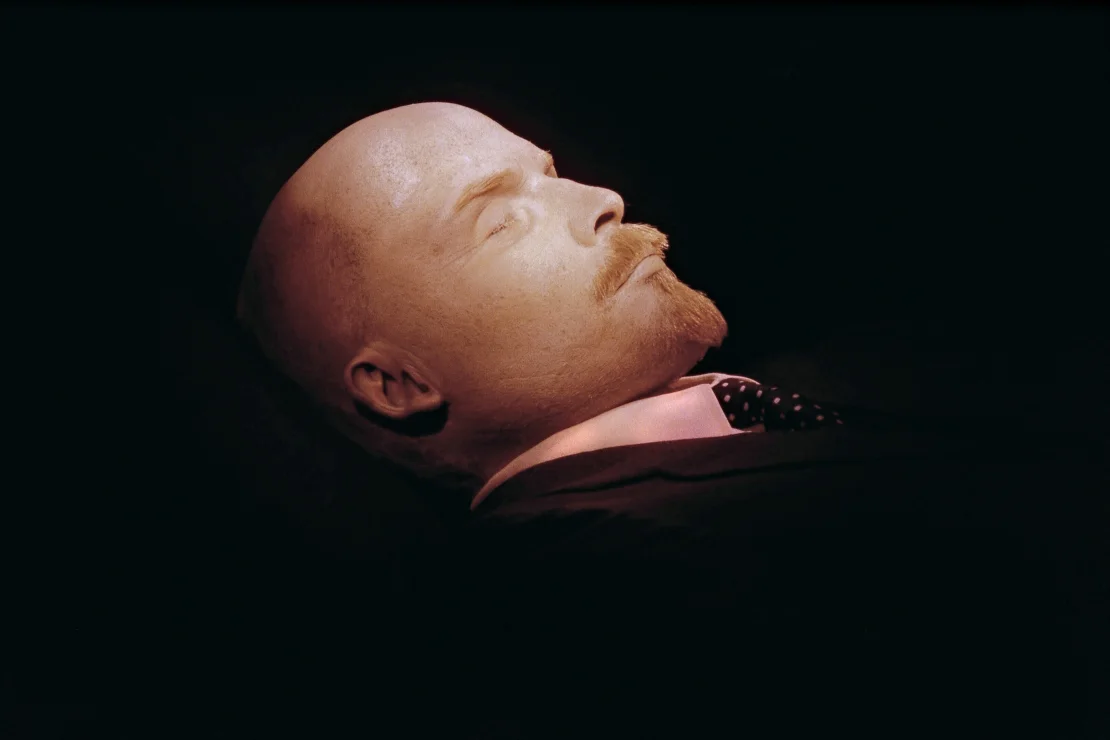
100 years ago--the death of Lenin

Taking photos of Lenin's body isn't permitted. This rare shot shows the revolutionary leader in October 1991. (Agence France-Presse/Getty Images)

On January 21, 1924, Vladimir Lenin, aka Nikolai Lenin, né Vladimir Ilyich Ulyanov, Chairman of the Council of People's Commissars of the Russian Soviet Federative Socialist Republic since 1917 and Chairman of the Council of People's Commissars of the Soviet Union since 1923, died in Gorki, Moscow Governate, at the age of 53, after a series of strokes. Mr. Lenin put the Communist philosophy of Karl Marx into action as the leader of the Bolshevik Revolution that seized power in November 1917, and plunged Russia and much of the world into decades of misery.

Mr. Lenin produced death and darkness, and his body remains in his tomb in Moscow. The Lord Jesus Christ, on the other hand, brings life and light (John 1:4-9, 8:12), and resurrected and left His tomb (Matthew 28, Mark 16, Luke 24, John 20), exactly as He predicted, and right on schedule (John 2:19-22). While many people have put their faith in the dead Mr. Lenin, I put my faith in the living Lord Jesus Christ, from whom we have eternal life (John 10:28).

Tuesday, 5 September 2023

More evidence of apostasy in the Church of England

Having a form of godliness, but denying the power thereof: from such turn away. II Timothy 3:5

As reported by Harriet Sherwood of The Guardian, July 29, 2023:

A Cornish church that banned women from applying to be its new vicar – despite once counting Dawn French, star of the TV comedy The Vicar of Dibley, among its flock – has reversed the decision under new management.

A newly elected governing council at St Fimbarrus church in the picturesque port of Fowey in Cornwall has told parishioners that a “new season” has begun.

In a statement, the parochial church council (PCC) said the previous regime’s decision to advertise for a male priest to fill its four-year-old vacancy was “misguided and unrepresentative” of the parish and the town.

The decision had been taken without consultation and many people in the parish expressed a “strong desire for change”.

The new PCC wanted the church “to be accessible to all … The PCC has voted unanimously to rescind the previous PCC’s resolution requiring male leadership … We are keen to recruit the best candidate to meet the needs of Fowey parish church, regardless of gender.”

Merisa MacInnes, a member of the PCC, said: “We are encouraged that numbers in the congregation have doubled in recent weeks and we are confident that the right person to be vicar will come forward in the coming months.”

In March, the previous PCC defended its decision to ban female applicants for the vacancy, insisting it was “not sexist”.

It said: “As an evangelical church we look to the Bible for all matters of faith. The Bible is very clear on equality – all are equal …. There is, however, debate over the roles women play within the church.”

It understood that its desire for a male priest-in-charge “can be difficult to understand looking from the outside into the church, but [we] would robustly defend that this position is not sexist, is widely established in the worldwide church, and accommodates all views in the membership of our church without exclusion”.

Andy Virr, the previous chair of the PCC and a local Conservative councillor, and two other PCC members stood down in May amid objections to the stance.

Under exemptions from the Equality Act, the Church of England permits local churches to reject female lead priests and the oversight of a female bishop.

Martine Oborne, the chair of Women and the Church (Watch), an organisation that campaigns for equality in the C of E, and a vicar in west London, said the Fowey decision was good news.

She added: “I think it’s time for church members to assert themselves and not defer to clergy who seek to limit women’s roles in the church.”

Fowey was not unique, she said. Some churches had taken decisions to reject female priests without proper consultation or transparency.

The fight for equality was not over despite 30 years having passed since women were allowed to become priests in the C of E.

“I think personally it’s time for the C of E to find a generous way to bring the arrangements that allow churches to go on limiting or not recognising women’s ministries to an end,” she said.
Wherefore God also gave them up to uncleanness through the lusts of their own hearts, to dishonour their own bodies between themselves:
Who changed the truth of God into a lie, and worshipped and served the creature more than the Creator, who is blessed for ever. Amen.
For this cause God gave them up unto vile affections: for even their women did change the natural use into that which is against nature:
And likewise also the men, leaving the natural use of the woman, burned in their lust one toward another; men with men working that which is unseemly, and receiving in themselves that recompence of their error which was meet.
And even as they did not like to retain God in their knowledge, God gave them over to a reprobate mind, to do those things which are not convenient;
Being filled with all unrighteousness, fornication, wickedness, covetousness, maliciousness; full of envy, murder, debate, deceit, malignity; whisperers,
Backbiters, haters of God, despiteful, proud, boasters, inventors of evil things, disobedient to parents,
Without understanding, covenantbreakers, without natural affection, implacable, unmerciful:
Who knowing the judgment of God, that they which commit such things are worthy of death, not only do the same, but have pleasure in them that do them.
Romans 1:24-32

As reported by Alexandra Topping in The Guardian, August 30, 2023 (links in original):

Most Church of England priests want the C of E to allow same-sex weddings and to drop its opposition to premarital and gay sex, according to a survey.

In a major shift in attitudes over the past decade, a survey of priests in England conducted by the Times found that more than half supported a change in law to allow clergy to conduct the marriage of gay couples, with 53.4% in favour compared with 36.5% against.

The last time Anglican priests in England were asked, in 2014, shortly after the legalisation of same-sex civil marriage, 51% said same-sex marriage was “wrong”, compared with 39% who approved.

Last year a row erupted at the first Lambeth conference (a meeting of Anglican bishops from around the world) in 14 years, with the archbishop of Canterbury faced sharp criticism for affirming a 1998 declaration that gay sex was a sin.

But the new poll found that 64.5% of priests in England backed an end to the teaching that “homosexual practice is incompatible with scripture”. It also found that 27.3% of priests supported an end to any celibacy requirement for gay people, while 37.2% said they were willing to accept sex between gay people in “committed” relationships such as civil partnerships or marriages, and around a third (29.7%) said the teaching should not change.

Andrew Foreshew-Cain, founder of the Campaign for Equal Marriage in the Church of England, said the survey showed there was “no excuse for further delay and equivocation” in welcoming gay people into the church.

“The clergy of the Church of England are kinder, more generous, and more welcoming towards LGBTI people than the current official position allows,” he said. “The C of E, and in particular our bishops, needs to stop wringing its hands over gay people and move forward towards blessings and, in time, to celebrating same-sex marriages in our parishes.”

The survey results were encouraging, said Robbie de Santos, director of communications at Stonewall. “We hope that church leaders reflect on these findings,” he said. “Too often, LGBTQ+ people of faith face discrimination and prejudice simply for being themselves.”

The survey also found that three-quarters of respondents thought Britain could no longer be described as a Christian country. Almost two-thirds (64.2%) said Britain could be called Christian “but only historically, not currently”.

In the 2021 census of England and Wales for the first time fewer than half of the population described themselves as Christian.

The Times poll found that two-thirds of priests in England thought attempts to stop the drop in church attendance would fail, with only 10.1% thinking it would be halted, and 10.5% believing that congregations would grow again. Average attendance for Church of England Sunday services in 2021 was 509,000, down from 1.2m in 1986.

Thursday, 31 August 2023

Archbishop of York whines about "oppressively patriarchal" Lord's Prayer

This provides more evidence that you can't be a satirist anymore--assuming that this item wasn't meant as satire. As reported by Harriet Sherwood in The Guardian, July 7, 2023 (links in original):

The archbishop of York has suggested that opening words of the Lord’s Prayer, recited by Christians all over the world for 2,000 years, may be “problematic” because of their patriarchal association.

In his opening address to a meeting of the Church of England’s ruling body, the General Synod, Stephen Cottrell dwelt on the words “Our Father”, the start of the prayer based on Matthew 6:9–13 and Luke 11:2–4 in the New Testament.

“I know the word ‘father’ is problematic for those whose experience of earthly fathers has been destructive and abusive, and for all of us who have laboured rather too much from an oppressively patriarchal grip on life,” he said.

His comment – a brief aside in a speech that focused on the need for unity – will divide members of the C of E, a body whose differences on issues of sexuality, identity and equality have been highly visible for years.

After Cottrell’s speech, Canon Dr Chris Sugden, chair of the conservative Anglican Mainstream group, pointed out that in the Bible Jesus urged people to pray to “our father”.

He said: “Is the archbishop of York saying Jesus was wrong, or that Jesus was not pastorally aware? It seems to be emblematic of the approach of some church leaders to take their cues from culture rather than scripture.”

Rev Christina Rees, who campaigned for female bishops, said Cottrell had “put his finger on an issue that’s a really live issue for Christians and has been for many years”.

She added: “The big question is, do we really believe that God believes that male human beings bear his image more fully and accurately than women? The answer is absolutely not.”

In February, the C of E said it would consider whether to stop referring to God as “he”, after priests asked to be allowed to use gender-neutral terms instead.

It agreed to launch a commission on gendered language, saying “Christians have recognised since ancient times that God is neither male nor female, yet the variety of ways of addressing and describing God found in scripture has not always been reflected in our worship”.
As reported in the Irish Times, February 8, 2023:

The Church of England is considering alternatives to referring to God as “he” after priests asked to be allowed to use gender-neutral terms instead.

The church said it would start a project in the spring to decide whether to propose changes or not.

Any potential alterations, which would mark a departure from traditional Jewish and Christian teachings dating back millennia, would have to be approved by synod, the church’s decision-making body.

Rev Dr Michael Ipgrave, Bishop of Lichfield and vice-chair of the liturgical commission responsible for the matter, said the church had been “exploring the use of gendered language in relation to God for several years”.

Sunday, 4 September 2022

Oldest extant printed pages are Hebrew liturgical poems from the mid-15th century

As reported by Adam Eliyahu Berkowitz of Israel365 News, August 17, 2022 (link, photos in original):

Hebrew piyutim printed in 1444 (Photo courtesy of Moshe Rosenfeld)

In March 2015, a Jerusalem book merchant took apart the cover of an old book and found inside it two old printed sheets in excellent condition. According to the merchant’s testimony, while he was drying the pages, an expert in ancient books entered his house and offered a large sum of money for the pages. The merchant did not agree and decided to pass the pages to the experts of the National Library of Israel for examination. He gave the pages to Yitzhak Yudlov, Institute for Hebrew Bibliography, located at the Jewish and National University Library in Jerusalem and a recognized expert.

The Jewish and National University Library kept possession of the pages for about a month and a half for the purposes of carrying out a thorough inspection. At the end of that period of time, Yudlov called the owner, who was abroad at the time. Yudlov told him that the pages were authentic and an especially rare find. The merchant arrived at the Jewish and National University Library, and Yitzhak Yudlov informed him that he thought these were sheets printed in Avignon, France in 1444-6, when an attempt was made to print a Hebrew book there. According to Yudlov, there are two documents located in the district archives in Avignon that relate details of this attempt at printing a Hebrew book.

On one of the sheets, a watermark depicting three hills inside two circles can be found. It is a very rare watermark, identified by Yudlov and Ephraim West as a being created in the first half of the 15th century.

In April 2015, Yitzhak Yudlov wrote his scholarly attestation regarding the sheets on a letterhead of the Institute for Hebrew Bibliography. In the attestation, he referred to the endeavor of printing a Hebrew book in 1444 that predated the printing of the Gutenberg Bible in 1455.

“In our opinion, these pages are remnants of that printing,” Yudlov wrote.

The merchant thought it would be good if Dr. Benjamin Richler, the Emeritus Director of the Institute of Microfilmed Hebrew Manuscripts (IMHM) in the Jewish and National University Library, would also write his opinion and translated the words of Yitzhak Yudlov. Yudlov had shown him the pages and even consulted with him on the matter. Dr. Benjamin Richler agreed to attach his description in English. Below is Dr. Richler’s letter:
(Photo courtesy Moshe Rosenfeld)

It is worth noting that Prof. Malachi Beit Aryeh was also one of the people with whom Yudlov consulted. Prof. Malachi, who was a former director of the Jewish and National University Library, recommended performing a beta-radiography of the watermark which allows getting a picture of the watermark unobscured by the printed text. He put the merchant in touch with Mr. Hominer, the operator of the machine. The merchant paid for the service, and after the merchant took two copies of the beta-radiography of the watermarks, Prof. Malachi Beit Aryeh was given an additional copy.

Prof. Beit Aryeh also asked the merchant to leave the sheets for him for several days, and he agreed, though the professor did not return the sheets for several weeks.

Later research discovered other examples of the watermark described as “three hills in two circles” in two manuscripts in the National Library in Vienna. The Three Hills watermark was used by a family of paper makers in Fabriano Italy. The other examples of the watermark were dated to 1418 and 1439. It is important to note that no examples of this watermark have been found to have been used anywhere after 1439. Other examples were found in Perpignan in the south of France from 1418, recorded by Briquet, as well as in Palermo in Sicily. Another example of the watermark was found at the Ambrosiana Library in Milan on a manuscript dating from 1431.

On August 6, 2018, the antique book dealer, Moshe Rossenfeld published an article signed by the late Yeshayahu Vinograd, concluding that according to all of the experts, the pages were from the oldest known mechanical printing press, produced in 1444-6.

The pages were subsequently sold and the buyer, who is the current owner, tried to sell it in the United States. He encountered difficulties as some people made anonymous claims that the pages were not authentic.

The pages were taken to the Forensic Institute in Jerusalem, under the management of Avner Rosengarten, a world-renowned expert in the field of forgery, and a former senior official in the Police Forensic Identification Laboratory. Rosengarten inspected the pages and determined that they were not forged.

Further research from archives dating to 1444 revealed that one Procopius Waldvogel, a silversmith by trade, arrived in Avignon at that period and borrowed money based on his invention of a mechanical printing press. His claim predates that of Johannes Gutenberg from Mainz, Germany who began printing on a mechanical press using movable type in 1450. It is widely recognized by historians that Gutenberg was not the first to do so and did not invent the process but he was, until now, believed to be the first European to do so.

According to the notarial archives in Avignon, Waldvogel and his partners produced “27 Hebrew letters from iron and steel” and also letters in Latin for the purposes of printing a Hebrew book. It is believed that the effort was unsuccessful for reasons that remain unclear but that some samples were produced. The book was to have been a collection of “piyutim”; Jewish liturgical poems sung during selichot, penitential prayers.

A document from the central archive in Avignon recorded the agreement between the partners leading to the preparation of metal moving Hebrew letters.

“This is neither a small affair nor a personal one,” Moshe Rosenfeld told Israel365. “Before us is a discovery that establishes a connection between Hebrew and the invention of the printing press.”
Agreement to print Hebrew piyutim 1444 (Photo courtesy Moshe Rosenfeld)

Saturday, 9 July 2022

Documents of Portuguese Inquisition digitized by National Library of Israel

As reported by Jewish Press Desk, July 8, 2022 (link, photos in original):

Nearly 500 years after the Portuguese Inquisition began, rare documentation of its proceedings and victims has been discovered in the Central Archives for the History of the Jewish People at Jerusalem’s National Library of Israel and digitized for the first time. The 60-page manuscript, penned in the 18th century, documents the first 130 years of the Portuguese Inquisition tribunal’s activities, mainly in Lisbon. It includes detailed information about trials conducted by inquisitors against newly converted Christians accused of continuing to secretly practice Judaism.

The document, written in Portuguese, is known as “Memoria de todos os autos da fé que setem feito em Lisboa” (“An Accounting of All the Autos-da-Fé that Took Place in Lisbon”), and it includes information about autos-da-fé, public spectacles in which the sentences of Inquisition victims were read and executed by the authorities. Most of the information pertains to such ceremonies in Lisbon between the years 1540–1669, with a brief mention of trials in Tomar. The number of victims at each auto-da-fé, the trial dates, and locations, as well as the names of the priests who delivered sermons appear in the document.

The manuscript also contains the number of people burned at the stake. Among those prosecuted were “New Christians” accused of “Judaizing,” yet not all of the defendants mentioned in the document were Jews. “Old Christians”’ (defendants who came from families without any Jewish background) were also convicted of sodomy, bigamy, possession of forbidden books, and sacrilege.

In 1536, the Catholic Church initiated the Inquisition in Portugal following a mass influx into the country of Anusim (Jews who had been forced to convert to Christianity) fleeing the Spanish Inquisition. The Portuguese Inquisition included particularly cruel punishments often carried out before large crowds gathered to watch autos-da-fé. Trials ceased after about 250 years, although Portugal’s Inquisition was not officially abolished until 1821.

Over the centuries, most of the Jews who converted to Christianity in Portugal abandoned any sign of their Jewish roots, yet some continued to keep some form of Jewish observance in private. For example, some would secretly celebrate Yom Kippur and Passover belatedly to confuse the authorities, or light Sabbath candles inside pottery vessels to conceal the flames. Children under the age of 12 were not permitted to attend these clandestine religious ceremonies to keep them from revealing secrets that might betray their families.

According to Dr. Yochai Ben-Ghedalia, Director of the Central Archives for the History of the Jewish People at the National Library of Israel, “These discoveries shed light on the realities of a complex chapter in Jewish history, as well as on the Inquisition’s obsession with revealing any form of deviance, including traces of Jewish tradition. We hope the newly discovered document will help scholars better investigate this fascinating and difficult period of history.”
A page from the manuscript describing auto-da-fé trials in Lisbon. Courtesy of National Library of Israel

Title page of the auto-da-fé sermon of the priest Phillippe Moreira, printed in 1646. Courtesy of National Library of Israel

Monday, 24 January 2022

Crosses to disappear from Switzerland's largest cemetery because they offend members of non-Christian religions

In 1991, when Appenzell Innerrhoden became the last Swiss canton to allow women to vote, renowned cultural observer Christopher Milner said that the move presaged further cultural decline. He was right, as reported by Robert Spencer in Jihad Watch, January 24, 2022 (link in original):

People of “other religions” have been in Switzerland since time immemorial, with no problem. There has, however, recently been an influx of people who believe that the cross is an insult to the power of Allah (cf. Qur’an 4:171). Many of these people are intransigent to the point of violence. Are Swiss authorities trying to appease them?

“Basel bickers over Christian symbols. Crosses to disappear from the largest Swiss cemetery,” translated from “Basler zoffen um christliche Symbole. Kreuze sollen aus dem grössten Schweizer Friedhof verschwinden,” by Rene Hildbrand, Die Weltwoche, January 20, 2022:

There has been a dispute about the cross for years. Time and again, the symbol causes controversy, even though Christians see it as a sign of reconciliation, tolerance and love of one’s neighbor.

There is currently a dispute about this in Riehen, the second largest town in northern Switzerland, with a proportion of foreigners of around 28 per cent. Switzerland’s largest cemetery is located at Hörnli in Riehen.

According to the administration of the central cemetery, more and more people of other faiths feel disturbed by crosses, Christian murals and even chapel names during funerals and ceremonies. The Catholic Church of Basel-Stadt is even showing itself to be compliant.

The spokesperson for the church council told the newspaper Basler Zeitung: “If there are people who consider Christian symbols disturbing in the process, it should be possible to cover them up or carry them out.”

The Protestant Reformed of Basel see things differently. Their church does not need any religious symbols. Nevertheless, the president thinks: “Those to whom these symbols are important should be able to experience and see them.”

There is strong resistance to the displacement of Christian symbols. The SVP party Riehen is fighting to preserve the cemetery culture. In a petition, it calls on parliament and the government council to stop such plans.

The representatives of the Basel Catholics complain: “If the basic furnishings of a chapel are to be without Christian symbols, this is a worrying trend.”

In 2018, the newly elected Bavarian Prime Minister Markus Söder had a cross hung in his Munich state chancellery in one of his first official acts. Ten years earlier, when he was secretary-general of the Christian Social Union (CSU), Söder had made a mess of things with a single sentence: “Crucifixes belong in classrooms, not headscarves.”
HT: Dracul Van Helsing

Wednesday, 30 June 2021

"Christians," Muslims, and Jews open House of One in Berlin

Can two walk together, except they be agreed? Amos 3:3

The Antichrist's agenda continues to advance on schedule; as reported by Adam Eliyahu Berkowitz of Israel365 News, June 29, 2021 (links in original):

Last month, a rabbi, imam, and priest laid the cornerstone for the House of One, a multi-faith prayer space built on top of the ruins of the 13th century Petrikirche (St. Peter’s Church) in Berlin. The original church was damaged in WWII and torn down by the Communist regime in 1964. During the ceremony, a Jewish prayer book, a piece of cloth from the Kaaba in Mecca, a miniature of the Coventry Cross of Nails (symbol of peace and reconciliation), and a copy of the document naming the provost of what was then St. Peter’s Church as the first citizen of Berlin in 1237 were placed in a copper capsule and enclosed in the cornerstone.

Ten years of planning went into the project and it is estimated that construction will require €47 million and be completed in four years. The final building will include a mosque, synagogue, and a church linked to a central meeting space. The central hall will also be used for gatherings of other faiths and atheists.

“The idea is pretty simple,” said Roland Stolte, a Christian theologian who helped start the project. “We wanted to build a house of prayer and learning, where these three religions could co-exist while each retaining their own identity.”

The three religions will be represented by Imam Kadir Sanci, Rabbi Andreas Nachama, and Father Gregor Hohberg, a Protestant priest. Rabbi Nachama, a rabbi organizing the project, said that Christians, Muslims, and Jews would worship separately, but would visit each other for religious holidays, commemorations, and celebrations.

Roland Stolte, a Christian theologian who helped start the project, noted that there were concerns from the public.

“In the first few years there were some fears that we were mixing religions or trying to create a new religion, Stolte told the Guardian.”

Despite the fears, the concept of universal prayer has its roots in the Bible and is explicitly described by the Prophet Zechariah:

And Hashem shall be king over all the earth; in that day there shall be one Hashem with one name. Zechariah 14:9

This concept of multiple religions worshipping God together is further described in prophecy as the basis for the Third Temple in Jerusalem:

I will bring them to My sacred mount And let them rejoice in My house of prayer. Their burnt offerings and sacrifices Shall be welcome on My mizbayach; For My House shall be called A house of prayer for all peoples.” Isaiah 56:7

This vision is shared by Rabbi Alon Goshen-Gottstein, founder and director of the Elijah Interfaith Institute. Rabbi Goshen-Gottstein is planning a similar project in Jerusalem named the Center for HOPE (an acronym for ‘House of Prayer and Education’). He approved of the project while noting that Jerusalem has a special role to play in this Biblical vision.

“Berlin may have some negative historical connotations for some people but as a city, it symbolizes reconciliation and becoming whole again,” the rabbi said.

“The Biblical prophecy of God’s name being one does not mean everyone converting to one religion,” the rabbi said. “It will be more like each religion going through an internal conversion that will bring us all together to serve God.”

Rabbi Goshen-Gottstein sees prayer as playing a vital role in this process.

“We want to change the image of religion from one of competition to one that brings us together with all people turning to one God,” Rabbi Goshen-Gottstein said. “It is a very simple thing. Each religion prays in the presence of the other in parallel prayer spaces, affirming the presence of the other, indicating a willingness to live together in peace.”
As reported by the English newspaper The Guardian, February 21, 2021 (link in original):

On the site of a church torn down by East Germany’s communist rulers, a new place of worship is set to rise that will bring Christians, Jews and Muslims under one roof – and it has already been dubbed a “churmosquagogue”.

The foundation stone of the House of One in Berlin will be laid at a ceremony on 27 May, marking the end of 10 years of planning and the beginning of an estimated four years of construction, and symbolising a new venture in interfaith cooperation and dialogue. The €47m building, designed by Berlin architects Kuehn Malvezzi, will incorporate a church, a mosque and a synagogue linked to a central meeting space. People of other faiths and denominations, and those of no faith, will be invited to events and discussions in the large hall.

“The idea is pretty simple,” said Roland Stolte, a Christian theologian who helped start the project. “We wanted to build a house of prayer and learning, where these three religions could co-exist while each retaining their own identity.”

Andreas Nachama, a rabbi who is turning the vision into reality in partnership with a pastor and imam, said: “There are many different ways to God, and each is a good way.” In the House of One, Christians, Muslims and Jews would worship separately, but would visit each other for religious holidays, commemorations and celebrations, he added.

“It is more than a symbol. It is the start of a new era where we show there is no hate between us.”

The House of One will be built on the site of St Peter’s church in Petriplatz, which was damaged during the second world war and demolished in 1964 by the GDR authorities. When the foundations of the church were uncovered more than a decade ago, consideration was given to a memorial or a new church on the site. “But we wanted to create a new kind of sacred building that mirrors Berlin today,” said Stolte. “The initiators are acting as placeholders. This is not a club for monotheistic religions – we want others to join us.”

The federal government and the state of Berlin have between them contributed €30m to the cost of the project, with another €9m coming from donations and fundraising. A new drive for contributions, launched in December, is expected to fill the gap of nearly €8m.

The project has been generally supported by faith communities and the public, said Stolte, although “in the first few years there were some fears that we were mixing religions or trying to create a new religion”.

The inclusion in the planning of people of no faith was a very important aspect of the House of One project, he said. “East Berlin is a very secular place. Religious institutions have to find new language and ways to be relevant, and to make connections.”
The leaders of the House of One aren't even united on who God is, and they're deceived if they think this edifice is anything other than an abomination to the God of the Bible. The rabbis quoted in the above articles are especially deceived; like those in the time of Jesus, they don't know the scriptures. The complete text of Isaiah 56:7 reads:

Even them will I bring to my holy mountain, and make them joyful in my house of prayer: their burnt offerings and their sacrifices shall be accepted upon mine altar; for mine house shall be called an house of prayer for all people.

The phrase "holy mountain," which appears seven times in the book of Isaiah and several times elsewhere in the Old Testament, always refers to Jerusalem. This is particularly clear in Isaiah 66:20:

And they shall bring all your brethren for an offering unto the Lord out of all nations upon horses, and in chariots, and in litters, and upon mules, and upon swift beasts, to my holy mountain Jerusalem, saith the Lord, as the children of Israel bring an offering in a clean vessel into the house of the Lord.

Thursday, 31 December 2020

Greek Orthodox Patriarch of Constantinople blasts Moscow Patriarchate

A recent backlog item; as reported by Russian Faith, August 13, 2020:

Patriarch Bartholomew is a citizen of Turkey. He leads all Greek Orthodox churches in the United States of America, as well as the handful of Christians remaining in Istanbul, Turkey.
As reported by Tatyana Chaika of the Union of Orthodox Journalists, February 6, 2020 (links in original):

The Patriarchate of Constantinople is revered by spiritual children across the world, still there are the ungrateful who do not value its gifts, said Pat. Bartholomew.

On February 5, 2020, Patriarch Bartholomew of Constantinople met with a group of clergy, professors, and students from Armenia, Romfea reports.

In his speech, Patriarch Bartholomew noted, “Constantinople is the spiritual womb of our nation, the ark in which everything that is sacred to our nation is preserved.”

He emphasized, “We consider this a special blessing and privilege from God, because we were granted this spirituality, this blessing to continue the tradition of many centuries, according to which our patriarchy is founded and worshiped not only by our own spiritual children but also by others, by the entire Orthodoxy, by the Christian world, by the whole mankind.”

According to him, the Patriarchate of Constantinople "is of particular value to us, the Greek Orthodox, as well as to all Orthodox faithful", while "the new Orthodox Autocephalous Churches, which were born from here, found healing. Unfortunately, there are unborn children and there are ungrateful ones who do not appreciate what they received from Constantinople – their Baptism, culture, the Cyrillic alphabet or otherwise.”

“The Church of Constantinople sacrificed itself, gave itself to others and, as grateful people tell us, the Mother Church, because She is the mother and still loves them all,” added the Phanar leader.

As reported by the UOJ, earlier Metropolitan Maxim (Vgenopoulos) of Silivria assured the head of Phanar that the Holy Theotokos is on his side “in the struggle of the Ecumenical Throne with its opponents, including the ungrateful Moscow Church.”
As reported by Yekaterina Filatova of the Union of Orthodox Journalists, August 11, 2020 (links in original):

Pat. Bartholomew spoke explicitly of visible and invisible enemies of the Mother Church, stressing that "we have ungrateful children, but we embrace them all with love."

The Head of the Phanar, Patriarch Bartholomew, called the Moscow Patriarchate, which broke off Eucharistic communion with Constantinople after the latter had granted autocephaly to Ukrainian schismatics, enemies and "ungrateful children." It was reported by the Orthodox Times.

Thus, according to the resource, Patriarch Bartholomew made a direct reference to both the visible and invisible enemies of the Mother Church of Constantinople and about the ungrateful children who benefited from the Church of Constantinople and yet “lifted heels of contempt against their benefactor.”

“We have enemies, it is not that we do not have, and in fact many,” the publication cites the patriarch. The enemies are not only who are declared, whom we know to be our enemies, but they are also the beneficiaries of the Ecumenical Patriarchate, its descendants, its spiritual descendants. So, we also have ungrateful children, but we embrace them all with love.”

The Phanar head recalled that on the occasion of the granting of Autocephaly to Ukraine, the Church of Russia “interrupted the Eucharistic communion and ceased to commemorate the Ecumenical Patriarchate.”

“However, the Ecumenical Patriarchate did not interrupt communion with the Church of Russia. Even this morning, while officiating at St. Panteleimon in Galatas, we commemorated Patriarch Cyril of Moscow,” the Ecumenical Patriarch stressed.

“We continue to embrace everyone, enemies and friends, with our love and our prayer and our understanding,” Patriarch Bartholomew upheld.

He made special mention of the continuous interest of the Mother Church for her direct flock in Constantinople, and for her care for every believer, “regardless of his/her national origin, as she takes care of the worship needs and the spiritual support of the Romanian, Ukrainian, Russian, Moldavian, Gagauz and, more recently, of the Georgian Orthodox Christians, who came as immigrants and now live permanently in Constantinople, being a flock of the Mother Church.”

As reported by the UOJ, earlier Patriarch Bartholomew claimed that the Patriarchate of Constantinople "is of particular value to us, the Greek Orthodox, as well as to all Orthodox faithful", while "the new Orthodox Autocephalous Churches, which were born from here, found healing. Unfortunately, there are unborn children and there are ungrateful ones, who do not appreciate what they received from Constantinople – their Baptism, culture, the Cyrillic alphabet or otherwise.”
As reported by the Union of Orthodox Journalists, August 11, 2020:

The Ecumenical Patriarch made another direct reference to both the visible and invisible enemies of the Mother Church. Ecumenical Patriarch Bartholomew spoke about ungrateful children who benefited from the Church of Constantinople and yet, as he stressed, “lifted heels of contempt against their benefactor.”

“We have enemies, it is not that we do not have, and in fact many…. The enemies are not only who are declare, whom we know to be our enemies, but they are also the beneficiaries of the Ecumenical Patriarchate, its descendants, its spiritual descendants. “So, we also have ungrateful children, but we embrace them all with love.”

This direct shot, of course, was aimed at the Church of Russia, which on the occasion of the granting of Autocephaly to Ukraine, interrupted the Eucharistic communion and ceased to commemorate the Ecumenical Patriarchate.

“You know that on the occasion of the Autocephaly of the Church of Ukraine the Moscow Patriarchate interrupted the communion with the Ecumenical Patriarchate, that is, with its Mother Church. However, the Ecumenical Patriarchate did not interrupted communion with the Church of Russia. “Even this morning, while officiating at St. Panteleimon in Galatas, we commemorated Patriarch Cyril of Moscow,” the Ecumenical Patriarch stressed, adding that “We continue to embrace everyone, enemies and friends, with our love and our prayer and our understanding.”

Ecumenical Patriarch Bartholomew made special mention of the continuous interest of the Mother Church for her direct flock in Constantinople, and for her care for every believer, regardless of his/her national origin, as she takes care of the worship needs and the spiritual support of the Romanian, Ukrainian, Russian, Moldavian, Gagauz and, more recently, of the Georgian Orthodox Christians, who came as immigrants and now live permanently in Constantinople, being a flock of the Mother Church.