Wednesday, 13 July 2016

Anglican Church of Canada votes in favour of sodomite and lesbian marriage--after changing the vote count

Wherefore God also gave them up to uncleanness through the lusts of their own hearts, to dishonour their own bodies between themselves:
Who changed the truth of God into a lie, and worshipped and served the creature more than the Creator, who is blessed for ever. Amen.
For this cause God gave them up unto vile affections: for even their women did change the natural use into that which is against nature:
And likewise also the men, leaving the natural use of the woman, burned in their lust one toward another; men with men working that which is unseemly, and receiving in themselves that recompence of their error which was meet.
And even as they did not like to retain God in their knowledge, God gave them over to a reprobate mind, to do those things which are not convenient;
Being filled with all unrighteousness, fornication, wickedness, covetousness, maliciousness; full of envy, murder, debate, deceit, malignity; whisperers,
Backbiters, haters of God, despiteful, proud, boasters, inventors of evil things, disobedient to parents,
Without understanding, covenantbreakers, without natural affection, implacable, unmerciful:
Who knowing the judgment of God, that they which commit such things are worthy of death, not only do the same, but have pleasure in them that do them.
Romans 1:24-32

How many legs does a dog have if you call the tail a leg?
Four. Calling a tail a leg doesn’t make it a leg.
Variation of a quote usually attributed to Abraham Lincoln, although previously in circulation

More evidence that the Anglican Church of Canada, like the country itself, is a rotting corpse. As reported by Colin Perkel of The Canadian Press, July 12, 2016, updated July 13, 2016:

Questions about the integrity of the voting process in which Anglicans narrowly rejected a resolution to allow same-sex marriage emerged Tuesday, and led to a stunning reversal of the result.

Some members stood up to say their votes had not been recorded during voting late Monday, when passage of the resolution failed by a single vote.

"That is an issue of concern," said Archbishop Fred Hiltz, primate of the church. "We cannot leave this synod with this kind of confusion."

To pass, the resolution required two-thirds of each of three orders — lay, clergy and bishops. The clergy failed to reach that threshold by one vote that was apparently not counted because it was counted in the lay order.

The error was discovered after delegates requested a detailed hard copy of the electronic voting records.

Hiltz then declared the resolution in favour of same-sex marriage had passed.

"That is our reality," Hiltz told stunned delegates. "That the motion is in fact carried in all three orders."

"Same-sex marriage. In the church. In my lifetime," tweeted Lauren Bryant-Monk, of Halifax. "I'm so proud to be Anglican today."

The resolution still needs affirmation by the next synod in 2019 before it becomes church law.

On Tuesday, several bishops said they planned to go ahead with same-sex marriages regardless. They leaned on a statement from the chancellor of the general synod, who said the current marriage canon does not specifically ban solemnizing same-sex marriages.

Bishop John Chapman of Ottawa said he would proceed immediately with such unions in his diocese, although no one would be forced to officiate at such a ceremony.

"It is time my friends," Chapman said. "It is past time."

"Take heart," said Rev. Melissa Skelton, bishop of New Westminster, B.C. "This is not over."

It was indeed not over as questions swirled Tuesday about the vote itself. And then the recount changed the church's position.

"This is the best news I have heard in a long time!" tweeted Marlene Wells, from Nova Scotia. "My weepy day has ended; let's celebrate."

"I'm flabbergasted, honestly," said Eliot Waddingham, 24, a transgender person from Ottawa, who had earlier spoken of being brokenhearted by the initial vote. "I can't believe this."

Not everyone, however, was pleased.

Northern representatives complained about feeling bullied, while Larry Robertson, Yukon bishop, left the floor earlier Tuesday in protest, saying he was angered at what he called the adversarial process.

Hiltz acknowledged the "deep differences" that exist around the issue.

"We sometimes find ourselves very much being pulled apart," he told delegates on Tuesday. "Our work on this matter is not done. It's not sufficient for us to simply say we dealt with the resolution."

He promised a pastoral letter in response by Thursday.

While some fretted the issue would cause a rupture and spark an exodus of members, others said they believed the church would hold together despite the bruising nature of the debate in which some used terms such as "abomination" in reference to the LGBT community.

"It was painful process, it was a difficult process, but at the end of the day, we've ended up moving forward," British Columbia Bishop Logan McMenamie said.

Toronto Archbishop Colin Johnson called same-sex marriages — at the discretion of the bishop and with agreement of local clergy — a logical step in the evolution of the church.

About 1.6 million Canadians identify themselves as Anglican, according to Statistics Canada, and church figures indicate more than 500,000 of them are part of about 2,800 congregations across the country.
As reported by CBC News, July 12, 2016 (bold in original):

A Winnipeg Anglican priest's disappointment with her peers for voting against changing church law to allow same-sex marriages turned into surprise and joy when a voting error led to the result being reversed.

Rev. Allison Courey, an Anglican Church of Canada priest who is in a same-sex marriage, was in Toronto for the church's triennial conference, which wrapped up Tuesday afternoon. She said she went from one emotional extreme to the other in less than 24 hours.

"[It was] like saying God doesn't want you; that's pretty heavy. And we're saying today that, 'Yes, God does want you and welcomes you and made you how you are.' So that's pretty exciting," she said in an interview.

At first, the church announced that on Monday, clergy at the General Synod, as the conference is called, voted 66.23 per cent in favour of a resolution to allow the marriage of same-sex couples in the church, a result that fell just short of the two-thirds majority needed to pass the resolution.

But then, the church announced on Tuesday afternoon that a voting error was detected and the resolution has actually passed.

Courey said she was riding the subway in Toronto, where she normally would not have cellphone reception, when she received the news via text message.

"A text popped up between subway trains or something or other … and it just said, 'It passed' with like 20 exclamation marks," she said. "I was like, 'What? Is this old? Is someone confused?'"

She said she later learned about the voting error.

The resolution needed two-thirds approval from each of three groups — clergy, bishops and other delegates, or lay people. Bishops and lay people had voted more than two-thirds in favour.

The clergy failed to reach that threshold by one vote that was apparently not counted because it was counted in the lay order. The error was discovered after delegates requested a detailed hard copy of the electronic voting records.

"They had released the minutes, which actually recorded the names, because we voted electronically and our electronic votes were attached to our names. And they published those names, and so people were able to look at their names and say whether or not their vote was recorded correctly," Courey said.

"My understanding was just one or two were incorrect, and that was enough to push it back."

'I was hurting'

Courey is an Anglican priest but was married in the United Church, where same-sex marriages are allowed.

Before the voting error was declared, Courey expressed frustration and "deep sadness" with Monday's failed vote and the bitter and divisive debate leading up to it.

"I was called an abomination, which was unsavoury," she said of speeches before the vote.

"I was hurting, but I also was aware that it was kind of an institution that was condemning me and not so much a person. Being rejected by my own friends and family has been a lot harder than being rejected by an institution."

With the result changed, Courey said she will now seek to have her marriage recognized within her own church.

"I've already been married in the United Church so I'm not going to be married again, obviously. But to have it recognized officially in the [Anglican] church, for sure," she said.

"I feel like, well, I am being a little more public about being married, too."
'I think people were stunned'

The vote change also surprised Bishop Donald Phillips and Dean Paul Johnson of the Diocese of Rupert's Land, which covers part of Manitoba and northwestern Ontario.

Phillips and Johnson were both in the room when the announcement was made, and they said the mood was quiet.

"There was certainly no kind of rejoicing or hand-clapping or anything like that. I think people were stunned," Phillips said.

Said Johnson, "I think the vote was so close both times that there simply can be no rejoicing. I mean, it's clear that in terms of the vote, we're very split and we need to reach out and care for each other."

Phillips added that the close vote "would cause great heartache and pain and I think suspicion, perhaps, amongst those who thought that the vote had in fact failed and now it was turned around.

"So on the one hand, [I'm] relieved that the motion passed, but on the other hand still feeling pretty heavy-hearted for the rest of the Synod," he said.
Another item reported by CBC News, July 12, 2016:

...Hamilton community leader Deirdre Pike praised the decision. "The darkness has turned into light — it's the perfect analogy from the Christian point of view," she said.

Pike, who has been a Catholic since age 16, married Renee Wetselaar in 2013 at Christ's Church Cathedral, an Anglican church on James Street North.

"This is the direction society has to go in general," she said.

On Tuesday, several bishops said they planned to go ahead with same-sex marriages regardless of the vote. In a series of statements, they expressed dismay at the defeat, before the vote was recounted.

The Anglican Diocese of Niagara — which includes Hamilton — said earlier in the day it was breaking with the official position of the national church and would follow an "inclusive" position on same-sex marriage.

With the switch at the national level, now that won't be necessary.

"For the Anglican church of Canada to be a leader in this direction ... it's a really great opportunity for people in the LGBTQ community who are people of faith to celebrate," Pike said.

To pass, the church resolution required two-thirds of each of three orders — lay, clergy and bishops. The clergy failed to reach that threshold by one vote that was apparently not counted because it was counted in the lay order.

The error was discovered after delegates requested a detailed hard copy of the electronic voting records.

The resolution still needs affirmation by the next synod in 2019 before it becomes church law.

While some fretted that the failure of the resolution would cause a rupture in the church and spark an exodus of members, others said they believed the church would hold together despite the bruising nature of the debate in which some used terms such as "abomination" in reference to the LBGTQ community.

Pike told CBC News that the people who voted no to the vote will no doubt weigh on the church. "They still have to face the fact that some of the people in the pews of these parishes will be walking away," she said.

"But for right now, I'm just happily astounded."
It's useful to look at articles on this development from earlier in the week, when it looked as though the result would be different. First, as reported by Colin Perkel of The Canadian Press, July 7, 2016 (bold in original):

The Anglican Church, the third-largest in Canada, is set to grapple with whether to allow same-sex couples to marry in a divisive debate that has already stirred strong emotion and seems destined to come down on the status quo ban.

The issue, in the form of a resolution that recommends giving formal church blessing to same-sex marriage, is to be voted on at the church's six-day triennial General Synod that opens Thursday north of Toronto.

To pass, the resolution requires two-thirds of the hundreds of delegates to vote yes in each of three orders — lay, clergy and bishops. However, the latter group has already indicated the threshold likely won't be met, saying in February that "some of us talked of being mortified and devastated by this realization."

In response, Ottawa Bishop John Chapman apologized to members of the gay community and to those feeling "discouraged, angry, betrayed and hurt."

Indigenous bishops have also said they would resist having "Western cultural approaches" imposed on them, arguing aboriginal voices had been lost in the "very strained" debate.

Integrity Canada, which speaks for gay, lesbian and bisexual Anglicans, has called on the church to "repent of all activity" that diminishes or hurts their community.

Archbishop Fred Hiltz, the head of the Canadian church, would not comment Wednesday. However, he has previously acknowledged the divisive nature of the discussion, fretting that some clergy could opt for "civil disobedience" if the resolution fails, while some members would desert the church whatever the outcome.

Defections were also on the mind of Logan McMenamie, bishop of British Columbia.

"It saddens me," McMenamie said in an interview Wednesday. "I don't think walking away from one another would solve anything."

At the same time, he said, some bishops formerly opposed to the resolution may have changed their minds amid the feedback that followed their February statement.

Vote is culmination of three years of work

The pending vote — likely Monday — is the culmination of three years of work that began when the last General Synod, the church's legislative body, asked a panel to come up with the draft motion. The gathering directed a marriage commission to consult widely within the church and among partners, and include a "conscience clause" spelling out that no one would be compelled to take part in a same-sex marriage against their beliefs.

The commission was also required to show how same-gender marriage would jibe with the church's 1893 founding statement — the Solemn Declaration — and be defensible on both biblical and theological grounds.

"The experience of same-sex committed partnerships in our midst, clearly manifesting God's blessing and the fruit of the Spirit, are a powerful indication that God's view of marriage may be more inclusive than ours," the resolution's authors state in their report called the "Holy Estate".

"However, it is finally a decision that the church will have to reach, not by arguments alone, but by prayerful discernment of the movement of the Spirit in our midst."

The report, which included input from 223 church members, also offers insight into some of the passion the topic arouses.

"It shouldn't be up to me or any other layperson to decide what is and what isn't God's revealed truth," a person identified as J. Brown, of New Westminster, B.C., told the commission. "The fact that I have to write this letter to defend one of the most fundamental doctrines of the church as made clear by scripture, tradition and reason is disheartening to say the least."

However, the report notes the church has made controversial changes in the past, including allowing marriage after divorce and women into the priesthood.

Anglican clergy already have the ability to refuse to officiate a wedding, and the report notes the church would likely have a strong defence against any civil or human rights litigation against officials who refuse to authorize same-sex marriages...
As reported by The Canadian Press, July 11, 2016 (bold in original):

A passionate debate on whether the Anglican Church of Canada should bless same-sex marriages came to a head Monday when delegates to their triennial conference voted against authorizing such unions.

More than 200 delegates to the church's six-day General Synod just north of Toronto rejected the resolution after speakers lined up to make their points, with most speaking in favour of the resolution.

In order to pass, the resolution required two-thirds support from each of three orders — lay, clergy and bishops.

The bishops voted 68.42 per cent in favour of the resolution, and the lay delegates voted 72.22 per cent in favour. However, the clergy voted 66.23 per cent, just missing the percentage needed.

The vote by General Synod 2016, which followed complaints of bullying and intimidation, sparked bitter disappointment among some members.

"It is breaking my heart that there are people who see gay marriage as a separation from God and from love," said Eliot Waddingham, 24, a transgender person from Ottawa who was an observer.

The vote, she worried, was tantamount to a "death sentence" for the church.

Archbishop Colin Johnson of Toronto cited his own decades of marriage in arguing in support of the motion.

"I want my gay and lesbian colleagues to have the same joy," Johnson said. "I believe it's the right thing to do."

The Rev. Allison Courey of Manitoba's Rupert's Land diocese said she loved to study the Bible throughout her life and she did not choose to be a lesbian.

She made an impassioned plea in support of the resolution, saying "many of us" have committed suicide because "death was better than being rejected by God."

However, other speakers urged delegates to reject the idea of same-sex marriage, with one saying it would cause "ghettoes of resentment" if allowed, while several aboriginal delegates denounced the resolution as condoning an "abomination" and disobedience of God.

"God did not create another Adam," said one young speaker. "He created a woman."

The vote was the culmination of three years of work that began when the last General Synod, the church's legislative body, asked a panel to come up with the draft motion. Even if it had passed, the decision would still have needed to be affirmed by the next General Synod in 2019, which could have made its own amendments.

Before the main vote, delegates voted to amend what would have been an opt-out clause for those opposed to same-sex marriage on principle to instead give bishops authority to allow such marriages in each diocese.

The complaints about bullying emerged during weekend discussions on the resolution in smaller working groups. In remarks ahead of the vote, Archbishop Fred Hiltz urged respectful discussions on a topic that has proven bitterly divisive.

"Some members of our synod are deeply hurt. Some of them are deeply offended. Some are feeling unsafe to continue to speak lest they be reprimanded," Hiltz told the gathering. "This kind of behaviour is not appropriate. It's unacceptable."

Indigenous bishops resisting change

The bishops' group had indicated in February that the threshold would likely not be met. Indigenous bishops had also said they would resist having "Western cultural approaches" imposed on them.

The electronic voting was essentially conducted secretly at the request of delegates as a privacy measure.

Before the vote, Hiltz told delegates their decision would have consequences for the country's third-largest church.

"There may be people who feel compelled to leave our church," Hiltz said. "That's the gravity and the weight of the situation that is before us."

Another delegate, Stephen Warner, said he wasn't surprised to hear the complaints of intimidation given that every member was given a "bully pulpit" during the small group chats as the issue comes to a head.

"This is my seventh synod overall over five years," said Warner, 20, of Toronto. "I've never seen a more tense and dour environment..."
As reported by Jamie Long of CBC News, July 12, 2016 (bold, link in original):

The heads of the Anglican Diocese of Ottawa and the Anglican Diocese of Montreal have announced they are ready to perform same-sex marriages, one day after the church's national clergy voted narrowly against the same reform.

More than 200 delegates gathered just north of Toronto for a six-day General Synod of the Anglican Church of Canada, where delegates rejected by a single vote a resolution to allow same-sex marriage.

"We recommend the greatest pastoral response possible, allowing same-sex couples to be fully included in the life of our church with full and equal access to its liturgies and pastoral offices," the resolution read.

To pass, it needed two-thirds support from each of three orders — lay, clergy and bishops. Clergy voted 66.23 per cent, just missing the mark, while bishops (68.42 per cent) and lay delegates (72.22 per cent) approved the motion.

Ottawa bishop 'extremely disappointed'

After the vote, Bishop John H. Chapman released a statement to the Anglican Diocese of Ottawa, saying he was "extremely disappointed" by the vote.

"It is time my friends. It is past time," Chapman wrote, supporting a move to allow same-sex marriages in the Anglican Church.

"It is my intention … to proceed with same-sex marriages immediately within the Diocese of Ottawa. While no clergy will be required to officiate at a same-sex marriage, those willing may do so with my permission."

In his decision, Chapman also referred to Canada's Civil Marriage Act, which received Royal Assent in 2005. It allowed for same-sex marriage.

Mary Irwin-Gibson, the bishop of the Anglican Diocese of Montreal, also said the vote was "really disappointing for many, many people," but that her diocese is ready to perform same-sex marriages.

"I think our diocese in particular wants to affirm all members of our church, and particularly the LGBTQ people who want to be married in the church and waiting and hoping," she said...
As reported by Kalina Laframboise of CBC News, July 12, 2016 (bold in original):

The head of the Anglican church in Montreal says she will allow her clergy to perform same-sex marriages, even though church leaders shot down marriage reform at a national meeting on Monday.

Mary Irwin-Gibson, bishop of the Anglican Diocese of Montreal, will join Ottawa Bishop John Chapman in rejecting a decision by the church's General Synod, which won't recognize same-sex marriage.

A motion that would have amended the church's rules on who can be married was narrowly rejected by clergy gathered at a six-day meeting north of Toronto.

Irwin-Gibson was disappointed with the outcome of the vote, but indicated she won't let it determine how marriage is performed in the Montreal diocese.

''In terms of practical terms, for our diocese, I will be allowing some same-gender marriages to happen after I've discussed it with the clergy, and when the clergy come to me individually," Irwin-Gibson told CBC Montreal's Daybreak.

'Disappointing for many, many people'

In order for marriage reform to be formally accepted in the Canadian church, all three of its groups — clergy, bishops and ordinary members — have to be onside by a two-thirds majority.

The bishops voted 68.42 per cent in favour of the resolution and the lay delegates voted 72.22 per cent in favour. However, the clergy voted 66.23 per cent, just missing the percentage needed.

"It was really disappointing for many, many people," Mary Irwin-Gibson said.

"One way or another, there are people who are ready to do same-gender marriages tomorrow and there are dioceses that don't ever see the day coming," she said.

Hurt and exclusion

The narrow vote means same-sex marriage could one day be blessed, but Irwin-Gibson said many are running out of patience.

"That's going to be a long time," Irwin-Gibson said. "But there are people who are really impatient and really hurt and feel really excluded."
As reported by Associated Press, July 12, 2016:

The Archbishop of Toronto has joined several other prominent clergymen who say they will bless same-sex marriages in defiance of a narrow vote by the Anglican Church of Canada not to authorize gay unions.

More than 200 delegates attending the six-day General Synod 2016 narrowly rejected the resolution Monday night after hearing from more than 60 speakers, most of them in favor of gay marriage.

Toronto Archbishop Colin Johnson said he wanted his gay and lesbian colleagues "to share the joy" and that he believes most Anglicans support same-sex marriage.

The U.S. Episcopal Church, the Anglican body in the United States, is alone among Anglican bodies in approving gay marriage and has faced a backlash for its support of same-sex unions.
As reported by Lydia Neufeld of CBC News, July 12, 2016:

The bishop in charge of Anglican churches in Edmonton says she's considering her next steps after a national vote Monday against the church authorizing same-sex marriages.

"I am sick at heart for the outcome of the vote that defeated the motion," Bishop Jane Alexander wrote in a Facebook post on Tuesday.

"I want to be part of a broad and inclusive church," Bishop Alexander wrote. "I ask you to be patient with me as I work out our next steps in the diocese of Edmonton."

In order to pass, the resolution required two-thirds support from all three orders — lay delegates, clergy and bishops.

The bishops voted 68.42 per cent in favour of the resolution, and the lay delegates voted 72.22 per cent in favour. The clergy, however, voted 66.23 per cent, just missing the percentage needed.

"The vote itself, 72 per cent in favour across houses, is a testimony to the church that at the very least we want to engage, we want to talk, and we want to include," Bishop Alexander wrote. "This is not a church that has said, 'I have no need of you.' "

In the post, Bishop Alexander said she has spoken personally and publicly in favour of allowing same-sex couples to marry in the Anglican church, and asked for "prayers in the days ahead."

The Edmonton Diocese isn't the only one considering its options on the issue.

The bishops in Ottawa and Hamilton have come out with statements declaring that the broader church rules allow them to marry same-sex couples, and they will do that, despite the vote against amending the church marriage laws.
Some things regarding this event are worth noting. It should hardly need saying--but I'll say it, anyway--that divine truth isn't a matter of democratic vote, but revelation from God in the Bible. Rebellion against His will always comes down to the lie told by the serpent in Genesis 3:1--"Yea, hath God said...?" God's commands are not a matter for democratic vote; to determine by a two-thirds majority what God has already clearly stated in the Bible is not Christianity, but churchianity.

The perceptive reader will note the number of women mentioned in the above items who are in positions of leadership in the Anglican Church of Canada. It's not a coincidence that churches that rebel against the word of God and put women in positions of leadership will put sodomites and lesbians in positions of leadership--and not stopping there, will go on to bless their sinful lusts and lifestyles relationships.

The reader will note that it's the aboriginal church leaders who are among the most vocal opponents of sodomite/lesbian "marriage." And the reader will note that for the SJWs, who are often so vocal in support of native causes, the alphabet perversion agenda trumps any respect for aboriginal beliefs and culture. For the dwindling numbers of those in the Anglican Church of Canada, aboriginal and otherwise, who are actually Christians, God's advice is to "come out from among them, and be ye separate" (II Corinthians 6:17); "Come out of her, my people, that ye be not partakers of her sins, and that ye receive not of her plagues" (Revelation 18:4). They should join existing Christian churches (although sound churches are getting increasingly hard to find), or start their own.

Blogger Vox Day has recently written the book SJWs Always Lie, and his three laws of SJWs (Social Justice Warriors) are worth remembering, and are very helpful in understanding much of what's going on, and the mentality behind it:

1. They always lie.

2. They always double down.

3. They always project.


The second law of SJWs is especially prominent in the promotion of sodomite and lesbian "marriages" in the Anglican Church of Canada. The lesbian Rev. Allison Courey has already "married" her partner in the United Church of Canada, which is a little ahead of the Anglican Church in promoting abominations. When it appeared as though the approval of sodomite/lesbian marriages had failed by one vote, the reaction of the Bishops of Niagara, Toronto, Ottawa, and Montreal was not to respect the decision or the church's process of arriving at the result--as unbiblical as that is--but to go ahead and promote their agenda, anyway. In typical SJW style, they keep pushing and pushing until they get what they want, and now that the vote has just barely tipped in their favour, you can be sure that their position will be that the issue has now been decided, and no further debate will be permitted.

SJWs would rather destroy the church than abandon their agenda, as they've proven for the last half-century, going from feminist-centric to pervert-centric. It's worth noting that only 500,000 of 1.6 million nominal Anglicans are members of local congregations (and I suspect that the number who regularly attend and are active in church is a lot less). The Anglican Church of Canada, for all its efforts to be relevant, is considerably less relevant and influential in Canada than it was for most of the nation's history, before the SJW infiltration.

Tuesday, 12 July 2016

Vancouver International Airport provides free yoga for travellers

The Hinduization of Trudeaupia (aka Canada) continues, as reported by Wanyee Li in Metro, July 12, 2016:

Travellers will have no trouble remembering which city they are in when they walk past a free yoga space at Vancouver’s YVR International Airport this summer.

The airport’s yoga program, the first of its kind in Canada, will be available to travellers heading out on domestic flights starting this Friday, July 15, and every Friday until the end of August as part of its Take-Off Friday series.

It’s an opportunity to relax the mind and body during what is usually a busy activity, said one yogi.

“It calms the mind, body and soul and it allows people to stretch their muscles before taking seat at a flight,” said Carey Dillen, president at Yyoga, the company hosting the program.

People can also participate if they are between connecting flights. Even stretching exercises are helpful after a long flight, said Dillen.

“Sitting in one spot for a really long flight on an airplane…stretching allows them to work out those kinks.”

On Fridays from 10 a.m. to 2 p.m., there will be a Yyoga instructor and yoga mats at the site to guide people through poses and answer questions. The yoga space, big enough to fit 12 mats, is located after security at domestic terminal C-Pier, across from Gate 46.

The yoga program is one of many activities offered at YVR’s annual summer festivities, called Take-Off Fridays which include live entertainment and lunch specials throughout the airport.

“It’s a nice alternative for some of the other activities we have in the area,” said Kim Halowski, manager of sales and services at YVR airport.

The Yyoga program officially starts this Friday but people have already expressed interest in it, said Dillen.

“When we were there setting up, we had so much interest from people walking by that we opened up the space for people to practice.”

Looking for an easy pose to do that is beneficial for travellers? Try downward dog, said Dillen.

“The one that I have a tendency to do is downward dog because you’re sitting for a long period of time so that will nicely stretch out your ham strings and your lower back and your shoulders.”

Canadian astronomers participate in discovery of four exoplanets and a dwarf planet

When I consider thy heavens, the work of thy fingers, the moon and the stars, which thou hast ordained;
What is man, that thou art mindful of him? and the son of man, that thou visitest him?
Psalms 8:3-4

The heavens declare the glory of God; and the firmament showeth his handiwork. Psalms 19:1

Thou art worthy, O Lord, to receive glory and honour and power: for thou hast created all things, and for thy pleasure they are and were created. Revelation 4:11

As reported by David P. Ball in Metro, May 30, 2016:

When astronomy honour’s student Michelle Kunimoto graduates on Monday, she’ll do so already holding the honour of being a galactic pioneer with distinction.

The 22-year-old University of British Columbia undergraduate has discovered four new planets in the Cygnus (Swan) constellation, known as “exoplanets” because they’re outside our solar system.

“I got interested in exoplanets from Star Trek,” she told Metro in an interview in UBC’s physics department. “The whole theme of Star Trek, curiosity and exploration, is really important for the long, long, long term. We want to answer the age-old question: Are we alone?”

She spent months poring through 400 different data samples from the Kepler space telescope, which captures the curves of light from distant stars. Sudden dips in their light can correspond to planets passing in front of them.

Kunimoto likened her method to trying to hear one quiet voice in a crowded room full of loud talkers. But when she first noticed the faint but tell-tale dip, she didn’t allow herself get excited.

“I had to be very careful,” she explained. “I ran them through a lot of tests, but the more tests I ran, the more confident I felt.

“When they all passed the right tests, and I had these four planets remaining, that was really exciting!”

The planet she’s most enthusiastic about is called Kepler Object Of Interest 408.05, which she nicknamed “Warm Neptune,” because it’s roughly the size of its namesake planet, but is within the distance needed for the warm, Earth-like atmosphere needed to host life. It’s 3,200 light years from Earth.

Technically, what she found are still considered “planet candidates” until they can be independently confirmed, but for her UBC supervisor the results are clear.

“It’s rare that you have that ‘Eureka!’ moment any more,” astronomy professor Jaymie Matthews told Metro proudly. “Michelle’s discovery was time-consuming, and she’s done this for only 400 out of 150,000 light curves.”

But will Kunimoto’s “Warm Neptune” — located within what Matthews dubbed the “Goldilocks” zone of planets that are neither too hot nor too cold to support life — potentially be home to intelligent life?

“You can bet that once the results are confirmed and more widely disseminated, the Search for Extraterrestrial Intelligence Institute will put KOI-408.05 on their list of higher-priority targets to monitor,” Matthews said. “If there is life and signals we could eavesdrop on, these are the places they’d be coming from...”
As reported by Mr. Ball in Metro, July 12, 2016:

Canadian astronomers have helped make a far-out find some 12 billion km from our sun: a new dwarf planet with an “unusual” 700-year orbit.

Spotted by an international team that includes top researchers in Vancouver and Victoria, it is the largest object in the solar system that Canadians have ever found.

And according to University of British Columbia’s Brett Gladman, the crew behind the discovery isn’t letting the fact that it’s “smallish” get in the way of their excitement — the object’s diameter is barely wider than B.C., making it what’s known as a “dwarf planet.”

“Think of it as a smallish planet,” explained Gladman, who holds a Canada Research Chair in planetary astronomy. “It’s not quite big enough to be a planet, but it’s still an impressive object with enough gravity to pull it into a spherical shape.”

“It’s about twice as far from the sun as Neptune’s orbit, so it’s really out there.”

First spotted in late February, using five-month-old images from the Canada-France-Hawaii Telescope at the top of the volcano island of Maunakea, for now the dwarf is simply named “2015 RR245.”

The Outer Solar System Origins Survey researchers found it by comparing very high-resolution photographs taken through the telescope. Computers then scanned for any dots that moved between frames — but it took human observers to sift through the results to make the final call.

However, until more detailed measurements can confirm its size and shape more precisely, technically it’s still a “dwarf planet candidate.”

Nevertheless, “it’s basically as good a case as the majority of other dwarf planet candidates,” Gladman said. “Everybody was quite excited.

“We expected to find a bright thing eventually, but didn’t expect it would be so far away or as large.”

It's not the first time this year UBC has unearthed other planets, but usually they're out of our solar system. An undergraduate student, for example, discovered four "exoplanets" orbiting a distant star this spring.

One surprising aspect of the new discovery, Gladman said, is that “2015 RR245" has a massive orbit that will see it come close to Neptune — despite its farthest reach being on the “outer edge” of the Kuiper Belt, a band of extremely distant objects orbiting our sun.

“Its very eccentric orbit is a little surprising,” he said. “If it actually is mildly unstable, which is possible given what we know, it would be surprising that such a big thing has survived so long. We’ll have to wait and see.

“That might reveal even more surprises.”
Go here to see a longer article on the discovery of the dwarf planet.

Monday, 11 July 2016

While Jewish women pray at the Western Wall in Jerusalem, ultra-Orthodox men spit on a prayer book

Another exciting episode in the wonderful, wacky world of ultra-Orthodox Judaism, as reported by Kobi Nachshoni of Ynet News, July 9, 2016 (links in original):

More than 300 women affiliated with Women of the Wall (WOW) came on Thursday morning, Rosh Chodesh Tamuz (the first day of the Hebrew month Tamuz) to pray at the Western Wall, as has been their custom for the past 27 years. They were greeted by vocal opposition by several men present that culminated in one of them ripping up a prayer book.

The ultra-Orthodox man's destruction of property was caught on video. He grabbed a prayer book out of the hands of a praying boy who called out twice in protest, "No! The name of God is in there!" Orthodox Judaism forbids destroying the written Hebrew name of God.

The men yelled at the female supplicants various epithets, such as "stinking bastards" and "whores," and interrupted them during their prayer by using whistles. WOW stated that they asked for aid from the security services present and were ignored.

Before they began praying, one of the two Torah scrolls that they had smuggled in was confiscated. A bat mitzvah ceremony was carried out for Franny Warner, a girl from Wisconsin who came to celebrate at the Western Wall—and to read from the Torah. WOW says that they sneak torah scrolls to the site monthly, as no such sacred texts are present in the women's section. In the men's, however, there are 100 Torah scrolls for that gender only.

WOW Chair of the Board Anat Hoffman commented, "Where people are tearing prayer books, bloodshed is in the future. The ultra-Orthodox man who, in the name of God, tore up a prayer book containing sacred texts, is likely to be the next Schlissel." Yishai Schlissel murdered 16-year-old Shira Banki at the 2015 Jerusalem Pride Parade by stabbing her to death, ten years after he stabbed three others at the capital's 2005 Pride Parade.

Hoffman continued, "And while he's doing that, the police and the rabbi of the Wall are silent and stand there with their arms folded. The prayer was interrupted in its entirety by yelling, swearing, spitting and whistles against the women praying… All those acts took place without being addressed by the police or the stewards of the Western Wall Heritage Foundation."

She expressed resentment at the arrest of WOW Director Lesley Sachs at last month's Rosh Chodesh prayers for "disturbing the peace": "The 'crime' that she allegedly committed was reading from a Torah scroll." Sachs added, "We need to remind the police that their job is to protect the values of equality, not to take the side of thugs."

In November, two progressive groups petitioned the High Court of Justice for the right to read from a Torah scroll at the Western Wall Plaza and for the cancellation of the restriction on bringing in external scrolls to the holy site. They further requested compensation from the state for the discrimination that they had suffered.

Since then, women have successfully attempted to smuggle in Torah scrolls to the site. A compromise agreement was approved by the government in January after being approved by both the ultra-Orthodox and liberal movements. However, Netanyahu later called for a new agreement to be drafted after being pressured by ultra-Orthodox Jews who rescinded their agreement.

Sunday, 10 July 2016

Uganda's Abayudaya Jews desire recognition from Israel

This group resembles a Hebrew Roots cult, unlike the Ethiopians who have arrived in Israel in recent years, and whose DNA has proved them to be part of physical Israel. As reported by Agence France-Presse, July 5, 2016 (bold in original):

In a candlelit room in a small eastern Ugandan village, Rabbi Gershom does Kiddush over wine at the beginning of Shabbat dinner as his wife, Tzieorah, removes a cloth covering the challah bread.

"Shabbat shalom!" cry the arriving guests. The scene is recognizable to every Jewish family - except the main dish is stewed goat and mashed green banana, with sweet pineapple, fresh from the garden, for pudding.

Gershom is the spiritual leader of the Abayudaya, a small community of African Jews living close to the town of Mbale, where the craggy edges of Mount Elgon mark the nearby border with Kenya.

They hope that Prime Minister Benjamin Netanyahu's visit to Uganda will mark the beginning of greater ties with the wider Jewish community.

Charismatic founder

The group's founder was a military officer, Semei Kakangulu, who was converted by Christian missionaries but then switched to Judaism in the early 20th century.

"He discovered the true religion and the true Sabbath day, that circumcision is mandatory, and began to follow the dietary laws of kashrut. He became a Jew," says Joab Jonadab, the local mayor and Gershom's brother.

Kakungulu's influence meant the community quickly grew. "My father was one of the initial followers," says Gershom. "By the end of the first year there were over 8,000 new Jews."

But when their charismatic leader died in 1928, the Abayudaya lost ground to zealous Christian missionaries and their mania for conversion. The community dwindled to fewer than a thousand.

For decades afterwards, Uganda's Jews lived in relative isolation. Cut off from the Jewish world they developed a syncretic form of worship combining, for example, traditional Hebrew songs with African melodies, yet they yearned for a stronger connection to Israel.

Israel Siridi, the community member responsible for circumcising infant boys, hopes Netanyahu's visit will mean recognition.

"Last year, Israel's Jewish Agency recognized us as Jews for the first time. We hope that our prime minister Netanyahu will lift the visa restrictions on us so we can go and study and pray in Israel," he said.

Hope of recognition

Days before Netanyahu's arrival, it seemed Siridi's prayers had been answered. Gershom gathered the community beneath the spreading branches of a large acacia tree to deliver some welcome news: he had received a letter from an Israeli rabbi saying the country's interior ministry "is to formally recognize the Abayudaya as Jews."

The community hopes recognition might also offer protection from persecution of the kind that threatened to wipe them out when the notorious Ugandan leader Idi Amin turned on the Abayudaya in the 1970s.

"When Idi Amin was president, he forbade Judaism and outlawed Jewish practice. His soldiers destroyed our synagogue, our elders were thrown in jail, tortured and killed," said Jonadab. "Amin said 'Africa is for the Africans' and he didn't see us as African enough."

Today the Abayudaya are thriving once again -- a revival Jonadab credits to President Yoweri Museveni, calling him "a good Pharaoh for us."

But the insecurities of a small community remain. "The Abayudaya are a tiny minority," says Gershom, who nevertheless was recently elected to parliament.

"It is not safe for us to live as a small group of isolated Jews in the heart of Africa. That's why recognition by Israel means so much to us. If anything bad happens to the Jews of Uganda the whole world will know," he said.
June 3, 2018 update: As reported by Jewish Telegraphic Agency, May 31, 2018 (links in original):

Israel has ruled that it will not recognize Uganda’s Jewish community, according to an Israeli newspaper report.

The Interior Ministry denied the request of a Ugandan Jew, Kibitz Yosef, to immigrate to Israel, Haaretz reported Thursday. The ministry said Yosef, who is staying at a kibbutz in southern Israel, had to leave the country by June 14, according to the report.

A representative told Haaretz that the decision represented Israel’s stance on the Ugandan Jewish community, not just the applicant in question. The ministry said Yosef could challenge its decision in the High Court of Justice.

The Uganda community, also called the Abayudaya, numbers approximately 2,000 and traces its roots to the early 20th century, when a former leader read the Bible and embraced Judaism. Most members were converted under the auspices of U.S. Conservative rabbis and thus are not recognized as Jewish by Israel’s mostly haredi Orthodox Chief Rabbinate.

In 2016, the Jewish Agency for Israel recognized the community, seemingly opening a path for its members to immigrate to Israel. However, the Abuyudaya have struggled to obtain recognition to do so. In December, Israel denied a visa application by a member of the community to study at a yeshiva in Israel, leading to accusations of racism.

This week, the Chief Rabbinate published a list of draft criteria for religious courts in the Diaspora to have its conversions accepted in the Jewish state. If enacted, Jewish converts in America may face additional hurdles in being recognized as Jewish by the Chief Rabbinate, which controls Jewish marriage, divorce, conversion and burial in the Jewish state. However, it does not have authority over who can immigrate to the country.
See my previous posts:

Jewish populations in Yemen and Ethiopia have distinct histories (December 31, 2010)

20 years ago: Thousands of Ethiopian Jews are airlifted to Israel (May 24, 2011)

More Ethiopian Jews arrive in Israel (February 10, 2012)

Millions of Africans see themselves as Jews (July 20, 2012)

Genetic map of Jewish diasporas supports record of ancient settlement in North Africa (January 8, 2013)

Swordfish discovered to contain oil gland that acts as a lubricant

Thou art worthy, O Lord, to receive glory and honour and power: for thou hast created all things, and for thy pleasure they are and were created. Revelation 4:11

More evidence of God's greatness in creation, as reported by Ashley P. Taylor in The Scientist, July 6, 2016 (links in original):

Swordfish have a previously unrecognized oil gland near the base of the sword that connects via capillaries to pores on the skin, according to research published today (July 6) in the Journal of Experimental Biology. Marine biologist John Videler, emeritus professor at the Netherlands’ University of Groningen, and colleagues hypothesize that this gland produces an oily coating on the swordfish head, which—along with microscopic protrusions from the skin, called denticles—may reduce drag and boost swimming speeds.

“I find this quite fascinating,” ecologist Jens Krause of Berlin’s Humboldt University, who was not involved in the work, told The Scientist. Krause noted that the gland’s function has yet to be tested. “Much is really left as speculation. Nevertheless, I think it’s an interesting idea that deserves publication and will undoubtedly require testing.”

This paper was two decades in the making. In 1996, Videler performed magnetic resonance imaging (MRI) scans on two swordfish, which revealed the oil gland. In the early 2000s, study coauthor Roelant Snoek, who is now a marine biology consultant, discovered capillary networks connecting the gland to pores in the skin. Using electron microscopy, the researchers characterized the pores and observed denticles on the skin. When they experimentally heated the oil gland, they found that the pores secreted oil.

Last year, another group described a weak area of thin bone at the base of the swordfish’s bill.

Videler was familiar with this spot: 20 years ago, on his way out of the hospital where he had administered the swordfish MRIs, he banged one of the animals’ swords against a door frame. “And then it broke off just at that weak spot,” he told The Scientist. Intrigued by the new finding, Videler decided to revisit the swordfish MRI data.

In the present study, the authors suggest that the spot is weak because the oil gland lies behind it.

The authors hypothesize that this gland releases oil to the capillaries and the vessels transport it to the pores, which secrete the fluid. The resulting oily layer, combined with the denticles—which make the skin rough—could make the skin super-hydrophobic and reduce drag, the authors proposed in their paper.

Swordfish cannot be kept in captivity, making them difficult to study. Future experiments could use models to investigate whether the oil layer reduces drag, Videler said.

Krause is interested to see whether other billfish—such as sailfish and marlins—have similar oil glands. “I’ve got lots of billfish heads in my freezer,” he said, “so I will certainly look at them and see whether I can find those [glands] also in our sailfish.”

Saturday, 9 July 2016

10 years ago: The death of John Money

The evil that men do lives after them; William Shakespeare, Julius Caesar, Act III, Scene II

On July 7, 2006, New Zealand-born U.S. sexologist John Money died, the day before his 85th birthday. Dr. Money was a pervert who promoted the normalization of pedophilia and sexual reassignment surgery, and advocated the idea that gender identity is a matter of social learning rather than biology. His most infamous deed was the sexual reassignment surgery in the mid-1960s of David Reimer, a Canadian infant who had been left without a penis because of a botched circumcision. Dr. Money encouraged David's parents to have the boy's testicles removed, give him hormone treament, and have him raised as a female.

For years, Dr. Money promoted the sexual reassignment as a success story, but in 1997 David Reimer, who had previously been anonymous (known in the literature as "John/Joan"), went public with the revelation that the sexual reassignment had been a disaster, and that he had transitioned to living as a male at the age of 15. David's twin brother Brian died from an overdose of antidepressants at the age of 36, and David fatally shot himself at the age of 38 on May 4, 2004. The evil that Dr. John Money promoted has accelerated, and is now all but mandatory.

Friday, 8 July 2016

Evidence of shaman's funeral feast is found in 12,000-year-old Israeli grave

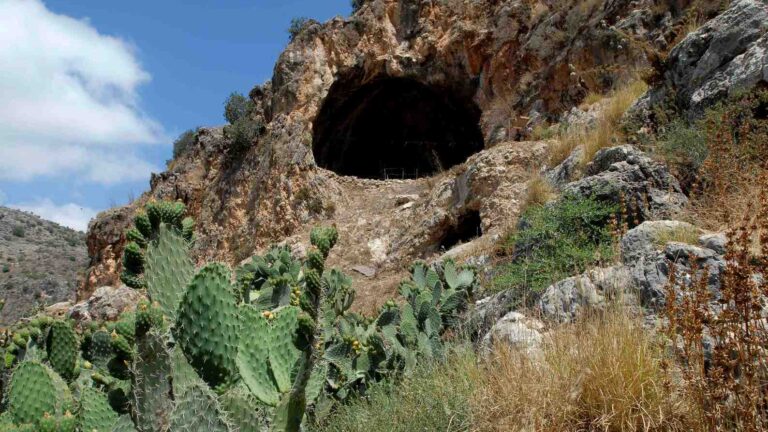
View of Hilazon Tachtit cave in northern Israel. Photo by Leore Grosman
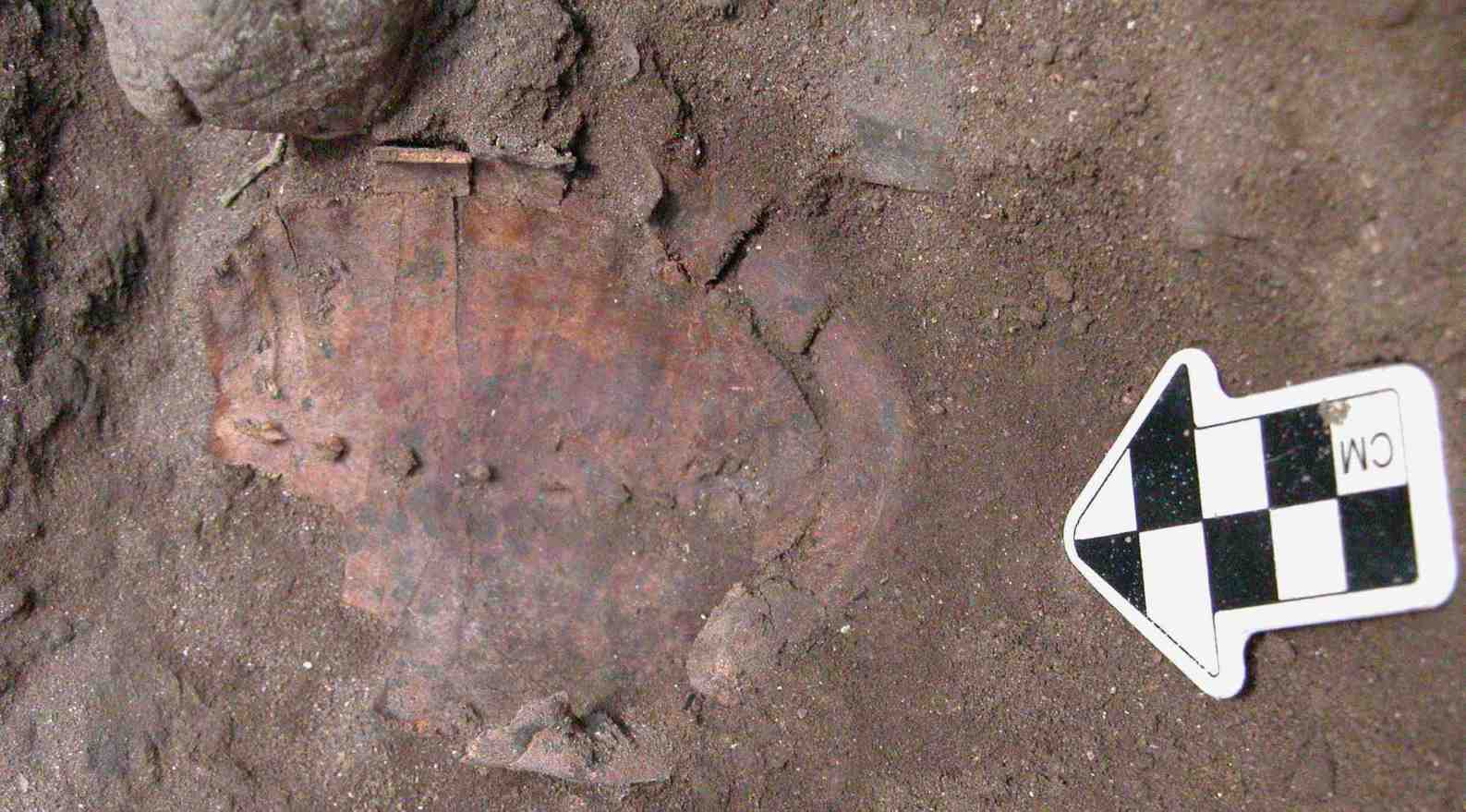
One of 86 tortoise shells found in a unique burial site analyzed by Hebrew University archaeologists. Photo by Leore Grosman

As reported by Israel21C, July 6, 2016 (links in original):

The woman’s corpse was set on a bed of gazelle horn cores, fragments of chalk, fresh clay, limestone blocks and sediment.

Eighty-six tortoise shells were placed under and around her body, while seashells, an eagle’s wing, a leopard’s pelvis, a forearm of a wild boar and a human foot were placed atop the 1.5-meter-tall woman. A large stone was added to seal the site.

The Hebrew University archaeologist who discovered the grave in a cave on the bank of the Hilazon River in the Western Galilee in 2008 knew that it was not an ordinary funeral because three other grave pits found in the vicinity since 1995 did not have any of the unusual objects that this one did.

It took eight years for Prof. Leore Grosman from the Institute of Archaeology at the Hebrew University of Jerusalem and Prof. Natalie Munro from the University of Connecticut to identify the six stages of the mysterious funeral ritual. Their research was published in the journal Current Anthropology.

They believe the deceased may have been a shaman during the Natufian period, 15,000 to 11,500 years ago.

According to their reconstruction, the funeral began with the excavation of an oval pit in the cave floor. A layer of objects was cached between large stones, including seashells, a broken basalt palette, red ochre, chalk and several tortoise shells. These were covered by a layer of sediment containing ashes, flint and animal bones.

About halfway through the ritual, the woman was laid inside the pit in a child-bearing position, and special items including many more tortoise shells were placed on top of and around her. This was followed by another layer of filling and limestones of various sizes placed directly on the body. The ritual concluded with the sealing of the grave.

The archeologists speculate that the collection of materials and the capture and preparation of animals for the feast, particularly the 86 tortoises, must have been time-consuming.

“The significant pre-planning implies that there was a defined ‘to do’ list, and a working plan of ritual actions and their order,” said Grosman.

Thursday, 7 July 2016

Canadian study finds that churchgoing American teens are less likely to use pornography

Well, I hope so. The authors of the study do acknowledge the "probablility of under-reporting of the amount of porn use." Yes, I suspect that's true; it's not a habit that too many people--especially those who claim to be Christians--are likely to admit to.

The incidence of pornography use among teenagers who are Christians should be zero, of course, rather than merely half of non-churchgoing teens (and increasing with age). However, it's obviously much harder to achieve that ideal today than it was a few decades ago. I have much sympathy for parents, Christian or otherwise, who are trying to prevent pornography from coming into their households. Even if they can do something to restrict their children's access to the internet at home, they can't monitor every second of their children's whereabouts or behaviour elsewhere, and they can't monitor what goes on in other households.

By the grace of God, I've never been interested in pornography, but if I had been all those years ago, I would have had a tough time getting any opportunity to indulge such an interest. There was no internet, pornography wasn't on television (I grew up in a small town with very little television of any kind, and even when I moved to a large city there was no pornography on television), and I wouldn't have been admitted to any theatres showing such content. If I had attempted to buy one of the few pornographic magazines on the newsstand, the clerk would almost certainly have refused to sell it to me, and might have called my parents to report it. Such restrictions on the ability to indulge sinful desires have largely disappeared.

As reported by Salmaan Farooqui in the Calgary Herald, July 6, 2016:

Kyler Rasmussen, a psychology graduate student, and Alex Bierman, a sociology professor, studied data from a five-year survey in the United States that looked at the average trajectory of an adolescent’s pornography consumption from ages 13 to 23, surveying 3,000 adolescents across the U.S. between 2003 and 2008. The results made a broad statement that, on average, adolescent churchgoers view half the amount of pornography as adolescents that never go to church.

“There is a social control function to religiousness, that is, religiousness tends to tell us disapproving messages of porn usage. It tends to tell us that we should not use porn, essentially,” said Bierman. “When we attend religious services, we join a community of like-minded others who tend to reinforce this message.”

The study also found that even though adolescents who go to church view less pornography than those who don’t, their pornography consumption still increases as they grow older, on average.

At age 16, churchgoing adolescents averaged watching one porn video per year, whereas an adolescent who never goes to church averaged two videos per year. That number increased to two videos per year and four videos per year respectively at age 23. Women were also surveyed, and while they watched up to 75 per cent less pornography, their viewership increased with age slightly as well. Rasmussen said that while the scale of consumption was probably far off, since the original survey asked how many videos a respondent watched per year, a difficult number to accurately remember.

“There was probably under-reporting of the amount of porn use,” said Rasmussen, noting that only one person reported watching 300 videos a year, which he speculated was probably more common. Despite that, he believes the most important information is that pornography viewership did increase with age for adolescents.

In future studies, the two hope to explore variables such as certain groups’ reluctance to share their high pornography consumption, and determining whether people who actively participate at church, rather than just attend, have different amounts of pornography consumption.

Another important thing to glean from the study, Bierman said, is that attending church is one possible way to get adolescents to watch less pornography. According to him, while it’s impossible to say whether porn is good or bad as a whole, the content of pornography can tend to be unhealthy for adolescents and how they view sex and intimacy as they mature.

“Pornography sticks with uncommitted, very casual sorts of relationships, where particularly women are there specifically to please men,” said Rasmussen. “Young people look at that and get an idea of ‘this is what sex is like and about,’ and so that changes their view of women and what sex is, and usually isn’t considered to be a good thing.”

“We are not looking to prophetalize, and we aren’t trying to make people religious, we are trying to ask what is it that may guide adolescents from pornography,” added Bierman, who is religious, along with his colleague Rasmussen. “What I think is important here is to glean why religious attendance has these effects, and hopefully apply these lessons to a broader framework of individuals.”

Bierman said this research is a base for the future. There isn’t much understanding of how pornography affects teenagers and their sexual development, so for Bierman and Rasmussen, this is a starting point for future studies.
Go here for a slightly different version of the same article.

Monday, 4 July 2016

90 years ago: The death of Émile Coué

The heart is deceitful above all things, and desperately wicked: who can know it? Jeremiah 17:9

On July 2, 1926, Émile Coué de la Châtaigneraie died at the age of 69. Mr. Coué was a pharmacist in Troyes, France from 1882-1910 who discovered the placebo effect among his clients, leading him to become a pioneer in promoting autosuggestion for self-improvement; he and his wife Lucie founded La Société Lorraine de Psychologie appliquée (The Lorraine Society of Applied Psychology) in 1913.

Mr. Coué wrote the book La Maîtrise de soi-même par l'autosuggestion consciente (Mastery of One’s Self through Conscious Autosuggestion) (1920), but is best remembered for the saying, which he encouraged people to repeat to themselves as a mantra, "Tous les jours à tous points de vue je vais de mieux en mieux (Every day, in every way, I'm getting better and better)." Repetition of this phrase became known as La méthode Coué (The Coué method), or Couéism.

Although Mr. Coué was more popular in Europe than in North America in his own time, he exerted a major influence on North American success/motivation speakers of the later 20th century and beyond, including W. Clement Stone, Rev. Norman Vincent Peale, and Rev. Robert Schuller--some of whom, of course, have been found in high places in evangelicalism. While the success/motivation speakers proclaim a false gospel of self-improvement through self-effort, the Lord Jesus Christ said, "Without me you can do nothing" (John 15:5).

450 years ago: The death of Nostradamus

The law and the prophets were until John: Luke 16:16a

On July 2, 1566, Michel de Nostredame, who Latinized his name to Nostradamus, died at the age of 62. He was best known for his Almanacs (annually from 1550-1566) and Les Propheties (1555-1568), and wrote quatrains which have been interpreted as prophesying major world events, often disasters. Mr. Nostradamus claimed to use astrology in coming up with his predictions, but modern research suggests that he borrowed from existing end-time prophecies.

Mr. Nostradamus has been credited with prophesying cataclysmic events of the 20th century, but such views have been criticized as reading the fulfillment into the prophecies after the events had occurred, and many of his prophecies have been as vague enough to be subject to various interpretations. Mr. Nostradamus himself rejected the label of "prophet," and I prefer to take him at his word on that.

The prophecies of Michel de Nostredame may be an interesting subject of study, but they shouldn't be relied upon as a valid or reliable guide to the future. Contrary to what those in the New Apostolic Reformation say, we don't have prophets anymore, in the Old Testament sense of someone receiving direct revelation from God. God has given us everything He wants us to know--and everything we need to know--about the future in the Bible, and it's the only authoritative source of information on the future. Divination--knowledge of the future using occult means--is, in fact, prohibited by God:

Do not practice divination or sorcery. Leviticus 19:26b (NIV)

Thursday, 30 June 2016

Having legally abolished biological sex differences, maybe Massachusetts can try repealing the law of gravity

So God created man in his own image, in the image of God created he him; male and female created he them. Genesis 1:27

Because that, when they knew God, they glorified him not as God, neither were thankful; but became vain in their imaginations, and their foolish heart was darkened.
Professing themselves to be wise, they became fools,
And changed the glory of the uncorruptible God into an image made like to corruptible man, and to birds, and fourfooted beasts, and creeping things.
Wherefore God also gave them up to uncleanness through the lusts of their own hearts, to dishonour their own bodies between themselves:
Who changed the truth of God into a lie, and worshipped and served the creature more than the Creator, who is blessed for ever. Amen.
For this cause God gave them up unto vile affections: for even their women did change the natural use into that which is against nature:
And likewise also the men, leaving the natural use of the woman, burned in their lust one toward another; men with men working that which is unseemly, and receiving in themselves that recompence of their error which was meet.
And even as they did not like to retain God in their knowledge, God gave them over to a reprobate mind, to do those things which are not convenient;
Romans 1:18-28

The University of Alberta Student Union elections of 1983 included a joke slate called the Utopian Pragmatists. The first plank of their platform was to repeal "the oppressive law of gravity." In 1983 such a position was obviously meant and understood as satire, but today's satire is tomorrow's reality, as proven by the state of Massachusetts in 2016. As reported by Al Perrotta in The Stream, June 2, 2016 (links in original):

The Massachusetts House of Representatives voted 116-36 Wednesday to legally demolish the notion of biological sex in favor of “gender identity.” A similar bill passed the Massachusetts Senate last month. Gov. Charlie Baker has already said he’ll sign the bill.

“The Gender Identity Public Accommodations Bill” (H.4343) provides a three-front advance of transgender “anti-discrimination” laws, reports Conservative Review:

1. It replaces the word “sex” with “gender identity” in multiple areas of Massachusetts law.

2. The Massachusetts Commission Against Discrimination must amend rules and policies to comply with this shift from biological sex to “gender identity.”

3. It allows people to use the restroom or locker room that matches their gender identity. Or as the bill puts it, “Any public accommodation … shall grant all persons admission to and the full enjoyment of such public accommodation or other entity consistent with the person’s gender identity” (incidentally, making bathrooms sound like amusement parks).

According to Boston.com, the bill does throw a bone to critics and parents concerned that such bathroom bills could be used as cover for predatory men who want to gain access to women’s bathrooms. H.4343 contains a provision that the Attorney General’s office issue guidance for potential legal action against “any person who asserts gender identity for an improper purpose.”

Victory brought eye-popping hyperbole from the bill’s co-sponsor, Rep. Byron Rushing. “We are doing the work the founders of our nation intended for us to do,” said Rushing, “This is a great day for us and we should be very proud.”

“Male and female he created them, and he blessed them and named them ‘Humankind’ when they were created.” Genesis 5:2

LGBT activists agreed. “This is a historic day for Massachusetts, said the pro-transgender group Freedom Massachusetts, “The wave of legislative activity #TransBillMA has seen in the last two months is the culmination of a decade-long fight to fully protect transgender people from discrimination in the Bay State.”

Nonsense, says one lawmaker who voted against the bill. “This legislation takes rights away from 99.9% of the population,” Rep. James Lyons told Conservative Review. “Every parent that I have spoken with including a parent of a transgender child understands that this bill eliminates long held expectation of privacy and protection for children.”

The issue goes even deeper. As Lyons told the Boston Herald, “The bill allows people on a routine basis to decide if they are male or female. Your anatomy is no longer relevant,” he said, “This has absolutely nothing to do with discrimination; it has everything to do with changing our society and social engineering by those on the left.”

As the debate and vote were taking place, hundreds opposed to the bill, dressed in blue, stood inside and outside the State House chanting “No, no!”

Opponents of the trans bill chant "no, no" outside the House chamber pic.twitter.com/sx9WZl4e2f

— Lauren Dezenski (@LaurenDezenski) June 1, 2016

They also engaged in prayer.

Faith leaders praying in multiple languages for our leaders to protect women and children. #mapoli #NoBathroomBill pic.twitter.com/0ma0ihai3p

— MA Family Institute (@MAFamilyInst) June 1, 2016

The protest and prayer was organized by Massachusetts Family Institute. And they are not giving up the fight. Today, the group is calling on people to phone Gov. Baker’s office to urge him to veto the bill. His Boston office number is: 617-725-4005. His Springfield office is 413-784-1200.
Perceptive readers will notice that the social justice warriors are quite willing to sacrifice the safety of girls and women in order to advance their demonic agenda--all in the name of "progress" amd "diversity," of course. Blogger Vox Day comments:

Personally, I think the crazier things get, the more egregiously awful they become, the better. All of this will be necessary to steel the civilizationists for the hard work to come. It is getting more and more difficult for the moderates and apologists and churchians to manufacture specious arguments claiming everything is really just fine and things are getting better all the time.

Even tender-hearted women are rapidly beginning to reach the conclusion that "kill it with fire" is the only solution to the sick society we presently endure.
HT: Vox Popoli; John C. Wright

This 81-year-old murderer professed Christ, but apparently didn't possess Christ

Behold, I send you forth as sheep in the midst of wolves: be ye therefore wise as serpents, and harmless as doves. Matthew 10:16

The victim of this murder reminds me of a clergyman of my acquaintance who's a lovely man, but seems to assume that everyone else is as decent as he is, and is frequently taken in by con men, especially those who claim to be Christians. Submitted for your approval, the following item, which proves that you're never too old to be conned--or to commit murder. As reported by Marcia Pobzeznik of The Newport Daily News, June 29, 2016:

Edward Acquisto was given a “significant” loan in 2011, Police Chief Thomas Blakey said, and an argument about paying it back led Acquisto to shoot and kill John Cloud of Kingston, Mass., in the town’s Pocasset Hill Cemetery on a Monday night earlier this month.

Blakey would not say how much Acquisto “legally” borrowed from the congregational church he and Cloud belonged to, but did say Acquisto apparently reneged on the agreement to pay it back.

“It does not seem that there was anything substantial paid back,” Blakey said.

Blakey also could not say what Acquisto did with the money. “It is unknown what became of the money,” Blakey said.

Acquisto, 80, formerly of Woonsocket, is a convicted felon who moved to an apartment on State Avenue Street in North Tiverton in 2003 after being released from prison for serving time for manslaughter and rape. He arranged to meet Cloud in the cemetery on Main Road on June 13 about 7 p.m., police said.

Acquisto was known to have spent time in the cemetery praying with his Bible in hand, and the two had met there in the past to pray together, Blakey said. They belonged to the same church in Kingston, Mass.

The night of June 13, Acquisto shot Cloud twice in the torso with a .22-caliber handgun, Blakey said. People who were in the cemetery at the time called police to report that a black Kia drove out of the cemetery, and a man lay dying near gravestones.

Cloud, 81, was a graduate of Tufts University who was a mechanical engineer and working for a medical equipment company in Dedham, Mass., at the time of his death, according to his obituary. He was described by family and friends who posted tributes to him as a dedicated family man who was also dedicated to his church.

The first line of his obituary reads: “John A. Cloud died unexpectedly on June 13 steadfast in his belief of the good in people.”

Fire Chief Robert Lloyd said rescue crews transported Cloud to St. Anne’s Hospital in Fall River, Mass., where he was pronounced dead.

A graveside service was held for Cloud on June 18 at the church in Kingston.

“We and the family have no comment,” Joan Cole, office manager for Mayflower Congregational Church, said in a response to a request for an interview with the reverend of the church and the family of Cloud.

Tiverton Senior Center Director Janice Gomes said Acquisto, who was in failing health the past several years, often quoted Bible verses during his visits to the center. He started going to the center shortly after moving into town in 2003, but in recent years just went there for help with paperwork. He told Gomes of his background early on, she said.

Acquisto was killed in a driveway of a home on Ford Farm Road, across from the town cemetery, after a brief police chase about an hour after he shot Cloud in the cemetery. Acquisto drove into Fall River after shooting Cloud and was chased back into Tiverton by Fall River and Tiverton police who spotted his car about a half-mile from the Tiverton border. Acquisto was shot and killed by police after emerging from his car with a gun in hand.

That part of the investigation is still ongoing, Blakey said.

Asked about the gun Acquisto used and how he obtained it seeing he was a convicted felon who should not have been in possession of a gun, Blakey only said that it was “not reported stolen.”

Tuesday, 28 June 2016

Handwriting analysis reveals parts of the Old Testament to be older than previously thought

As reported by Tia Ghose of Live Science, April 11, 2016 (bold in original, link inserted by blogger):

Key parts of the Old Testament may have been compiled earlier than some scholars thought, suggests a new handwriting analysis of text on pottery shards.
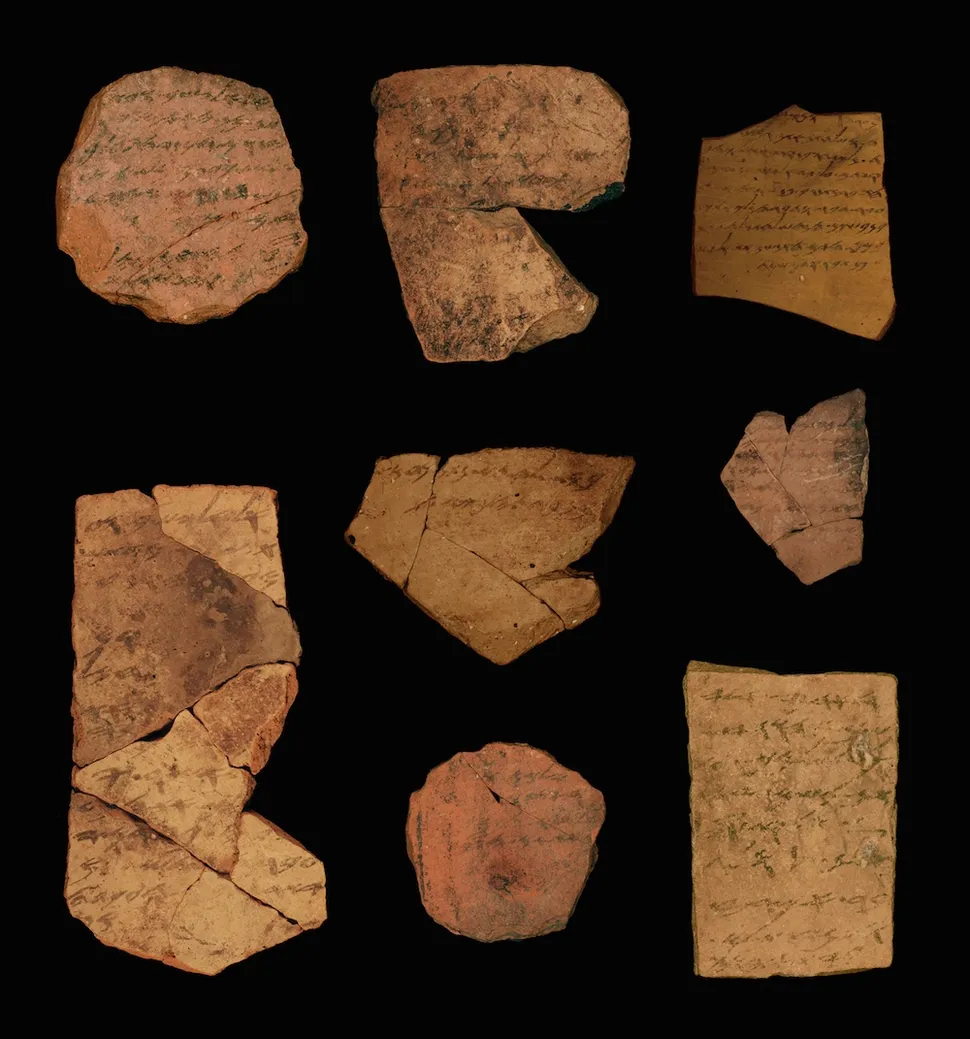
The shards, found at a frontier fort dating to around 600 B.C., were written by at least six different people, suggesting that literacy was widespread in the ancient kingdom of Judah, said study co-author Israel Finkelstein, an archaeologist and biblical scholar at Tel Aviv University in Israel.

"We're dealing with really low-level soldiers in a remote place who can write," Finkelstein told Live Science. "So there must have been some sort of educational system in Judah at that time."

The writing shows that the kingdom had the intellectual resources to write and compile large chunks of the Old Testament during this period, he added.

Biblical history

Religious scholars have long fiercely debated when the Bible was written. Up until around the middle ages, people believed the Bible was written almost in real-time (as events were occurring).

Text in the Bible mentions scribes and literate officials for the kingdom of Judah, which remained a state from roughly the 10th century B.C. to 586 B.C., when the Babylonian king Nebuchadnezzar laid waste to Jerusalem, destroyed the temple and forced most of the Jewish elites into exile in Babylonia. So scholars assumed the text must have been written prior to the destruction of the temple.

But that line of reasoning assumed the biblical accounts were historically accurate. Another possibility is that those details about literate people were anachronisms inserted by later writers based on their own cultures, Finkelstein said. In recent years, one camp of scholars has pushed for a later date for the compilation of the Old Testament, with some even arguing the compilation occurred centuries later, when the Greeks or Persians ruled in what is now Israel, Finkelstein said.

He said he and his colleagues realized there might be a different way to address the question. Decades earlier, archeologists had uncovered archaic Hebrew ink inscriptions on ostraca, or pottery shards, from a frontier fort called Arad, a remote garrison located far away from Judah's central city, Jerusalem. Finkelstein said he wondered whether these inscriptions, which were written over the span of a few months in 600 B.C., could reveal how many people could read and write at the time.

Widespread literacy

To answer that question, Arie Shaus, a mathematics and archaeology doctoral candidate at Tel Aviv University, along with Shira Faigenbaum-Golovin, an applied mathematics doctoral candidate at the university, and colleagues, relied on machine learning. They used computer programs to scan digital images of the text, systematically fill in missing lines of text and analyze each stroke. Finally, the computer algorithms compared the script on each of the 18 inscriptions to see whether they were written by the same hand. (The ancient Hebrew text was written in an Iron Age script that is no longer used.)

All told, at least six different people wrote or read the script on the ostracas, including individuals ranging in rank from the commander of the fort, a man named Malkiyahu, all the way down to the deputy quartermaster, a soldier with a low rank, below the person running the fort's storage depots, the researchers reported today (April 11) in the journal Proceedings of the National Academy of Sciences. While none of these inscriptions were Shakespeare, most were written with proper spelling and syntax, the researchers found.

"This is really quite amazing," Finkelstein said, "that in a remote place like this, there was more than one person, several people, who could write."

What's more, other border forts have similar ostraca, suggesting that writing at that time was widespread, at least within the Judahite army, the researchers reported. Other archaeological evidence suggests that no more than 100,000 people lived in Judah at the time. Together, these lines of evidence suggest that a substantial fraction of the population (possibly several hundreds of people) could read and write, Finkelstein said.

Early biblical compilation

In order for so many low-ranking soldiers to be able to read and write, there must have been some kind of Judahite educational system, Finkelstein said.

That, in turn, suggests there were enough literate people at that time to compile some portions of the Old Testament, such as the Book of Deuteronomy, parts of Genesis, and the books of Joshua to 2 Kings, Finkelstein said.

By contrast, after the destruction of the first temple, when Israel's educated people were either killed or exiled to Babylonia, there is not so much as a pottery shard, seal or stamp with a single piece of writing from the region for more than 200 years, Finkelstein said. This suggests it's much less likely these books were compiled after the temple's destruction, he said.

The findings are very important and dovetail with other lines of research, said Christopher Rollston, a Near East scholar at George Washington University in Washington, D.C. There is no doubt that the elites in Judahite society could read and write around 600 B.C., Rollston said.

"In fact, I have argued in print that the literacy of elites (scribes, high governmental and religious officials) is already present by circa 800 [B.C.]" Rollston told Live Science in an email.

However, not everyone agrees with all of the paper's assumptions. While the notion that many could read and write in the Kingdom of Judah during the seventh century B.C. is widespread, "I do not share the authors' opinion that literacy among the elite declined after the seventh century [B.C.]," said Ernst Axel Knauf, a theology scholar at Bern University in Switzerland, who was not involved in the study.

Monday, 27 June 2016

Edmonton Eskimos cater to the Selfie Generation

This item hasn't anything directly to do with the usual subjects of this blog, but it does serve as a snapshot of current conditions. The Edmonton Eskimos of the Canadian Football League are recognizing characteristics unique to Millennials (aka the Selfie Generation, aka the Retarded Generation)--as reported by Ryan Tumilty of Metro News, June 6, 2016:

The Edmonton Eskimos are hoping a new generation of football fans will help them boost struggling attendance numbers and bring new life to Commonwealth Stadium.

With the season set to get underway in just a few weeks, the club has introduced a new standing section that it hopes will appeal to younger fans.

“We created a tiered deck system in both north end corners of the end zone,” said Scott Murray, the team’s vice-president of ticket sales.

He said the new section will be sold online during the week and they hope it will allow for a more social experience.

“They like some freedom to move around, as opposed to being assigned to a specific seat,” he said.

Last year, the team averaged 31,517 fans per game – part of a downward trend they have seen in recent years. Murray said they do hope to improve those numbers, but it’s also about making sure the team is offering something for everyone.

“This helps us engage a different group of people that we don’t think we have engaged enough,” he said. “We think they will come for the social experience and maybe do two or three games a year.”

Jay Ball, the general manager of FC Edmonton, said he believes the Eskimos are on the right track trying to attract millennial fans.

Ball said his team already has much of that younger audience and they’ve attracted them in part by advertising where they are.

“The live on social media, they live on mobile devices and tablets and computers. You can’t reach them through billboard advertising,” he said.

He said they also encourage people to get excited about the game and have a good time, much like what the Esks are planning for the new sections.

“We’re not selling soccer. We’re selling a really unique sports experience.”
I approve of giving the Selfie Generation its own section. Anyone who's had the misfortune of being at a game (or anywhere else) in the vicinity of these life forms can verify that they spend their time running around and playing with their smartphones, and don't bother watching the game. It's a good idea to give them their own playpen, and leave the rest of the stadium for people who want to watch a football game.

Let's see now: they can't remain in one place for very long, and are unable to sit still and concentrate on the activity at hand. This is the sort of behaviour that has historically been true of 5-year-olds, and now it's being recognized as acceptable behaviour for 15-year-olds. And some people are still so deluded as to believe that society is progressing.

Saturday, 25 June 2016

40 years ago: Cuckservative Governor of Missouri rescinds 1838 executive order banishing Mormons from the state

The term "cuckservative" has been around only since about early 2015, but the cuckservative mentality has been around longer than that. I don't know if the word has an "official" definition, but I define a cuckservative as someone who claims to be a conservative, but who considers it more important to be regarded as not racist, sexist, and/or (insert pejorative here) by people who don't like him than to stand firm for any conservative principles. Cuckservatism manifests itself in behaviour known as "virtue signalling," such as apologizing to groups claiming victim status on the basis of alleged historical mistreatment at the hands of the cuckservatives and/or the cuckservatives' ancestors.

An example of 20th century cuckservatism comes from June 25, 1976. Missouri Governor Kit Bond (Republican) announced an executive order rescinding Missouri Executive Order 44, issued by Governor Lilburn Boggs on October 27, 1838, directing that members of the Church of Jesus Christ of Latter-day Saints "must be treated as enemies, and must be exterminated or driven from the State if necessary for the public peace—their outrages are beyond all description." Mr. Bond's announcement came in an address to the Far West stake of the Reorganized Church of Jesus Christ of Latter-day Saints, as a goodwill gesture for the United States Bicentennial. For those unfamiliar with the Reorganized Church of Jesus Christ of Latter-day Saints, the RLDS was formed as a splinter group from the main LDS church after the death in 1844 of Moromon founder Joseph Smith, resulting in a dispute over who was the proper successor to Mr. Smith as leader of the church.

Mr. Boggs' executive order in 1838 had been issued three days after the Battle of Crooked River, a skirmish between Mormons and Missouri state militia. The Mormons have made a lot of mileage out of claiming to be victims of religious persecution, but the claim is nonsense. Many new religious movements came into being in the United States in the second quarter of the 19th century, with the Church of Jesus Christ of Latter-day Saints being the one that has lasted the longest (It hardly needs saying--but I'll say it, anyway--that that's not to be taken as evidence of the approval of God upon the organization). There were numerous splinter groups that resulted from the death of Joseph Smith; most of them soon disappeared but the RLDS remains. Another new religious movement, Seventh-Day Adventism, began in the mid-1840s, but I don't recall any accounts of Seventh-Day Adventists being driven out of one area after another. The evidence indicates that many Americans in those days were receptive to doctrines that were heretical by biblical standards of orthodoxy (in the mid-19th century, only about 1/4 of the American population were members of Christian churches), but somehow the Mormons seem to have borne the brunt of "persecution." Mormons were in fact driven out of various places (e.g,, Kirtland, Ohio in 1837), but it wasn't because of their beliefs, but because of their behaviour, especially crooked banking and real estate practices. Readers who are interested in this history may search some of the blogs and sites on the left side of this blog. A "secular" book about a serious crime that has some connection to historic Mormon scandals is The Mormon Murders by Steven Naifeh and Gregory White Smith (1988).

According to Gordon H. Fraser in his book Is Mormonism Christian? (4th edition, 1977, pp. 176, 180):

True, the Mormons left New York State for Ohio in the early 1830s, but this was largely because their New York neighbors could not see them as saints and prophets. The "hoodlums" of the area were not persecutors, but simply Joseph Smith's old gang of treasure hunters, who felt that Joseph was "holding out" on them with his treasure of golden plates. The attraction in Ohio was Sidney Rigdon's ready-made congregation, which moved into the Mormon church as a body.

They left Kirtland, with its newly built temple, largely because of the shady banking and real estate operations of Smith and Rigdon. Many had apostatized by that time. Those who hastened the exodus westward were not gentile persecutors, but dissident Mormons who had attached themselves to the church and then, disillusioned, sought revenge against the leaders. The rank and file of honest folk who followed westward did so in good faith.

Their expulsion from Missouri and Illinois, likewise, was not because of their religious beliefs but because of their behavior. In both cases, they had become undesirable neighbors...

...The most flagrant fraud, and the one that caused the hasty exit of Smith and Rigdon to escape their pursuers, was their venture into the banking business. The bank was denied a charter but was started anyway. It was illegally operated and dishonestly administered. It issued $250,000 worth of bills, which were backed by no assets. Many besides Mormons invested and deposited in it to their sorrow. The outsiders added to the friction, causing the flight of Smith and Rigdon and the collapse of the whole Kirtland enterprise. None of this, however, was religious persecution by the gentiles.
Note: "Gentiles" in Mormon terminology refers to non-Mormons, as Mormons regard themselves as being true Israel.

The differences between Mormonism and Christianity are beyond the scope of this post, but the reader is invited to search various blogs and sites on the left side of this blog. Additional useful sources include the film The God Makers (1982) and the companion book of the same name by Dave Hunt and Ed Decker (1984), as well as the aforementioned Is Mormonism Christian?.

Friday, 24 June 2016

The Selfie Generation gets a hotfoot while unleashing "The Power Within"

It came as a minor surprise to this blogger that Tony Robbins is still doing his "Power Within" sessions, including firewalking; it seems like such a relic of an earlier era. It's not unusual for people to be burned while firewalking, but the reason for it is new, and related to the technology and mentality of the early 21st century. This episode sounds like something from a "Carry On" movie--as reported by Associated Press, June 24, 2016:

DALLAS — More than 30 people who attended an event with motivational speaker Tony Robbins have been treated for burns after Robbins encouraged them to walk on hot coals as a way of conquering their fears, Dallas fire officials said.

Five people were taken to a hospital Thursday night, while the rest were treated at the scene for burns to their feet and lower extremities, Dallas Fire-Rescue spokesman Jason Evans said.

The hot coals were spread outside the Kay Bailey Hutchison Convention Center as part of a four-day Robbins seminar called “Unleash the Power Within.”

Representatives for Robbins didn’t immediately return messages Friday, but in a statement provided to KTVT-TV organizers said about 7,000 people walked across the coals and only five “requested any examination beyond what was readily available on site.”

“Someone not familiar with the fire walk observed the event and called 911 erroneously reporting hundreds of people requiring medical attention for severe burns,” according to the statement.

Tad Schinke, an event trainer, told WFAA-TV: “We always have a few people that have some discomfort afterwards and we do our best to take care of them.”

Such fire walks are not uncommon at Robbins’ seminars: More than 20 people were treated for foot burns after a similar event in 2012 in San Jose, California.

One participant, Jacqueline Luxemberg, told WFAA that some people were not concentrating on walking across the coals because they were taking selfies and asking others to take video of them.

Fire officials used a city bus to hold many of the injured people; others were carried to ambulances or back inside the convention centre to be evaluated.

Tuesday, 31 May 2016

600 years ago: The martyrdom of Jerome of Prague

On May 30, 1416, Jerome, aka Hieronymous, was burned at the stake after being convicted by Roman Catholic Church authorities of heresy. Jerome was a Roman Catholic who became a follower of the doctrines of English reformer John Wycliffe and especially his fellow Bohemian reformer, Jan Hus.

When the Council of Constance--convened by Antipope John XXIII and held in Constance, Germany--opened in 1414, Mr. Hus was summoned, and subsequently burned at the stake as a heretic on July 6, 1415. Jerome followed him there, and was imprisoned in April 1415. He became seriously ill, and recanted his support for Messrs. Wycliffe and Hus in public sessions of the Council in September 1415. The Council doubted the sincerity of Jerome's confession and retried him on May 23 and 26, 1416, wherupon Jerome withdrew his recantation. He was burned at the stake and thus became the first Hussite martyr. It should be kept in mind that the Roman Catholc Church has never apologized for murdering true Christians such as Jan Hus and Jerome of Prague, and the doctrines and practices that these saints opposed are still in place.

See my previous post, 600 years ago: The martyrdom of Jan Hus (July 6, 2015).

Friday, 13 May 2016

Hindu Gurus in India pray for Donald Trump's election as President of the United States

It isn't just Southern Baptist convention pastors such as David Jeremiah and Robert Jeffress, Liberty University President Jerry Falwell, Jr., and New Apostolic Reformation charismaniacs such as Kenneth Copeland, Paula White, Jan Crouch, and Lance Wallnau who have laid hands and "anointed" Republican Party front-runner Donald Trump in his campaign for President of the United States of America in the 2016 election. As reported by Associated Press, May 11, 2016:

NEW DELHI: Donald Trump may find it tough to get Republican leaders behind his campaign, but he's got some faraway fans trying to get the gods on his side.

Around a dozen members of a right-wing Indian Hindu group lit a ritual fire and chanted mantras Wednesday asking the Hindu gods to help Trump win the United States (US) presidential election.

While Trump has dominated the Republican primary race to decide the party's candidate for the November election, his calls for temporarily banning Muslims from America and cracking down on terrorist groups abroad have earned him some fans in India.

"The whole world is screaming against Islamic terrorism, and even India is not safe from it," said Vishnu Gupta, founder of the Hindu Sena nationalist group. "Only Donald Trump can save humanity."

Members of the group gathered on a blanket spread out in a New Delhi protest park along with a collection of statues depicting gods including Shiva and Hanuman ─ as well as photos of a smiling Trump.

Above them hung a banner declaring support for Trump "because he is hope for humanity against Islamic terror."

The group chanted Sanskrit prayers asking the gods to favor Trump in the election, and threw offerings such as seeds, grass and ghee ─ or clarified butter ─ into a small ritual fire.
It hardly needs saying--but I'll say it, anyway--that if Donald Trump is elected President of the United States in November 2016, it won't be because of the prayers of Hindu gurus, because the gods to whom they're praying don't exist, and are in fact demons (see, e.g., Leviticus 17:7; I Corinthians 10:20; Revelation 9:20). The God of the Bible is sovereign over the affairs of men, and in His answers to prayer.