Tuesday, 28 February 2023

Trinity Western University promotes events that divide rather than unite Christians

Anyone who thinks that evangelical universities and colleges are actually Christian isn't paying attention; it's becoming increasingly difficult to see any difference between these institutions and the world, especially as the world becomes more anti-Christian. Submitted for your approval, the following items from the events page of Trinity Western University in Langley, British Columbia (bold, links in original):

27/01/2023 - 10:00 :

Trinity Western University's Lunar New Year celebrations bring students, staff, and the community together at Langley and Richmond campuses

As a global Christian university, Trinity Western is a community of learners representing over 80 countries. This year, during Lunar New Year, a festival celebrated by many communities globally, Trinity Western's Langley and Richmond campuses are filled with activities.

On January 23, TWU's Intercultural Student Programs (ICP) kicked off a week-long series of events for students and the campus community, starting with a Korean Dinner hosted in the Global Lounge (Kuhn Centre) on Monday evening. Students shared laughs and good food while participating in dumpling wrapping and lantern making.

Wema Kibe is a student leader who helped coordinate Monday's community dinner. The third-year International Studies major explained that "Community dinners are a great place for people to not just learn about a culture but to also make new connections. Ushering in the new year with people from diverse places was a great way to do this."

The first activity of the evening was making dumplings, and Wema reflected on the intercultural exchange, "It was fun to see people at different tables creating different shapes. I talked to someone from Japan who made a dumpling the way they do it in her culture, and it was interesting to see that integration."

Student leader Anasthasia Anjanette led participants in making paper lanterns. The activity symbolized "letting go of our past selves" and getting ready for the new year. Wema explains, "Inside the lanterns, they wrote down their wishes for the new year." Prizes were given out to the maker of the best-looking lanterns.

The campus Korean club, Manna, took charge of the cooking and cultural explanations of the food.

On Tuesday, a lion dance troupe graced the foyer of the Reimer Student Centre. Boisterous music and drum beats accompanied the traditional dance performance, which was enjoyed by students, staff, and faculty. Wednesday evening saw student dorms racing through a series of stations across the Langley campus—each station presenting a different game or challenge—in a cross-campus dorm night.

Thursday brought celebrations to TWU Richmond's two sites in Minoru and Lansdowne. Activities included calligraphy writing, trivia games, pastoral care and prayer, and a student dance performance. Dumplings and snacks were served, and red envelopes with a treat and a note of Scriptural encouragement handed out. The MLA for Richmond Centre Teresa Wat attended as well, to share new year greetings with the Richmond campus community.

MBA student Merghani Ahmed expressed that he enjoys studying at TWU Richmond, where the community represents "a diversity of different faiths and nationalities." He also appreciates "the flexibility of classes, and good events, such as today's Lunar New Year event, which are good experiences for students from international backgrounds."

The festivities continued that evening in the Reimer Student Centre, where bubble tea was served by TWU's Student Association (TWUSA), and various booths offered games, conversation, gifts, and snacks.

A week of Lunar New Year events wraps up this Friday evening with a talent show at Block Hall.

30/01/2023 - 09:00

Black History Month 2023 at Trinity Western University

Trinity Western University honours Black History Month this February. Join us as we recognize the importance, impact, and contributions of Black history and culture on a global, national, and local scale.

Find out how TWU is celebrating Black History Month, and how you can participate.

See our month-long schedule of events below:

---------------------------------------------------------------------------

Library Event and Book Display – Presentation by Aklilu Mulat, Senior Vice President, Business Operations & CFO, Trinity Western University
February 1 | 11:45 a.m. | Glass Room, Norma Marion Alloway Library

Topic: Blacks' Contribution to the TWU Family: The Ethiopian Connection

Mr. Aklilu Mulat's speech is inspired by his own journey and connection leading to Trinity Western, going as far back to the former emperor of Ethiopia (Haile Selassie), and the visible legacy that the connection created. Lunch provided.

TWU Afro-Caribbean Club (ACC) Games Night
February 2 | 8 p.m. | Global Lounge, Kuhn Centre

Join us in bringing TWU together, especially the student community, for a fun night of games, conversation, and friendship-building. Snacks will be shared.

TWU Chapel
February 3 | 11 a.m. | Enarson Gymnasium

Enjoy a special Praise Chapel worship experience with the TWU BHM Choir.

Black History Month Opening Event
February 3 | 5 p.m. | Kuhn Centre Lobby

Our Black History Month kick-off celebration features music by TWU's BHM Choir and the Kara-Kata Afrobeat Band from Vancouver, alongside talented TWU students Ose Obetoh, David Mutabazi, Eddison Bryan and Tamilore Awonusi.
Warm appetizers and Afro-Caribbean beverages provided.

TWU Chapel
February 8, 10 | 11 a.m. | Enarson Gymnasium

TWU President Mark Husbands continues the Chapel sermon series on Justice.

Black History Month Movie Night
February 15 | 6 p.m. | DeVries Auditorium

Movie: Hidden Figures
See the story of three African-American female mathematicians working at NASA—Katherine Johnson, Dorothy Vaughan and Mary Jackson—whose efforts served to launch astronaut John Glenn into orbit, a monumental accomplishment in U.S. and world history.

February 19
Black History Month Podcast Interview


Learning Matters: a Bridge to Practice – Episode #50

What do you get when a Communication Scholar, Historian, Geographer, and a Biologist walk into a room during Black History Month?

On the podcast Learning Matters: a Bridge to Practice, hosted by TWU's Scott Macklin, professors and scholars Divine Agodzo, Robynne Healey, Maxwell Ofosuhene and Laura Onyango discuss and celebrate intersections of black contributors to history and issues of diversity, inclusion and reconciliation across the full spectrum of our educational offerings and scholarship. Answering questions such as, What do you believe are some of the unique challenges facing Black students in Christian universities today, and how do you work to support and empower them? In your opinion, what can be done to address systemic racism and discrimination within Christian universities and communities? What are some books or movies that you consider helpful in exploring or learning about black history?

Black History Month Closing Celebration
February 27 | Front of Reimer Centre

Talk by Hon. Justice Olufunlola Adekeye, CON, CFR,JSC (rtd.) Justice of the Supreme Court of Nigeria 2009-2012
February 28 | DeVries Auditorium

Topic: The Place of Black Women in Leadership in the 21st Century—Experience as a Trailblazer

Hon. Justice Adekeye will share her Lordship’s experience as a Christian woman who helped to break the glass ceiling in the Judiciary of Nigeria. She was the first woman to rise to the High Court of Ondo and Ekiti States, and the second woman (and first in Southern Nigeria) to rise to the Supreme Court of Nigeria, which is the highest court in the country.

Throughout the month of February: A display of books written by Black authors will be featured at the Norma Marion Alloway Library.

-----------------------------------

Gender Cafe: EDID, Politics, and Christian Institutions

Christian organizations should be in the forefront of creating and advancing equitable, diverse, inclusive, and decolonized environments. It is a part of our DNA. So, why are we not leading in this endeavour? The problem is that we follow the political and cultural trends instead of forging faith-led approaches to achieving a just and humane society. How are Christians called to lead the work of shaping the Beloved Community?

Dr. Adkins’ talk will be followed by discussion and a question-and-answer period.

It's FREE and open to the public and refreshments are provided.

About the Speaker

Jennifer Adkins, PhD, is Vice President of Inclusive Excellence at TWU. An expert in diversity, equity, and inclusion, she is a key member of the executive leadership team, the University leadership council, and the strategic planning committee, and she provides strategic leadership and counsel to the University. She is advancing TWU’s work in diversity, equity, and inclusion, and helping to propel the University forward in pursuit of our shared vision to prepare graduates for faithful lives of excellence.

About the Gender Studies Institute at TWU

The Gender Studies Institute fosters interdisciplinary teaching, intellectual dialogue, research, and collaboration in all areas of gender studies. The interdisciplinary nature of the institute will enable TWU scholars to collaboratively address with students gender issues that come out of every discipline, such as domestic violence, child abuse, and gendered visions of care, exploring how categories such as class, race, and gender intersect, to train leaders who will enjoy and foster restorative gendered relationships. The role of our Christian faith in the working out of gender in all aspects of life will inform our teaching and research.

Lunar New Year has considerable worldly superstition and pagan content; from the article The Lunar New Year: Rituals and Legends at the site Asia for Educators (bold, links in original):

Preparations for the New Year

... Domestically there is a traditional cleansing as well. In decades past, the most thorough “spring cleaning” of the year was initiated as a ritualistic sweeping away of all the evil spirits feared to be lurking in dark corners behind heavy and rarely moved pieces of furniture. Today, the only consideration for the vast majority of Chinese is a spotless presentation of one’s home to the many family members and guests who will be welcomed during the holiday season. Windows are washed, or were repapered in the old days, and the courtyard gate or other wooden parts of the house might be repainted. The old agrarian calendar cites the 20th day of the 12th lunar month as the “day for sweeping floors,” and this date still marks the beginning of the major pre-holiday housecleaning projects in Hong Kong. In much of China, peasants waited until the 23rd (in South China) or the 24th (in the North) to pick up the broom and dust pan. It was on this day that the Kitchen God, or god of the hearth, was scheduled to depart to make his report concerning household activities to the Jade Emperor in heaven. So as not to unnecessarily disturb and possibly offend him, housewives waited until he was on his way before they started moving furniture and raising dust.

Sending the Kitchen God off to heaven was a matter deserving special attention. In residence year-round at the hearth, where he was represented by a prominently displayed picture, or in parts of the South by beautifully calligraphed characters for his name, the Kitchen God observed all the family’s comings and goings. Had they been generous to any beggar at the door? Had they wasted any hard-earned food, which some farmer had toiled and sweated to produce? Measures were taken to insure the kitchen god’s cooperation in giving a glowing report to the Jade Emperor, and thereby winning for the family a little heavenly favor. This included ritual offerings of candies or pastries and wine, and even smearing his lips with honey to make certain that he would only have sweet things to say about the family. Once this was done, the picture of the Kitchen God was torched, and he was off on his yearly journey, not to return until New Year’s Day. The dusting, washing, and scrubbing could then begin. Many believed they should sweep with inward strokes toward the center of the room so as not to whisk any of the family’s good fortune out the door...

...New Year’s Eve

By New Year’s Eve, family members, some of whom may have traveled long distances to return home, gather for a reunion. In preparation for his return from heaven on New Year’s Day, the new portrait of the Kitchen God is hung, as are the brand new door gods, the duilian (door couplets), and any other festive decor. Some southern families place stalks of sugar cane behind the doors. The height and section-upon-section construction of the sweet stalks represented the family’s hope for a ladder-like ascent to new levels of glory in the coming 12 months. Everyone dresses up, preferably in new clothes, and is on best behavior.

Traditionally, on this last night of the year, the male head of the household led the family in making offerings to various gods of the house and to the ancestors. The ceremonies would begin by sealing the cracks around the door with red paper to prevent the last vestiges of the old year’s bad luck from stealing into the house, and any of the family’s good luck from escaping. Respects would be paid to the god of wealth, the gods of the well, the bed, the hearth, or any others with whom the family wanted to remain on especially good terms. The attention would then turn to the ancestors, to whom sacrifices of food would be given along with burning of incense. Each member of the family would kneel in respect before the ancestral tablets, symbols of many past generations, all the spirits of whom some families believed were in attendance that night. In wealthier households, an entire room might be devoted to use as an ancestral hall, complete with altar, while in poorer families, the ancestral tablets might occupy a modest shed in a corner. Just as important was to show respect to one’s living elders. Younger family members would ketou (kowtow) to members of each generation above them, in order, beginning with the eldest. When children showed respect in this way, they were rewarded with red envelopes (hongbao), which contained New Year’s money (yasui qian)...

...New Year Festivities

...It was at this time that the male head of the house in many educated households would write auspicious characters or phrases to be hung at the entrance to the home. Some also waited for this day to approach the ancestral altar for seasonal rites, and to perform ritual ketou...

...In the days after the new year, it is common to make pilgrimages to temples, especially nowadays for residents of Hong Kong. Theater groups and acrobatic troupes perform in the streets at marketplaces, on temple grounds, or at large public stadiums. Dragon dances, lion dances, stilt-walking performances, and folk pageantry are still particularly popular...

...The Lantern Festival

The 15th day of the first lunar month is known as the “Lantern Festival.” The name for this day on the traditional calendar is Yuanshao, which has come to mean the small round dumplings of rice flour conventionally eaten at this time. The Lantern Festival signals the end of the New Year festival period.

Originally, lanterns were said to have been used on this night to help see the gods by torch light. Each family would construct an elaborate paper lantern for this purpose. Now in many parts of China there is great emphasis on the craftsmanship used in making exquisite lanterns in a variety of shapes and styles, which are then often shown at public exhibitions.
All of the events mentioned above appeal to only certain segments of the population rather than the whole. Lunar New Year is of interest mainly to Orientals; Black History Month helps to perpetuate the separation of Negro history from general history; and "equitable, diverse, inclusive, and decolonized" is Orwellian Newspeak for "eradicate everything coming from white people, especially white males." I defy anyone to find anything distinctively Christian in these events--or in allegedly Christian institutions of higher education.

Tuesday, 31 January 2023

"Edmonton's Christian University" supports United Nations sustainable development goals

Anyone who thinks that "Christian" universities are actually Christian isn't paying attention. The King's University, which calls itself "Edmonton's Christian University," is funded by churches of the Reformed persuasion, but the university long ago went liberal (I'm not sure it was ever sound). Listed among upcoming events is International Development Week Movie & Pizza (bold in original). The blurb is its own commentary:

February 06, 2023
12:00 pm - 1:00 pm
Cafeteria

For International Development Week, the Micah Centre invites the King’s community to learn about the UN’s Sustainable Development Goals (SDGs): what are they, and how can they help us achieve a more just, humane, and sustainable world? You are invited to a viewing of ‘Nations United: Urgent Solutions for Urgent Times’, to learn about the SDGs and hear about the amazing work people around the world are doing to improve lives in their communities.

Contributors include Don Cheadle, BeyoncƩ, Michelle Yeoh, Forest Whitaker, Thandie Newton, and Malala Yousafzai.

Archaeology and biblical history items, September 2022-January 2023

Here are more items related to archaeology and biblical history that I've been too negligent to post. I don't feel like posting entire items, but the reader may find the full articles by clicking on the links below.

Dropping water levels reveal new archaeological sites, artefacts in Euphrates, Tigris rivers (September 8, 2022) (also here)

Rare First Temple-period papyrus found in Montana, returned to Israel (September 8, 2022) (also here)

Extremely rare Judean quarter-shekel coin repatriated to Israel from the U.S. (September 13, 2022) (also here)

Tomb from time of Pharaoh containing ancient finds, discovered on beach in Israel (September 18, 2022)

The ‘most beautiful’ Byzantine-area mosaic floors discovered in Gaza uncovered by local farmer (September 19, 2022)

Ancient burial cave with dozens of unique artifacts found in central Israel (September 27, 2022)

40 pure gold coins found stashed in a wall during excavations in northern Israel (October 3, 2022)

Greek monastery manuscripts tell new story of Ottoman rule (October 21, 2022) (also here)

Research by Israeli universities confirms truth of biblical accounts of Egyptian, Aramean, Assyrian and Babylonian military campaigns against Israel and Judah (October 25, 2022) (also here)

U.S. archivists find oldest-known star map in Egypt beneath ancient Christian Syriac manuscript (October 28, 2022) (also here)

Ancient Christian monastery discovered in Middle East predates emergence of Islam (November 4, 2022)

Canaanite inscription lamenting a plague of lice unearthed in biblical Lachish (November 9, 2022)

Newly discovered mosaics in Galilee’s “Burnt Church” shed light on early Christianity (November 22, 2022) (also here)

3,000-year-old Canaanite scarab found by Israeli schoolchildren during field trip near Tel Aviv (November 30, 2022) (also here)

Ancient Roman Road discovered in Galilee (December 5, 2022)

2,200 year old Greek “Hercules” sling bullet discovered in central Israel (December 8, 2022) (also here)

Rare Antiochus IV coin discovered in suspected thief's house in northern Israel (December 9, 2022)

2,200-year-old coins found in Judean Desert support historical account of the Maccabees, say archaeologists (December 13, 2022) (also here)

Rare 2,000-year-old ‘Temple tax’ silver coin found near Temple Mount (December 14, 2022)

Roman-era cemetery discovered in Gaza (December 17, 2022)

Israeli archaeologists find earliest evidence of use of cotton in the Middle East (December 18, 2022)

Inscriptions confirm biblical account of King Hezekiah (December 19, 2022)

2,000-year-old tomb associated with Jesus’ midwife Salome uncovered in Judean lowlands (December 20, 2022) (also here)

Israeli children find 2,000-year-old oil lamp in northern Israel (December 21, 2022)

Twenty ancient tombs, full of tiles and amulets, found in city of Damietta in the Nile Delta in Egypt (December 22, 2022)

Scientists use new technology to recreate face of Pharaoh who may have ruled over the Exodus (December 26, 2022)

Biblical Siloam Pool next to Temple Mount to be fully excavated (December 27, 2022)

People in biblical Levant paid in silver 3,600 years ago, study shows (January 8, 2023)

What’s new in the ancient City of David? (January 9, 2023)

Israeli archaeologists uncover 6th-century Church with unique mosaics near Jericho (January 12, 2023)

4,000-year-old ostrich eggs eaten in prehistoric Israel uncovered in the Negev (January 12, 2023)

Archaeologists discover 18th dynasty tomb in Egypt (January 18, 2023)

Mesha Stele Mystery solved: King David was real, researchers say (January 17, 2023)

1,300-year-old luxurious fabrics found in the Arava offer proof of ‘Israeli Silk Road’ (January 19, 2023)

1,000-year-old Jerusalem Old City moat, mysterious carved handprint discovered (January 25, 2023) (also here)

Excavations underneath Western Wall may eventually connect to City of David (January 25, 2023)

Saturday, 31 December 2022

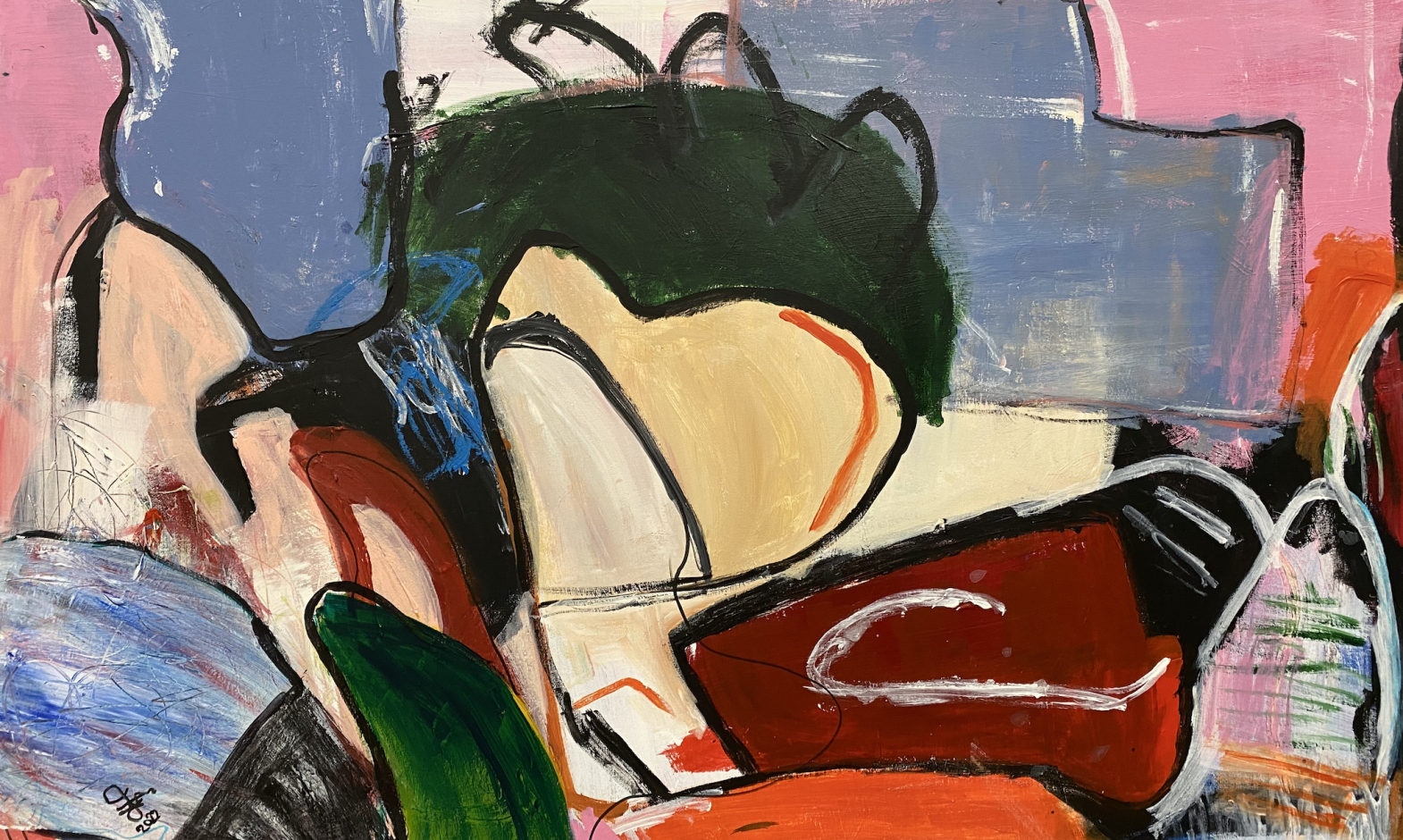
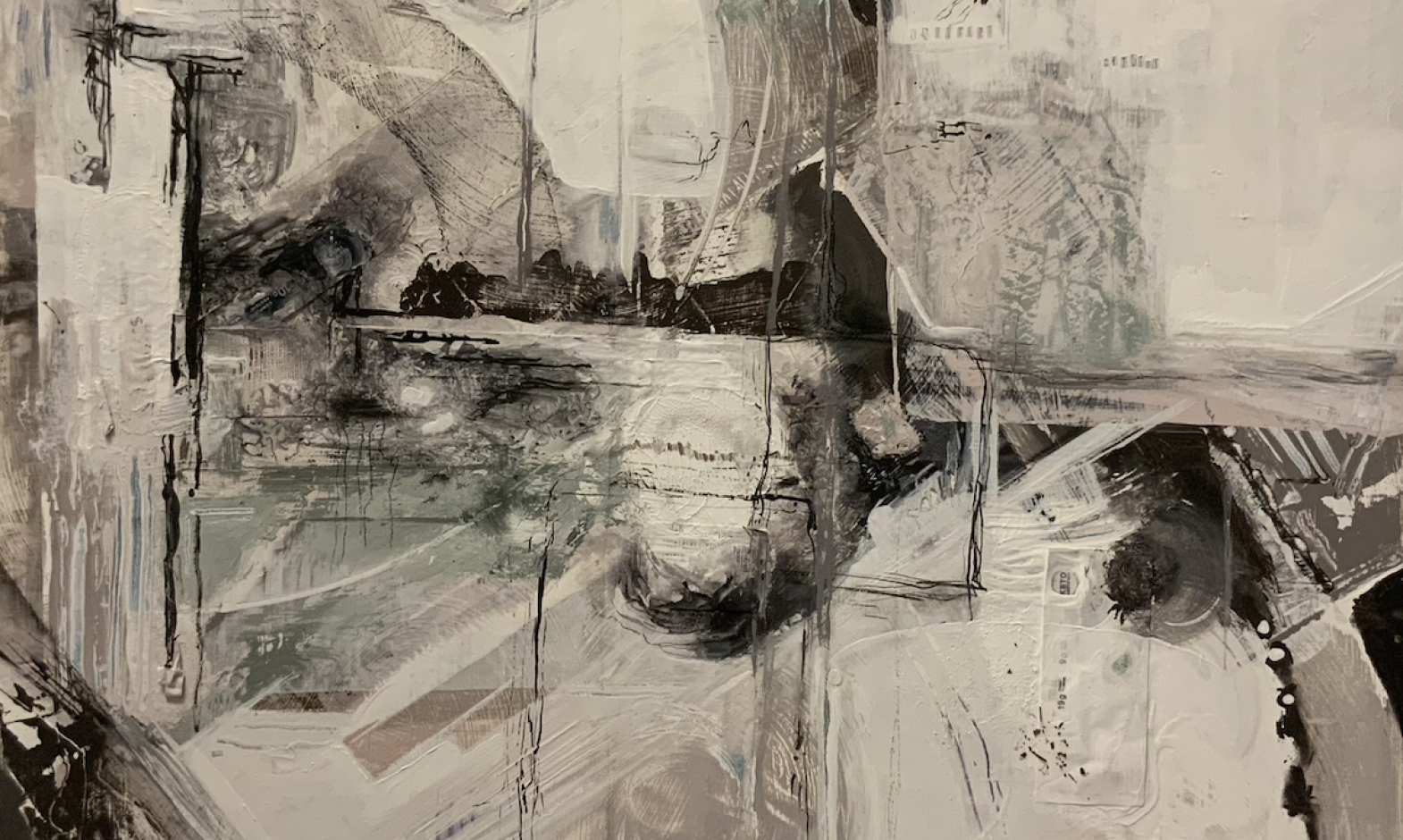
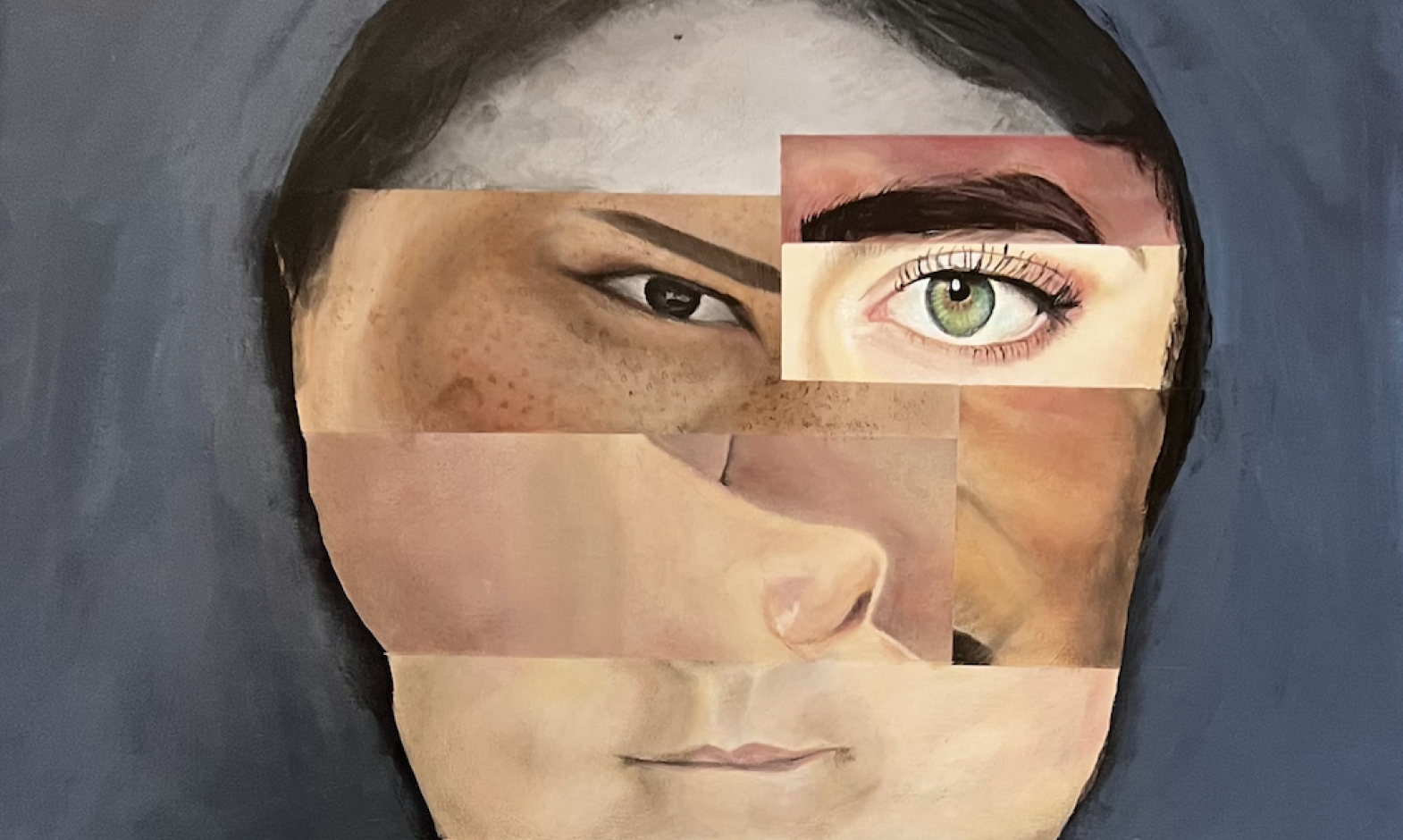
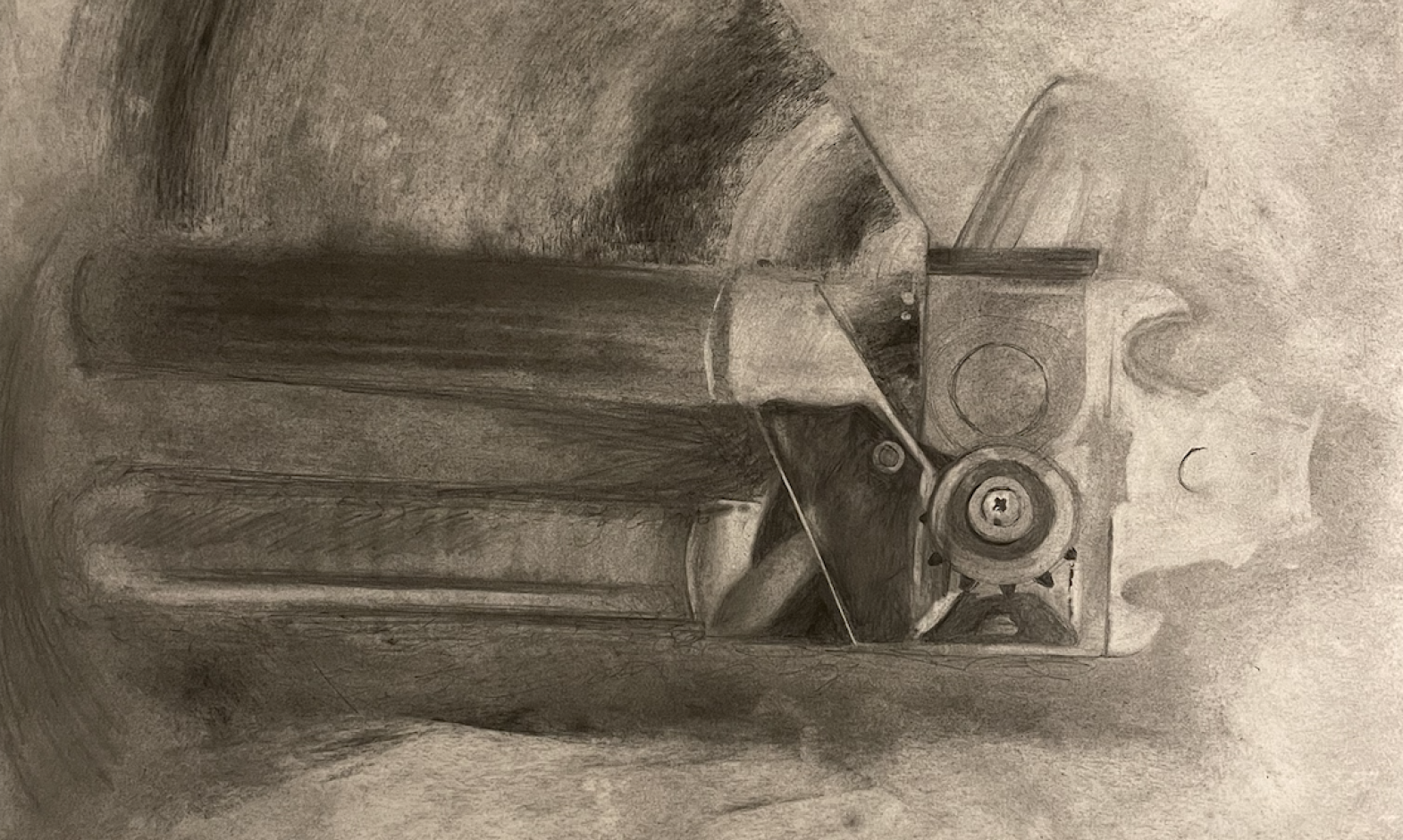
Examples of "art" produced by students at a Canadian "evangelical" university

Another example of wordliness from an "evangelical" university; as advertised by Trinity Western University in Langley, British Columbia, November 29, 2022 (bold, text links in original):

2022 In Review: Art + Design exhibition celebrates a year of creative production by TWU art, design, video game and animation students

Newest student exhibition celebrates a year of creative production by art, design, video game and animation students in TWU’s School of the Arts, Media + Culture.

2022 In Review: Art + Design Student Exhibition

Dates: December 2, 2022 – February 2, 2023

Opening Night Artist Talks: Thursday, December 1, 6:15-7:30 p.m.

Location: SAMC Gallery, Norma Marion Alloway Library, Trinity Western University (22500 University Drive, Langley).

This exhibition celebrates a year of creative production by SAMC art, design, video game and animation students. Produced over the course of 2022, the works in this exhibition span the diverse media that students are exposed to in the program, including drawing, painting, animation and digital design. 2022 In Review provides a space to reflect on the growth and learning that has taken place this year as students have honed their technical skills, deepened conceptual capacities, and discovered their authentic visual voice.

A foundational question resonates throughout the work gathered here, a question that is taken up in each of the courses offered in the Art + Design program: what does it mean to be created in the image of a creator God? As these student artists participate in the act of creation, they each reveal the Creator in a unique way. The act of creation draws these emerging artists near to the heart of a God who delights in the beauty and diversity of His creation.

This exhibition is on view from December 2, 2022 to February 2, 2023. All are welcome to join us for opening night artist talks on Thursday, December 1 at 6:15 p.m.

...
About Art + Design at Trinity Western University

We are a community of professional artists, designers, scholars, and students who look at visual ways of creating. Within a variety of interdisciplinary historical, critical, and theoretical contexts, we explore how visual art and design practices can be used to create and critique culture. Our program empowers students to become creative leaders who are able to adapt and innovate in our rapidly changing world. Learn more at Art + Design.

Mojgan Mirzapouralamdari, Untitled, Mixed Media on Canvas.

Zaeya Winter, What We Preserve, Mixed Media on Canvas.

Sofia del Castillo Medina, My Essentials, Acrylic on Canvas.

Yihan (Martin) Wang, Subtractive study, graphite and charcoal on cold pressed watercolor paper.

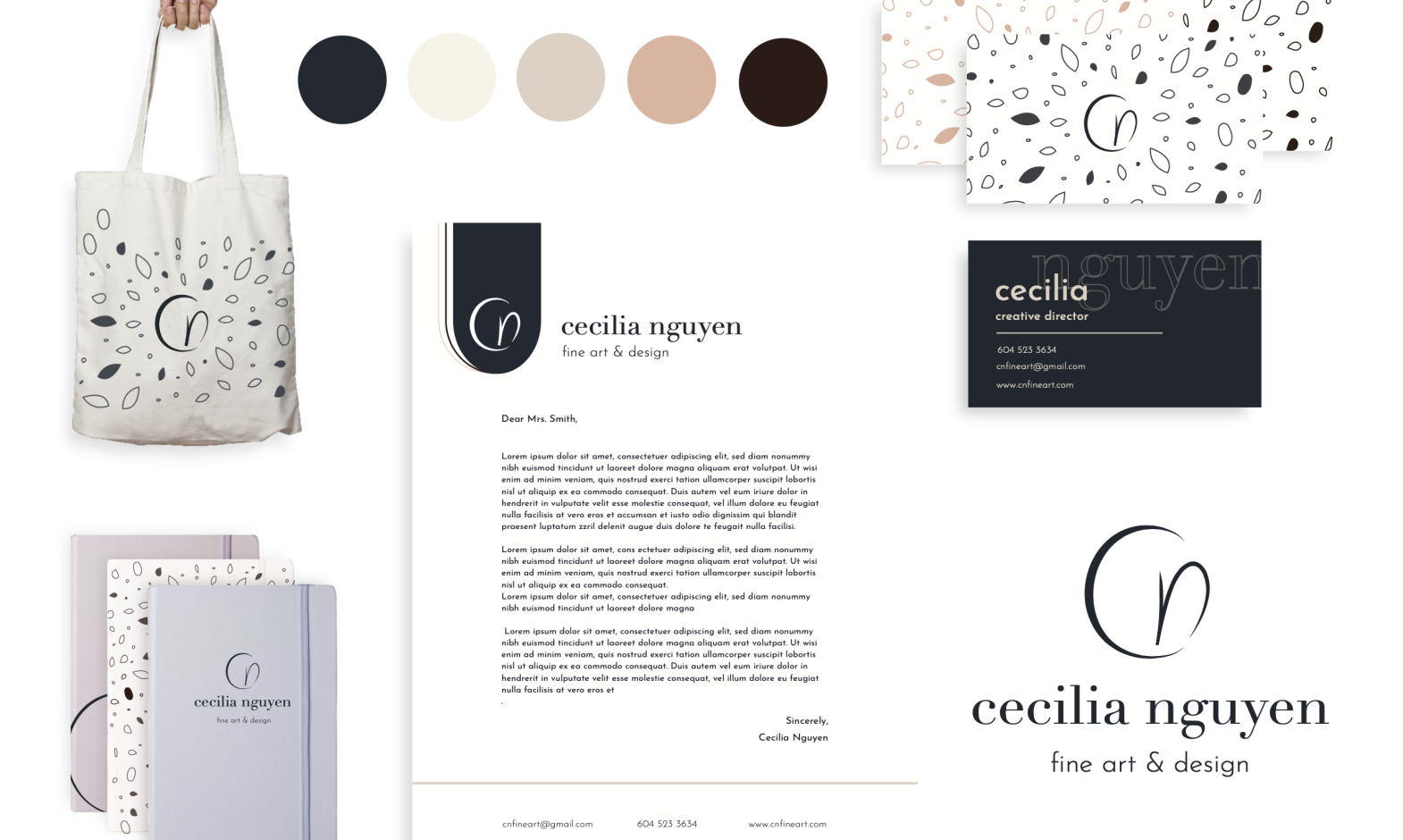
Cecilia Nguyen, Personal Brand, Adobe Illustrator.

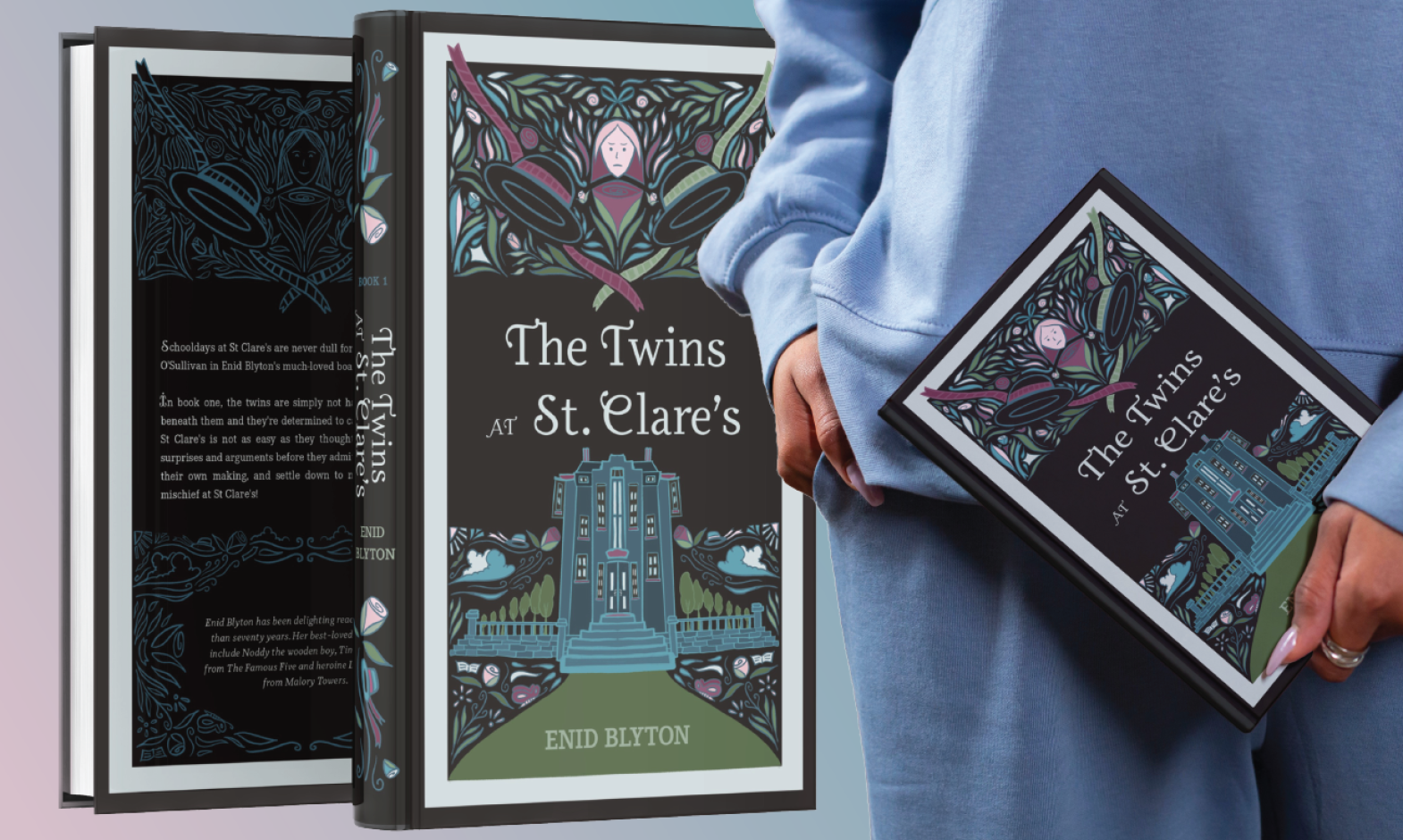
Candace Genesis, Book Cover.

I see nothing in any of these works of "art" that could be said to "reveal the Creator in a new way"--nothing distinctively Christian, depicting the good, beautiful, and true. Most of this "art" is ugly and incomprehensible; I'm reminded of Winston Churchill's description of Graham Sutherland's portrait of him as "a remarkable example of modern art." The work by Mr. Wang is at least recognizable as a can opener (assuming that's what it's supposed to be), and Book Cover is indeed a picture of a book cover. The amount of creativity on display is breathtaking; and these are just the works shown at TWU's website.

Antichrist Ambrose University presents Gilgamesh

Ambrose University in Calgary, Alberta is the denominational school for both the Christian and Missionary Alliance in Canada and Church of the Nazarene Canada. Anyone who thinks that institutions such as Ambrose University are Christian isn't paying attention; they may be "evangelical," but they aren't Christian. According to Ambrose's events calendar (bold, link, photo in original):

Gilgamesh (Classical Theatre Production)
Ambrose Theatre Students

December 1-3, 2022 at 7:30 p.m. & Saturday, December 3, 2022 at 2:30pm

Tickets: $20 Adult; $15 Students/Seniors/Ambrose ID. Please reserve tickets at tickets@ambrose.edu or at the door. Not suitable for children under 10.

Date
Thursday, December 1, 2022

Location
Big Secret Theatre,
Arts Commons
#21 225 8 Ave SE
Calgary, AB

Ambrose Arts Performing Gilgamesh

From December 1-3, Ambrose Arts will be performing Gilgamesh at the Big Secret Theatre – Arts Commons.

We are pleased to introduce our designer, Lindsey Zess. Lindsey is a Metis director, designer, maker and art educator living and working on Treaty 7 territory, primarily Mohkinstsis/Otoskwunee/Calgary. She creates work for both film and theatre, specializing in scenography, directing, devised performance, physical theatre practices and puppetry. Her devising/design methodology places a strong emphasis on the material, mythological and metaphysical.

The production Gilgamesh is inspired by the discovery of the oldest library in the world. A 4000-year-old story, The Epic of Gilgamesh, begins with King Gilgamesh of Uruk leading a life of despicable actions. Finding an unlikely friendship with his rival Enkidu through combat, the two become inseparable, fighting all their battles together. Upon the death of his friend, Gilgamesh sets off on the quest for eternal life. Gilgamesh finds himself attempting to conquer death through treacherous missions assigned by gods and immortals. Laying eyes on his city once more, Gilgamesh comes to terms with his fate and chronicles it as a lesson to those after him.

For more information on the Epic of Gilgamesh, we recommend watching this video!

It's impossible not to notice that the announcement mentions the politically correct race of the designer,as if that's of importance to the production. What is important is the subject matter, which is not suitable for children under 10--ideal family fare for Christmas! It seems odd that a university that claims to be Christian would present a production celebrating Gilgamesh, who has been identified by sound biblical scholars with Nimrod (Genesis 10:8-10), a tyrant whose kingdom was opposed to the God of the Bible. For evidence of this, see Nimrod by biblical archaeologist David P. Livingston at Christian Answers. Let's hear it, ladies and gentlemen, for your "evangelical" universities!

Sunday, 27 November 2022

Flashback--1975: Guru offers doubletalk on yoga

The definition of yoga from Webster's Seventh New Collegiate Dictionary (1965):
1 cap: a Hindu theistic philosophy teaching the suppression of all activity of body, mind, and will in order that the self may realize its distinction from them and attain liberation 2: a system of exercises for attaining bodily or mental control and well-being
From The Edmonton Journal, November 10, 1975 (bold in original):

He spreads word of yoga

Guru Hariananda wants to spread the true knowledge of yoga.

"Yoga can kill people right away if they don't know what they're doing," he says. "But yoga is a very, very old science, before we had hospitals and doctors, people were still suffering, and how did they get well?"

"They were cured by purifying their bodies with their own bodies. That is the yoga."

The guru (Hari for short) says there are 128 processes in yoga, based on the 8,000-year-old teachings of Yogi Patanjali.

"So many people know of yoga, as standing on their heads, or as a form of exercise, but yoga has a very deep meaning. It's a way of life."

"Yoga makes you fit mentally, physically, spiritually and morally."

The guru came to Edmonton two weeks ago to teach his knowledge of yoga to people in the city. He's been in the city a couple of times before during the past several years, and already has a small number of devotees.

He asks no fees from his devotees, but says he'll take donations to help cover his expenses.

Classes go in in different areas of the city each weekday evening...

...Born in the Himalayas, the 24-year-old Hari has lectured on and taught yoga since he was 13 years old.

In his teaching, he has travelled widely.

Hari stresses that his yoga has nothing to do with Hinduism or any other religion.

"You can stay with your religion. You will reach God. God is within you. You are the God as long as you maintain yourself physically and spiritually.

Those who wish to learn more about the classes or the guru's philosophy should call 484-8025.

Guru Hariananda's assertion that "his yoga has nothing to do with Hinduism or any other religion" is, of course, nonsense. Yoga comes from the Sanskrit word yunakti, meaning “he yokes.” The yoking is with Brahma, the ground of all being in Hinduism. Patanjali was a Hindu author, philosopher, and mystic whose lifespan was apparently between the 2nd and 4th centuries A.D. Until it became “westernized,” Yoga was mainly about teaching old Hindus how to die. It’s no more about relaxation and relieving stress than Transcendental Meditation, which is also Hinduism. Neither one caught on in the west until they decided to change the marketing approach to appeal to westerners’ priorities, such as financial prosperity, physical health and emotional well-being. It's interesting that Guru Hariananda claims that yoga "can kill people right away if they don't know what they're doing" which could apply to many Westerners who don't realize what yoga acutally is.

Guru Hariananda's statement that "God is within you...you are the God..." is certainly in conflict with the Bible's consistent teaching that we are not God, and that God lives only within those who have saving faith in Jesus Christ. For further reading, I recommend the books Death of a Guru by Rabi Maharaj with Dave Hunt (1977, 1984) and Yoga & the Body of Christ by Dave Hunt (2006), and the article The Basic Spirituality of Yoga by Marcia Montenegro of Midwest Christian Outreach (March 8, 2018). See also my post Christian woman in Manitoba who warns of the dangers of Yoga shows more discernment and courage than the local "Christian" clergy (April 26, 2018).

Elvis Presley offered a good practical view of yoga in the movie Easy Come, Easy Go (1967):

Monday, 31 October 2022

Antichrist Ambrose University hosts presentation by theistic evolutionist

Now the serpent was more subtil than any beast of the field which the Lord God had made. And he said unto the woman, Yea, hath God said,... Genesis 3:1

For I know this, that after my departing shall grievous wolves enter in among you, not sparing the flock.
Also of your own selves shall men arise, speaking perverse things, to draw away disciples after them.
Acts 20:29-30

O Timothy, keep that which is committed to thy trust, avoiding profane and vain babblings, and oppositions of science falsely so called: I Timothy 6:20

Ambrose University in Calgary, Alberta is the denominational school for both the Christian and Missionary Alliance in Canada and Church of the Nazarene Canada. Anyone who thinks that institutions such as Ambrose University are Christian isn't paying attention; they may be "evangelical," but they aren't Christian. From the university's schedule of events (bold, links in original):

The Bible & Ancient Science: Principles Of Interpretation

Date
Wednesday, October 26, 2022

Time
7:00 P.M. (Mountain Time)

Location
Virtual (Complete the registration form to receive the link)

Presented by Dr. Denis O. Lamoureux Event

DESCRIPTION
Is the Bible a Book of Science? Christians have answered in a wide variety of ways. Theologian and scientist Denis O. Lamoureux proposes that during the inspiration of Scripture, the Holy Spirit came down to the level of the biblical writers and allowed them to use the science-of-the-day. In this way, the ancient science in the Word of God is a vessel that delivers life-changing, inerrant spiritual truths.

Handout for lecture

Response by Dr. Colin Toffelmire and Q&A to follow

SPEAKER BIO
Denis O. Lamoureux is Professor of Science and Religion at St. Joseph’s College in the University of Alberta. He is also a research associate in paleontology. Lamoureux holds three earned doctoral degrees—dentistry, theology, and biology. His most recent book is entitled Beyond the Evolution vs. Creation Debate. It was written to assist high school students in understanding origins and the Genesis 1 account of creation. This lecture is part of current Seminary students' courses, but the public are welcome to join in for this special lecture.

Dr. Lamoureux has provided a link (here) for attendees to pre-read about the subject. This will help give context to some of the discussion.
Dr. Lamoureux's entry at the University of Alberta website (bold, links in original:

Denis O. Lamoureux DDS PhD PhD
Professor of Science & Religion
St. Joseph's College, University of Alberta
Edmonton, Alberta T6G 2J5
Canada
dlamoure@ualberta.ca

Denis O. Lamoureux is Professor of Science and Religion at St. Joseph's College in the University of Alberta. His appointment is the first tenure-track position in Canada dedicated to teaching and research on the relationship between scientific discovery and Christian faith. Lamoureux's academic specialty focuses on the modern origins controversy.

Lamoureux embraces the time-honored belief that there are two major sources of Divine revelation—the Book of God’s Words and the Book of God’s Works. The Bible and the physical world complement each other. Science reveals How the Creator made this spectacular design-reflecting world, while Holy Scripture declares precisely Who created it. Together the Two Divine Books fulfill each other; alone they are incomplete.

In his online web lecture Beyond the "Creation" vs. "Evolution" Debate, Lamoureux argues that the simple either/or approach to origins inhibits everyone from making informed choices. He asserts that if the limits of both conservative Christianity and evolutionary biology are respected, then their relationship can be complementary. This view of origins is known as Evolutionary Creation. Concisely stated, it claims that the Father, Son, and Holy Spirit created the universe and life through an ordained, sustained, and design--reflecting evolutionary process.

Indeed, evolutionary creation is a challenging view of origins for many Christians, and Lamoureux shares his struggle to accept this position in a web lecture entitled Coming to Terms with Evolution: A Personal Story. He also writes about his voyage in a book chapter that is online.

Evolutionary creation emphasizes that the Bible is NOT a book of science. Instead, it is a God-inspired revelation that offers inerrant, life-changing, Messages of Faith. Holy Scripture does indeed refer to the natural world, but it features an ancient understanding of nature. In other words, the Bible has an ancient science. In his latest book, The Bible & Ancient Science: Priniciples of Interpretation (2020), Lamoureux presents hundreds of verses revealing that Scripture features the science-of-the-day in the ancient world. Through his 22 interpretive principles he argues that the Holy Spirit descended to the intellectual level of the ancient biblical writers in order to communicate as effectively as possible inerrant spiritual truths. Three of these principles and an explanation of the cover of this book can be found here.

Of course, not everyone agrees with Lamoureux's position on origins, as seen in the comments made by famed atheist Richard Dawkins in this video clip.

Lamoureux holds three earned doctoral degrees—dentistry, theology, and biology. He is a Fellow of the American Scientific Affiliation and cited in the Who's Who of Theology and Science. He is also a member of the Evangelical Theology Society. Lamoureux lectures throughout Canada and the United States in both Christian and public academic institutions. In 2001 and 2006, he received teaching awards from the University of Alberta Students' Union. Lamoureux's award winning introductory course on the relationship between science and religion, CHRTC 350: Science and Religion with Class Notes, Class Handouts, and Class Audio-Slides is available online.

With Phillip E. Johnson, Lamoureux co-authored Darwinism Defeated? The Johnson-Lamoureux Debate on Biological Origins (1999). Lamoureux has also written Evolutionary Creation: A Christian Approach to Evolution (2008) and has condensed this book into into a more accessible version entitled I Love Jesus and I Accept Evolution (2009). Lamoureux has debated John Walton, C. John Collins, and William Barrick in Four Views on the Historical Adam (2013).

The Church’s struggle with Galileo's astronomy offers valuable insights for Christians coming to terms with evolution. Galileo popularized the aphorism: “The intention of the Holy Spirit is to teach us how one goes to heaven and not how heaven goes.” Rewritten for the Church today, evolutionary creationists encourage Christians to understand: The purpose of the Bible is to teach us THAT God is the Creator, and not HOW the Father, Son & Holy Spirit created.
Dr. Lamoureux's views appear to be reasonable, until you realize that he denies the historical existence of Adam, which is a denial of the teaching of both Old and New Testaments. According to Dr. David Craig, in his Amazon customer review of Four Views on the Historical Adam:

I Appreciated the personal testimony of Denis Lamoureux's pursuit of truth in the fields of science and theology. He has definitely wrestled with and struggled with all the issues at hand - as a non-believer, as well as a believer in Christ. Lemorourex concludes that his view of evolution disallows for belief in the historical Adam that is revealed in the Scriptures. He argues at length that the realities of history conflicts with modern science. He believes that ancient science (the view of the biblical writers) conflicts with modern science and therefore what we have in the Bible is God accommodating inerrant spiritual truths.

In summary "Lamoureux rejects scientific concordism, the idea that God chose to reveal through the Scriptures certain scientific facts and that modern science, properly understood, can be aligned with the Bible. To the contrary, he says the authors of Scripture had an ancient perception of the world, apparent in their belief in a three-tiered universe, their view of the 'firmament,' and elsewhere. When it comes to humanity's biological origins, the biblical authors likewise had a primordial understanding. They held to 'de novo creation,' the belief that God created man and everything else directly, immediately, and completely, that is fully mature."

Lamoureux argues that Adam did not exist, but that Jesus Christ is a historical person who died and rose again for our sins. He attempts to show how modern science has changed his views on interpreting the Bible through understanding distinctions between ancient and modern science, language accommodation, and his rejection of concordism.

I found his essay to be interesting, but unconvincing. I especially struggled with his weak theological explanation of the historical "Adam" from the lips of Jesus and the Apostle Paul in the New Testament. I also struggled with his interpretation of Genesis 1-11 as not being historical. Lastly, I found his interpretation and methodology in arriving at his conclusions insufficient - leaving me with more questions than answers. I agree with C. John Collins assessment of his essay when he writes, "Lamoureux has followed a style of reasoning that is oversimplified, specifically in that he generally poses either/or questions with only two options; he does not consider whether there are alternatives."
This blogger regards the Bible as the infallible, inspired word of God, and anything that contradicts the Bible is in error. Dr. Lamoureux, on the other hand, regards the Bible as being in error if it's in contradiction with what the latest "science" says. It should be noted that Dr. Lamoureux, in addressing the issue of the existence of Adam, is no longer operating in the realm of science, but has moved into the realm of history, where the scientific method doesn't apply. I also find it curious that an "evangelical" professor teaches at a Roman Catholic college.

As for the man Ambrose has chosen to respond to Dr. Lamoureux's presentation, Dr. Colin Toffelmire says, "...we want to try to think the best of these people we disagree with...," but check his Twitter feed, and you'll see that he doesn't seem to think well of Christians and conservatives, and seems to find more affinity with secular liberal intellectuals. In this Dr. Toffelmire reminds me of pseudo-intellectual Tim Keller, who has had a disproportionate influence among evangelicals, but who never seems to identify with real Christians, but always takes the view that's likely to gain the approval of secular New York liberals.

This isn't the first time that Ambrose has hosted a theistic evolutionist; see my previous post Antichrist Ambrose University has theistic evolutionist as guest speaker for its Faith, Life and Learning Days (February 6, 2020)

See also my other previous posts on Ambrose University:

Why is an Alliance-Nazarene college named after a Roman Catholic saint? (March 2, 2009)

The Ambrose-contemplative connection (March 4, 2009)

Ambrose University College trains Nazarene pastors using materials from a company with ties to Mormonism (March 6, 2009)

Ambrose University College and "Transformation" (March 6, 2009)

The Outhouse (aka The Shack) in God's house (May 5, 2009)

Ambrose Seminary teaches contemplative spirituality in 2009-2010 (February 24, 2010)

Ambrose University College hires Jesuit-educated contemplative spirituality proponent as its new president (May 30, 2012)

Ambrose University College's "Jazz Day" provides evidence of increasing worldliness in evangelical schools (March 5, 2014)

Antichrist Ambrose University College continues on its downward, leftward, and Romeward course (March 8, 2014)

Antichrist Ambrose University President Gordon T. Smith continues to promote ecumenism and Social Gospel (February 28, 2018)

Saturday, 1 October 2022

Hindu nationalism raises concerns in New Jersey

While some people in the U.S.A.--especially those who want the country to continue on the secular road to destruction--are raising alarms about Christian nationalism, another form of religious nationalism is attracting concern--such are the "blessings" of multiculturalism. As reported by Hannan Adely of North Jersey Media Group, October 1, 2022 (links in original):

In his native India, Shaheen Khateeb said he was treated like an outsider, harassed at school and called “Turk” because of his Muslim faith. Hearing about cases of mob violence against Muslims, he decided to move to the U.S. in 1979.

Today, Khateeb, who lives in Washington Township, fears the tensions he left behind are bubbling up in Indian immigrant communities, including in New Jersey, where, according to the U.S. Census Bureau, about 420,000 people of Indian ancestry live.

In recent months, controversies have ensued over a divisive display at the India Day Parade in Edison, a scuttled speaking engagement in Ridgewood by a Hindu nationalist leader and a Teaneck committee resolution condemned by Hindu groups.

Khateeb said the tensions have strained friendships.

“We visited each other’s homes. We shared dinners. But not anymore,"he said. "What’s happening in India is happening here nowadays because social media news travels really very fast."

Muslim and human rights groups say tensions in the U.S. mirror what is happening abroad as a Hindu nationalist movement grows in India, spurring allegations of discrimination and hate crimes against minorities. But some Hindu leaders say that concerns about nationalist activity in the U.S. are exaggerated and that they are being unfairly vilified and maligned.

Raju Patel, president of the Jersey City Asian Merchants Association, said Indian immigrants are concerned about educating their children and being good citizens, and not the divisions that they left behind.

“People are making a fuss about all these things,” he said. “They are trying to bring those problems here to the U.S.”

Tensions are not new among religious communities in India, where Hindus make up about 80% of the population. But the movement known as Hindutva — a far-right ideology that promotes Hindu rule — has gained strength since Narendra Modi, India’s prime minister, was elected in 2014. Indian right-wing websites and WhatsApp groups have fueled support for the movement in the U.S., said Audrey Truschke, an associate professor of South Asian history at Rutgers University.

What’s new about it is the ferocity of Hindu nationalism, how aggressive they are being and the negative impacts that is having on the Indian Muslim community and cross-community relations,” Truschke said.

Nationalist fervor couched in patriotism, ethnocentrism and anti-immigrant sentiment has risen around the globe. Often, there is a populist strongman at the helm and, in some cases, nationalist extremists have embraced violence to further their cause. These forces have shaped politics in countries like Brazil, Hungary and the U.S., where groups with an "America First" nationalist agenda stormed the Capitol on Jan. 6 to try to subvert the transfer of power.

In New Jersey, many Indian immigrants closely follow news from their native country, but in the past few months, they themselves have been a focus of news stories.

In August, the inclusion of a bulldozer at the India Day Parade in Edison sparked condemnations. In India, some view the bulldozer as a hate symbol for its use in razing homes and businesses to punish Muslim activists in India.

Earlier this month, activists protested a planned fundraiser with Hindu nationalist leader Sadhvi Rithambara at Old Paramus Reformed Church in Ridgewood, leading to its cancelation.

And last week, the Teaneck Democratic Municipal Committee passed a resolution calling for investigations of organizations in the U.S. with alleged ties to a Hindu nationalist paramilitary group. The resolution also called for politicians to reject campaign funds and support from these groups.

The Teaneck resolution sparked outcry from Hindu organizations, which issued a statement calling it a provocative and false act that demonizes the Hindu community and condemns groups that were not given a chance to respond. The backlash prompted Teaneck Mayor James Dunleavy to issue a statement saying the committee is not associated with the township, which has a nonpartisan form of government.

On Friday, the New Jersey Democratic State Committee took a stand against the resolution.

"A foundational goal of the Democratic Party is to bring people together, not to divide them, and the anti-Hindu Teaneck resolution does not accomplish this important goal," the committee wrote in a statement. "We stand with those who value inclusivity and diversity, and against hate and bigotry in any form."

In Edison and Teaneck, residents had heated exchanges over religion and nationalism at municipal meetings or expressed outrage in calls and emails, while urging local officials to take a stance.

Patel said the spate of incidents was due to misinformation and grudges. Nationalism to him meant pride in one's country, he said.

“Is it a crime to have Hindu nationalism? If I hurt somebody, then it’s a crime. In this country, free speech is for everything but some people won’t tolerate that free speech,” he said.

In Jersey City, he said, South Asian immigrants of different faiths continue to work and socialize with one another without problems.

Still, activists, including Khateeb, say the rise of the nationalist movement should not be ignored. Recent violent confrontations in the city of Leicester in England between groups of Hindu and Muslim men were a warning of how problems can escalate, he said. In Leicester, men with metal poles marched through streets chanting “Jai Shri Ram," a religious chant used as a rallying cry against Muslims. At the same time, a Hindu temple was vandalized.

“What happened in the United Kingdom was an eye opener,” he said. “What is happening is Hindutva forces are gathering. There is a massive amount of work being done behind the scenes.”

Monday, 26 September 2022

Tree is granted membership in Manitoba Buddhist Temple

Spiritual buffoonery isn't restricted to New Agers, charismaniacs, or liberal "Christians." As reported by John Longhurst of the Winnipeg Free Press, September 26, 2022 (photo in original):

There’s a new member of the Manitoba Buddhist Temple: a tree.

The large tree, which stands in front of the Winnipeg temple, was made a member of the sangha, or congregation, at a ceremony Saturday.

“It’s a way to make a point about what’s happening to the environment today,” said Tanis Moore, sensei of the temple.

“Trees are vital for our survival, and they provide beauty and shade.”

Moore was inspired to hold the ceremony by what Buddhists in Thailand are doing to preserve their forests.

In the Southeast Asian country, monks have been ordaining trees in order to protect them from being cut down for environmentally destructive cash crops.

The Winnipeg ceremony, which was led by Moore and Fredrich Ulrich, former sensei at the temple, began with the ringing of a bell. It was followed by a chant beside the tree, which had an orange saffron coloured cloth wrapped around its trunk.

The tree was then given the name as Dharma Phala, or “Fruit of the Dharma,” along with the title “honoured one” and thanked for joining the congregation.

The ceremony included the playing of a shakuhachi bamboo flute by Eric Napier Strong, who attends the temple.

It concluded with a prayer: “We gently caress you, our planet and home… make us aware of the harm we have done to the life network upon which we ourselves depend.”

“It’s like baptizing someone into a Christian community,” said Ulrich, explaining the meaning behind the ceremony.

“It’s representative of all trees,” added Moore. “It’s a symbol of our desire to care for the planet.”
Fredrich Ulrich, former sensei at the temple, says the ceremony inviting the tree into the congregation is akin to baptizing someone into a Christian community.
Fred Ulrich has been around for a long time; he was a priest in Edmonton in the 1980s. On March 5, 1987, during Christian Awareness Week at the University of Alberta, he debated Jeff Amano (author of The Reincarnation Sensation) of Probe Ministries on the subject of reincarnation vs. resurrection.

Thursday, 8 September 2022

1,200-year-old rural estate discovered in Israel's Negev Desert

As reported by Israel365 News, August 23, 2022 (photos in original, link inserted by blogger):

A 1,200-year-old luxurious rural estate, the first of its kind in the Negev, was exposed in the archaeological excavations carried out by the Israel Antiquities Authority and funded by the government through the Authority for the Development and Settlement of the Bedouin, prior to the expansion of the town of Rahat. A surprise awaited the archaeologists in the building courtyard: a unique vaulted complex overlying a three-meter-deep rock-hewn water cistern.
Aerial view of the rural estate uncovered in Rahat, with the vaulted complex in the centre. The estate is the first of its kind discovered in the Negev. Aerial photographs: Emil Aladjem Israel Antiquities Authority

The building, dated to the Early Islamic period (8th-9th centuries CE), was constructed around a central courtyard, and it comprised four wings with rooms to serve the needs of the residents. In one wing, there was a hall paved with a marble and stone floor and walls decorated with frescoes (wall paintings on damp plaster). The extant small fresco fragments were finely colored in red, yellow, blue and black. Other rooms in the building had plaster floors, and in other rooms, very large ovens—probably for cooking—were uncovered. Amongst the small finds were fragments of delicate decorated glass serving dishes.
The hall paved with marble and stone floor. Photograph: Emil Aladjem, Israel Antiquities Authority

According to Oren Shmueli, Dr. Elena Kogan-Zehavi and Dr. NoĆ© D. Michael, the directors of the Israel Antiquities Authority excavations: “This is a unique discovery unknown until today. We were surprised to discover a complex of stone-built vaults at a depth of 5.5 m below the courtyard, standing to a height of 2.5 m. The vaults were carefully constructed, and they probably led into additional underground complexes that have not yet been uncovered. Our biggest surprise was the discovery of an opening below the vaulted rooms, that led into a deep rock-hewn cistern. It seems that the stone-built underground vaults were built as storerooms to store foodstuffs at fairly cool temperatures, and the supporting vaulted structures enabled the residents to move around underground safely and comfortably, to protect themselves from the scorching summer heat, and to drink cool water from the adjacent cistern. The clay oil lamp sherds retrieved on the vault floors were used for lighting the dark rooms, providing evidence for the residents’ activity here.
The underground vaults. Photograph: Oren Shmueli, Israel Antiquities Authority
The water cistern. Photograph: Emil Aladjem, Israel Antiquities Authority
Fragments of luxurious decorated delicate glass vessels are evidence for the wealth of the estate owners. Photograph: Yoli Schwartz, Israel Antiquities Authority

“The luxurious estate and the unique impressive underground vaults are evidence of the owners’ means. Their high status and wealth allowed them to build a luxurious mansion that served as a residence and for entertaining; we can study the construction methods and architectural styles, as well as learn about daily life in the Negev at the beginning of Islamic rule”, say the excavation directors.

According to Eli Eskosido, Director of the Israel Antiquities Authority, “ The excavation in Rahat is the result of close cooperation between the Israel Antiquities Authority and the Authority for the Development and Settlement of the Bedouin. In the excavation, the luxurious estate was uncovered in an area located between two ancient mosques, perhaps among the earliest ever discovered. By good chance, and much to the local population’s interest and excitement, the Islamic building remains have been discovered in the area planned for expanding the town of Rahat. The Israel Antiquities Authority and the Authority for the Development and Settlement of the Bedouin are planning together to conserve and exhibit the finds to the general public.”

On Thursday, 25/8/2022 the Israel Antiquities Authority and the Authority for the Development and Settlement of the Bedouin are opening the site to the public for free tours of the site, and for family digging and sieving activities. For details and registration, see the Israel Antiquities Authority Facebook Page.

Second Temple-era fortified village discovered in southern Samaria

As reported by All Israel News, August 20, 2022 (bold, photo, in original, link inserted by blogger):
Ruins of the Khirbet el-Qutt village (Photo: Screenshot)

The Land of Israel Studies and Archaeology department at Bar-Ilan University has turned its focus to uncovering a fortified village believed to have existed at the time of the Bar Kokhba Revolt in 132-135 A.D.

Ruins of the Khirbet el-Qutt village can be seen near the “Lebonah Ascent” in southern Samaria, overlooking the route to Jerusalem from Samaria and Shechem (where the modern Arab town of Nablus sits). The Lebonah Ascent is surrounded by steep slopes, except where it connected to hilltops toward the south.

The village has been called “Kfar Lakitia,” named after one of the three Roman garrisons Emperor Hadrian stationed at the end of the revolt. Khirbet el-Qutt features a subterranean wine cellar that was converted into a hiding place, according to BibleWalks.com.

Dr. Dvir Raviv is leading the current excavation of Khirbet el-Qutt, whose area extends across about five acres. The late Professor Zecharia Kallai of the Hebrew University of Jerusalem’s Institute of Archaeology first surveyed the site at the end of the 1960s. Kallai reported finding remains of walls, cisterns, caves and pottery from the Early Bronze Age, as well as Iron Age II, and the Roman and Byzantine periods.

A late-1990s survey by the archaeology department of the Civil Administration in Judea and Samaria unearthed a miqveh, or Jewish ritual bath, 500 meters south-southeast of the ruins.

Another survey in late 2014 recorded a second miqveh, along with the remains of buildings, cisterns, caves, quarries, agricultural installations and burial caves.

The Ritual Miqveh

Raviv’s latest survey uncovered the remains of three ritual baths, though one miqveh was exposed recently during illegal looting of the area. The miqveh features an entrance-way with six steps leading to the small, oval-shaped immersion chamber. The walls are lined with gray plaster, typical for the Early Roman period.

The Hiding Complex

A small double-chamber subterranean complex, strewn with sherds of storage and cooking vessels – dating back to the period between the Great Revolt against the Romans and the Bar-Kokhba Revolt – indicate the former wine cellar had been used for hiding.

It is difficult to identify this complex as a hiding place due to the absence of tunnels, except for the presence of the ceramic remains. It is possible that the hardness of the surrounding stone prevented tunnels and additional rooms from being formed.

Dozens of hiding complexes found in recent years in the northern Judean Hills indicate the nature of the stone in the area often forced masons to maximally exploit pre-existing subterranean spaces, and to create short tunnels or a small, simple passage system.

Water Cisterns

Excavators uncovered six water cisterns whose walls were covered with numerous layers of plaster – a nod toward the Early Roman period, inlaid with sherds that might date to the Byzantine period. They are quite similar to the water cisterns of the Royal Hasmonean and Herodian fortresses, built throughout the Hasmonean kingdom.

Fortress or Monastery

The remains of a monumental 900-square-meter building, built of large dressed stones, was uncovered on the eastern slopes. The building style and limited pottery found at the site suggest the remains of a monastery or fort from the Late Roman or Byzantine periods.

The Necropolis

A cemetery extends to the south, consisting of at least 18 tombs. One contains ossuary fragments and a few Early Roman sherds. The number and types of tombs suggest that the site reached its maximum size during the Second Temple period.

Site History

Close to the main road and to the fertile Lebonah valley, Khirbet el-Qutt would have drawn inhabitants throughout history. Findings show evidence of occupation almost continuously from the Iron Age I until the early Muslim period, including during the Hellenistic and Roman periods.

The present survey showed that Khirbet el-Qutt’s settlement peaked during the Early Roman period, at the end of the Second Temple period. During the Byzantine period, the village’s occupants seem to have concentrated at the top of the hill and along its eastern slope, suggesting that a monastery might have stood there.

The development of settlement at the site, and its transition into a large fortified Jewish village, appear to have occurred during the late Hellenistic period, accompanied by the invasion and conquest of the area by the Hasmoneans – also known as the Maccabees. Other excavations in the area offer proof that the Hasmonean dynasty was marked by intensive settlement activity, from about 140 B.C. to 37 A.D.

Sunday, 4 September 2022

Oldest extant printed pages are Hebrew liturgical poems from the mid-15th century

As reported by Adam Eliyahu Berkowitz of Israel365 News, August 17, 2022 (link, photos in original):

Hebrew piyutim printed in 1444 (Photo courtesy of Moshe Rosenfeld)

In March 2015, a Jerusalem book merchant took apart the cover of an old book and found inside it two old printed sheets in excellent condition. According to the merchant’s testimony, while he was drying the pages, an expert in ancient books entered his house and offered a large sum of money for the pages. The merchant did not agree and decided to pass the pages to the experts of the National Library of Israel for examination. He gave the pages to Yitzhak Yudlov, Institute for Hebrew Bibliography, located at the Jewish and National University Library in Jerusalem and a recognized expert.

The Jewish and National University Library kept possession of the pages for about a month and a half for the purposes of carrying out a thorough inspection. At the end of that period of time, Yudlov called the owner, who was abroad at the time. Yudlov told him that the pages were authentic and an especially rare find. The merchant arrived at the Jewish and National University Library, and Yitzhak Yudlov informed him that he thought these were sheets printed in Avignon, France in 1444-6, when an attempt was made to print a Hebrew book there. According to Yudlov, there are two documents located in the district archives in Avignon that relate details of this attempt at printing a Hebrew book.

On one of the sheets, a watermark depicting three hills inside two circles can be found. It is a very rare watermark, identified by Yudlov and Ephraim West as a being created in the first half of the 15th century.

In April 2015, Yitzhak Yudlov wrote his scholarly attestation regarding the sheets on a letterhead of the Institute for Hebrew Bibliography. In the attestation, he referred to the endeavor of printing a Hebrew book in 1444 that predated the printing of the Gutenberg Bible in 1455.

“In our opinion, these pages are remnants of that printing,” Yudlov wrote.

The merchant thought it would be good if Dr. Benjamin Richler, the Emeritus Director of the Institute of Microfilmed Hebrew Manuscripts (IMHM) in the Jewish and National University Library, would also write his opinion and translated the words of Yitzhak Yudlov. Yudlov had shown him the pages and even consulted with him on the matter. Dr. Benjamin Richler agreed to attach his description in English. Below is Dr. Richler’s letter:
(Photo courtesy Moshe Rosenfeld)

It is worth noting that Prof. Malachi Beit Aryeh was also one of the people with whom Yudlov consulted. Prof. Malachi, who was a former director of the Jewish and National University Library, recommended performing a beta-radiography of the watermark which allows getting a picture of the watermark unobscured by the printed text. He put the merchant in touch with Mr. Hominer, the operator of the machine. The merchant paid for the service, and after the merchant took two copies of the beta-radiography of the watermarks, Prof. Malachi Beit Aryeh was given an additional copy.

Prof. Beit Aryeh also asked the merchant to leave the sheets for him for several days, and he agreed, though the professor did not return the sheets for several weeks.

Later research discovered other examples of the watermark described as “three hills in two circles” in two manuscripts in the National Library in Vienna. The Three Hills watermark was used by a family of paper makers in Fabriano Italy. The other examples of the watermark were dated to 1418 and 1439. It is important to note that no examples of this watermark have been found to have been used anywhere after 1439. Other examples were found in Perpignan in the south of France from 1418, recorded by Briquet, as well as in Palermo in Sicily. Another example of the watermark was found at the Ambrosiana Library in Milan on a manuscript dating from 1431.

On August 6, 2018, the antique book dealer, Moshe Rossenfeld published an article signed by the late Yeshayahu Vinograd, concluding that according to all of the experts, the pages were from the oldest known mechanical printing press, produced in 1444-6.

The pages were subsequently sold and the buyer, who is the current owner, tried to sell it in the United States. He encountered difficulties as some people made anonymous claims that the pages were not authentic.

The pages were taken to the Forensic Institute in Jerusalem, under the management of Avner Rosengarten, a world-renowned expert in the field of forgery, and a former senior official in the Police Forensic Identification Laboratory. Rosengarten inspected the pages and determined that they were not forged.

Further research from archives dating to 1444 revealed that one Procopius Waldvogel, a silversmith by trade, arrived in Avignon at that period and borrowed money based on his invention of a mechanical printing press. His claim predates that of Johannes Gutenberg from Mainz, Germany who began printing on a mechanical press using movable type in 1450. It is widely recognized by historians that Gutenberg was not the first to do so and did not invent the process but he was, until now, believed to be the first European to do so.

According to the notarial archives in Avignon, Waldvogel and his partners produced “27 Hebrew letters from iron and steel” and also letters in Latin for the purposes of printing a Hebrew book. It is believed that the effort was unsuccessful for reasons that remain unclear but that some samples were produced. The book was to have been a collection of “piyutim”; Jewish liturgical poems sung during selichot, penitential prayers.

A document from the central archive in Avignon recorded the agreement between the partners leading to the preparation of metal moving Hebrew letters.

“This is neither a small affair nor a personal one,” Moshe Rosenfeld told Israel365. “Before us is a discovery that establishes a connection between Hebrew and the invention of the printing press.”
Agreement to print Hebrew piyutim 1444 (Photo courtesy Moshe Rosenfeld)

Thursday, 1 September 2022

"Divination bones" discovered in southern Israel

As reported by Sarah Katz of Israel365 News, August 16, 2022 (link, photos in original):

Let no one be found among you who consigns his son or daughter to the fire, or who is an augur, a soothsayer, a diviner, a sorcerer,one who casts spells, or one who consults ghosts or familiar spirits, or one who inquires of the dead. Deuteronomy 18:9 (The Israel BibleTM)
The dice assemblage. Photo credit: Yoli Schwartz, Israel Antiquities Authority

A rare assemblage of “astragali”—animal knuckle bones used for gaming and divination—dating from the Hellenistic period (2300 years ago), was uncovered by Dr. Ian Stern in the Maresha-Bet Guvrin National Park in the Judean Shefelah in southern Israel. This exceptionally large assemblage, were published recently for the first time in the British archaeological journal LEVANT, was studied by Dr. Lee Perry-Gal of the Israel Antiquities Authority, Prof. Adi Erlich of the Zinman Institute of Archaeology, University of Haifa, Dr. Avner Ecker of the Department of Land of Israel Studies in University of Bar Ilan, and Dr. Ian Stern of the Nelson Glueck School of Archaeology, Hebrew Union College, Jerusalem. The assemblage was discovered several years ago, in the huge underground cave complex below the ancient city of Maresha.

The “astragali”—knuckle bones of goats, sheep and cattle—were used similarly to dice for gaming and for ritual divination, mainly by women and children. Some of the knuckle bones were shaved down, or perforated, or filled with lead, to be thrown more effectively, as dice.
The dice bear god names and game instructions. Photo credit: Roi Shafir, University of Haifa

Tens of the dice bore Greek inscriptions: some were engraved with the names of gods associated in ancient times with human wishes and desires. Aphrodite, the goddess of fertility, love and beauty, Eros, the god of love, the god Hermes, the goddess Hera, and Nike, the goddess of victory, appear amongst other gods. On other knuckle bones, game instructions and various game-roles are engraved, such as “Robber”, “Stop!”, “You are burnt”, etc.
The dice bear god names and game instructions. Photo credit: Roi Shafir, University of Haifa

According to Dr. Lee Perry-Gal, Israel Antiquities Authority zooarchaeologist and research fellow in the University of Haifa, “The assemblage of astragali from Maresha is very unique, specifically the large quantity and good quality, and the many inscriptions. The assemblage shows that in ancient times of distress, as today, people sought help from external factors, in magic and spells and in the world of the unknown. In the past, men, and especially women, struggled with an environment of uncertainty, death, childbirth, and health issues, and tried to protect themselves with the help of magic. In addition, we know that astragali were used for games. It is noteworthy that we have examples of children buried with similar gaming dice. The cubes, which were a popular gaming activity, had a role in accompanying children to the next world, to be used there”. Perry-Gal adds, “ Since the astragali symbolize good luck, it was customary to inter them under the house threshold, in the hope that they will bring good luck and prosperity.
Dr. Lee Perry-Gal holding the gaming dice. Photo credit: Yoli Schwartz, Israel Antiquities Authority.

“It is of interest that these knuckle bones are often found next to ostraca (pottery sherds with writing inscribed or written in ink), which bore Aramaic texts, such as, ‘Magical incantation’, or ‘If you do so, this will happen to you., which demonstrates their cultic role.

According to Dr. Perry-Gal, “The Hellenistic city of Maresha was one of the period’s melting-pots in the southern Levant. “Different populations and cultures lived side-by side here as neighbors, all subordinate to the Hellenistic rule. There lived here Edomites, Phoenicians, Nabateans and Jews, and the different peoples and cultures influenced each other.”

According to Eli Eskosido, Director of the Israel Antiquities Authority, “This fascinating research sheds light on the life and customs in the ancient world and reminds us that people are regular people all over the world. They dream and hope, and notwithstanding the harshness of daily life, they find time for playing and leisure.”
See video.