Showing posts with label Evangelicalism. Show all posts

Wednesday, 16 October 2024

Youth "ministry" in at least two churches in Winnipeg (and one in Providence) now includes Dungeons & Dragons

There is a way which seemeth right unto a man, but the end thereof are the ways of death. Proverbs 14: 12 (also Proverbs 16:25)

I've never played or had any desire to play Dungeons & Dragons or any other fantasy role-playing game, but I remember when the game was at the peak of its popularity in the 1980s. One of the few times I ever watched Sally Jessy Raphael's tabloid television show was when she had an episode on D&D in 1989. One of her guests was Paul Valentine, founder of the World Church of Satanic Liberation, and even he said that Dungeons & Dragons could be dangerous for players if they had an evil Dungeon Master. Christians warned against the game in those days, but now there are at least two churches in Winnipeg that use D&D as part of youth "ministry."

There's an old saying, attributed to various people, "What you win them with is what you win them to," or "What wins them is what keeps them." If you use Dungeons & Dragons to attract young people to church, that's what you're winning them to, and what will keep them in church. When I read of the nonsense described in the following article, it makes me more grateful that the Lord saved me when He did. As reported by John Longhurst in the Winnipeg Free Press, October 16, 2024 (photos by Mr. Longhurst):

Fifty years ago, a new game appeared on the scene: Dungeons & Dragons.

Soon after being introduced, the fantasy role-playing game, with its magic, wizards, sorcerers and warlocks, was criticized by many Christian leaders who saw it as a portal to the demonic — a way for Satan to steal the souls of unsuspecting youth.

That was during the time of the so-called “satanic panic,” when some Christians saw the devil everywhere they looked, from heavy metal music to graffiti.

One religious tract that circulated at the time said the game — in which players embark on adventures in a fantasy setting, directed by a dungeon master — was a form of “intense occult training” that caused young people to become witches and even to kill themselves.

In at least two churches in Winnipeg, D&D is seen in a very different light.

At River East Church, which is affiliated with Mennonite Church Manitoba, the game is seen as a great way to engage youth.

That’s the view of associate pastor Aaron Thiessen, 35, who runs a twice-monthly D&D game night at the church for as many as 25 youth from grades 7 to 11.

Thiessen hadn’t played the game himself growing up.

“It’s not that my parents were against it; I just thought it wasn’t for me,” he says.

When he discovered many young people in the church were into D&D, Thiessen decided to start some informal game nights in 2017. It went so well, he made it an official youth activity in 2019.

“The first time we tried it, 10 young people showed up. Now we have trouble keeping up with all who want to play,” he says.

The pandemic put a dent in the game — though they kept playing it online — but it came back stronger than ever when COVID abated.

Many of the youth who come to game nights aren’t from the congregation.

“For some, it’s the one connection they have to a church,” Thiessen says, adding it enables him to engage youth he had not met before, in a different way.

For him, the game nights build community and provide him with opportunities to have natural conversations with youth. He especially likes to see introverts open up as they play.

As for who comes, it’s a good mix of male and female players.

“It’s not just for guys anymore,” he says.

Thiessen begins each session with a story from the Bible or a story of a saint. On an evening in October, it’s the story of Moses going up a mountain, where he saw a burning bush and heard the voice of God.

“Mountains were special places where people could run into a deity,” Thiessen tells the youth about that Bible story. “I’m curious about what stories you will tell tonight.”

For Thiessen, incorporating stories such as this is a way to include a bit of spiritual teaching.

“The Bible is a book of stories, stories that continue to impact us today, stories that shape us as people, just as D&D is about stories,” he says.

The game also gives him and the adults who volunteer as dungeon masters to run the games a way to explore issues outside the games themselves.

“It gives us chances to explore why things happen the way they do in a game, the moral choices characters make,” Thiessen says.

After the games, there can be a time to debrief and talk about what happened.

Nathan Christmas, 18, is a volunteer dungeon master at River East. For him, D&D is a core way to bring youth together in a fun activity.

“It’s a space where youth can get together and tell stories. It builds conversation, improv and critical thinking skills,” he says.

For Kiana, one of the youth playing the game, it’s an opportunity to be with friends and “be in a different world.” For Jaden, it’s about “creating new worlds and stories with friends.”

Another congregation using D&D is FaithWorks, an independent church that meets on the campus of Canadian Mennonite University.

It’s organized by Christopher Neufeld, 42, who wasn’t allowed to play the game as a child, owing to some sort of “ambiguous evil” that was said to surround it.

In high school, he started to play with friends. Today he uses it as a way to engage young adults in the congregation; he hopes to start another game for youth in the church, too.

“It’s a connecting point with the church for some of them. Something in common we can do together,” he says.
Kiana (left) and Nori play Dungeons & Dragons at River East Church.

Anton Klein serves as a dungeon master during game night at River East Church.

I remember the "satanic panic" in the '80s, which included accusations of "backmasking" in rock music recordings in the early years of the decade, and accusations of satanic ritual abuse and murder toward the end of the decade. The latter peaked from about 1988-1992, and faded away when evidence mounted that many of the accounts were the result of false memories. I believe the concerns about Dungeons & Dragons, however, are legitimate. A good book on the subject from a Christian perspective is Playing with Fire by John Weldon and James Bjornstad (1984).

December 30, 2024 update: This isn't happening only in the capital of Manitoba, but also in the capital of Rhode Island; as reported by Jonny Williams of the Providence Journal, December 28, 2024 (bold, links, photos in original):

PROVIDENCE – On a recent overcast afternoon on the second floor of a brick building on Bassett Street, a fierce battle raged. Fireballs soared across the room, magic zipped through the air and sharp claws ripped at people’s clothes and flesh.

This was, of course, no ordinary battle. Fire was not actually involved – no sprinklers went off, thankfully – and though spells were chanted, no supernatural forces invaded the space.

This was Dungeons & Dragons (D&D), a tabletop role-playing game where players suspend reality and for a few hours take on a fantastical identity as a barbarian, a bard, a ranger, a rogue, a warlock or a wizard – to name a few of the classes players can choose – and go on intrepid adventures.

A few minutes into the battle, however, the group paused the game and did something unusual: They bowed their heads and prayed. One of the party’s members had to step out of the skirmish to help care for a family member who was sick. Before he left, the group wanted to pray for him and his family.

Origins of Dungeons & Dragons 50 years ago

If the battle was unusual, the setting was odder still. The venue was not a crowded kitchen table but the administrative offices of an evangelical church in Providence. D&D, created 50 years ago in the basement of a game designer in Lake Geneva, Wisconsin, has not always enjoyed a cordial relationship with Christianity.

The game began as a niche pastime among war gamers – people who played battle simulations with figurines – but it exploded in popularity during the Satanic Panic, a period of time in the 1980s filled with paranoia over rumored satanic rituals. D&D got swept up in the panic, gaining notoriety among conservative Christians who associated the game with the occult. What was often left out of the discussion was the fact that D&D’s creators, Gary Gygax and Dave Arneson, were both Christians themselves.

These days, however, D&D has shed much of the stigma associated with it, and some churches are turning to the game as an outreach tool to bring in nonbelievers.

Sanctuary, a church that meets at 15 Hayes St., is one of them. Mike Valdes, a lay leader at the church, says he and others were – in this case truly – supernaturally compelled to experiment with D&D as a form of ministry.

“We felt like God was actually kind of leading it. It wasn’t merely an idea, but something he wanted us to pursue,” Valdes said.
From left, Hannah Enos, Dungeon Master Mike Valdes, David DiPilato and Autumn Beaudoin play a game of Dungeons & Dragons at the Sanctuary church office in Providence. (Photo credit: Kris Craig, The Providence Journal)

An entry point for those uncomfortable with religion

For some people, church may not be a place where they feel comfortable or welcome, but a D&D game can break some of those barriers.

“Seeing that there are many people who would not want to step into the walls of a church but would totally be down to play D&D, we just saw a couple pieces coming together,” Valdes said. “This could be a way to create a community space for people to be in the room with people of faith but in a way that felt safer or more accessible.”

The ministry is still in a beta-testing phase, though about 50 people have expressed interest in participating. Valdes and other dungeon masters – who organize the game sessions, play side characters and guide the story – hosted two separate campaigns with a few players this year. The storylines eventually merged in a Marvel Cinematic Universe-style grand battle in the feywild, a parallel plane infused with magic and inhabited by sylvan creatures.
Dungeons & Dragons game pieces in play on the board. (Photo credit: Kris Craig, The Providence Journal)
An ogre game piece in Dungeons & Dragons. Providence's Sanctuary church is beta-testing the game as a way to welcome people who might not be comfortable in a traditional church setting. (Photo credit: Kris Craig, The Providence Journal)

Not just fun and games

People who play the game often see potential for more than just a fun time.

Jocelyn Bell is one of the players who has been beta-testing the idea. She plays as a level-four water genasi, a type of elemental genie. Like many Christians, she grew up in a religious community where D&D was taboo.

“I was in a church environment as a kid that equated Dungeons and Dragons with [the] demonic,” Bell said.

Bell is now a fan of fantasy, and she even found a way to incorporate D&D in her work. A sociology professor, she uses D&D and fantasy as tools to teach her students about social justice.

Gabrielle Neel is another player who has helped Valdes with the beta-testing. A librarian, Neel has used D&D as a therapeutic tool to help children with autism and special needs express themselves. Research has shown that playing D&D can have salubrious effects on a person’s mental health.

Some Christians may still not feel entirely comfortable playing D&D. The game has fiendish monsters and dark magic, elements that have been frowned upon in more conservative religious circles.

But Valdes said the group has taken its time to explore these aspects of the game in a safe way, and the leaders are always praying for wisdom on how to best use D&D as an opportunity for ministry.

This much was evident in the upper room on Bassett Street. As the game started, Valdes prayed, “[God], be another player at the table, and we dedicate this time to you and invite you to be present and active among us.”
The Dungeons & Dragons player handbook. Once condemned by conservative Christians for its association with the occult, the game has since shed much of its former stigma. (Photo credit: Kris Craig, The Providence Journal)
I don't know if Dungeons & Dragons has changed over the last 40 years--I suspect not--but what has changed is that Evangelicalism has noticeably become more worldly and less discerning.

Monday, 30 September 2024

This freak is a product of an Evangelical university in Canada

Wherefore God also gave them up to uncleanness through the lusts of their own hearts, to dishonour their own bodies between themselves:
Who changed the truth of God into a lie, and worshipped and served the creature more than the Creator, who is blessed for ever. Amen.
For this cause God gave them up unto vile affections: for even their women did change the natural use into that which is against nature:
And likewise also the men, leaving the natural use of the woman, burned in their lust one toward another; men with men working that which is unseemly, and receiving in themselves that recompence of their error which was meet.
And even as they did not like to retain God in their knowledge, God gave them over to a reprobate mind, to do those things which are not convenient;
Being filled with all unrighteousness, fornication, wickedness, covetousness, maliciousness; full of envy, murder, debate, deceit, malignity; whisperers,
Backbiters, haters of God, despiteful, proud, boasters, inventors of evil things, disobedient to parents,
Without understanding, covenantbreakers, without natural affection, implacable, unmerciful:
Who knowing the judgment of God, that they which commit such things are worthy of death, not only do the same, but have pleasure in them that do them.
Romans 1:24-32

Anyone who thinks that Evangelical universities and colleges are actually Christian isn't paying attention. Lighthouse Trails Research Project published the following letter from a reader on June 27, 2022 (link in original):

I am a Westmont grad from the early 70s, and, with my husband, a Multnomah University alum as well. I grew up in a church closely associated with Multnomah when its slogan was: “If you want Bible, you want Multnomah.” But no longer. We live near the school and have seen the apostasy firsthand. It breaks our hearts.

Westmont was beginning to crack while I was there. Most of the older faculty were still OK but the administration was caving in to vocal students who were very rebellious, especially toward the Christian stance of the school.

We sent a daughter to Trinity Western University in Langley BC in 2000, back when I still believed printed doctrinal statements. She went from respecting the Word of God and loving her parents to becoming a radical socialist activist who excises out of her life anyone who doesn’t support her current values, including us. I don’t know of any of her friends from there who haven’t followed the same path, either becoming indifferent to, or antagonistic toward biblical Christianity. She goes to a social justice episcopal church.

My niece, a pastor’s daughter, went to Texas Christian University, graduating around 2006. She became a Unitarian a few years ago.

The daughter of my husband’s boss is an enthusiastic Biola grad. She is also a shaven head goth who spoke at her grandfather’s funeral, calling up his spirit and having a lovely visit with him over a glass of wine!

We pray for their salvation. I believe the reason our other children still walk with the Lord is because they eschewed college (and debt) for other kinds of career training. The Lord is blessing them.

Colleen
I responded with several comments:

Back in the 1980s, Herbert Schlossberg was quoted as saying that the real mission field was the evengelical colleges, which had largely lost the idea of confronting the world, and instead had largely accommodated it.

I’ve been saying for years that doctrinal statements are often useless; there are many churches, schools, and evangelical organizations that have good-looking statements of faith, but they don’t follow them in practice.

If you want to know how “Christian” an “evangelical” college is, don’t look at its statement of faith; look at the student newspaper and blogs. They’re often full of apostasy, and it’s an indication of the school’s apostasy that they even allow such content to be published.
(June 27, 2022)


Further to my comment above, look at any issue of Mars’ Hill, the TWU student newspaper. Glance at any issue, and I dare you to find anything distinctively Christian.

As an example of the apostasy to be found in any issue is in the October 6, 2021 issue. Go to page 12, and you’ll find an article promoting animism.

The arts and culture editor (2020-21) and managing editor (2021-22) of Mars’ Hill was one Carter Sawatzky, a drag queen who occupies several letters on the alphabet pervert spectrum, and is appearing with “gay Christian” Greg Coles at a Preston Sprinkle-hosted conference .

If TWU were actually Christian, characters like this would have been kept out, and Mars’ Hill wouldn’t be allowed to be published (November 30, 2023).


Further to my most recent comment, this is what Carter Sawatzky looks like now [in his profile as a graduate student at the University of British Columbia] (bold in original) (September 25, 2024):

Carter Sawatzky
They/Them
MA Student

RESEARCH AREA Critical Race Studies And Black Studies | Gender And Sexuality Studies | Rhetoric

PERIOD/NATION RESEARCH AREA
Contemporary Literatures

About
Carter Sawatzky (they/them) is a first-year MA student in the Department of English Language and Literatures at UBC with research interests in queer/trans studies, HIV/AIDS literature, and medical humanities. They received their BA Honours English from Trinity Western University where they wrote their Honours thesis on queer strategies of coping with disease and dis/ability through various forms of resilience and resistance in contemporary American literature on HIV/AIDS. Beyond academia, they are also the communications director of One TWU, the independent coalition of LGBTQIA2S+ students, alumni, and allies at TWU.
Ladies and gentlemen, this is what your “Evangelical” universities are producing.

Friday, 31 May 2024

Survey indicates that many Canadian "Evangelicals" aren't Christians

Now the Spirit speaketh expressly, that in the latter times some shall depart from the faith, giving heed to seducing spirits, and doctrines of devils; I Timothy 4:1

Having a form of godliness, but denying the power thereof: from such turn away. II Timothy 3:5

I don't share the liberal views of the Winnipeg Free Press's religion writer, but at least he reports on issues that almost all other mainstream media outlest in Canada ignore. As reported by John Longhurst in the Winnipeg Free Press, May 18, 2024:

God as a three-in-one, Jesus as divine, the resurrection of Jesus from the dead — these are traditional church teachings that all Christians are assumed to believe. But a recent study by Cardus and the Canadian Bible Society has found that assumption to be unfounded.

Titled “Still Christian(?): What Canadian Christians Actually Believe,” the study’s author, Andrew Bennett, found the beliefs of many Canadian Christians don’t match up with what their churches teach on these and other doctrines.

For example, when asked to agree or disagree with the statement “there is one true God in three persons: Father, Son, and Holy Spirit,” 89 per cent evangelicals agreed, as did 51 per cent of Catholics and 57 per cent of mainline Protestants.

When asked if the resurrection of Jesus Christ was a historical event, 81 per cent of evangelicals said yes, as did 48 per cent of Catholics and 55 per cent of mainline Protestants.

As for whether Jesus was God, 74 per cent of evangelicals said yes, as did 46 per cent of Catholics and 42 per cent of mainline Protestants.

Are all religions equally true? The study found that 20 per cent of evangelicals agreed, as did 54 per cent of Catholics and 57 per cent of mainline Protestants.

When it comes to whether Christian moral teachings should evolve with changes in society, 45 per cent of evangelicals said yes, as did 72 per cent of Catholics and 61 per cent of mainline Protestants.

The study of 2,026 randomly selected Canadian adults was conducted by the Angus Reid Institute in February. Along with questions about doctrines, it also asks respondents for their views on things like abortion, same-sex marriage, heaven and hell and church attendance.

For Bennett, who is program director for Faith Communities at Cardus, the results are startling. “You could say there’s a real problem in the pews,” he said.

While evangelicals are more likely to hold to their denominational doctrines, there is “still some level of incoherence there,” he said, adding that especially for Catholics and mainline Protestants there are hints of “deep fractures” within those groups.

Although many diverged from traditional teachings, Bennett noted they still viewed themselves as Christians. “This fact is significant in itself,” he said.

One surprising finding from the study is that younger Canadian Christians display stronger commitments to traditional teachings compared to older generations. One reason for this, suggested Bennett, is that at a time when Christianity is no longer a cultural norm in Canada, some younger people “may be making deliberate, counter-cultural choices to adhere to the beliefs and devotional life of historical Christianity.”

For Sam Reimer, who teaches sociology at Crandall University in Moncton, the Cardus study mirrors his own research into the disparity between what Canadian evangelical clergy believe and what their denominations teach.

“Even active evangelicals will disagree knowingly with their church’s or denomination’s position on a moral or doctrinal belief,” said Reimer. He thinks this is because what used to be an accepted external locus of authority — church teaching — has been replaced by an internal locus where Christians think each person can decide what they want to believe “based on what works for them.”

Kevin Flatt studies religion at Redeemer University in Ancaster, Ont., For him, the results “are not surprising since they are consistent with longstanding patterns and trends in Christianity in Canada.”

What stands out for him is how evangelicals seem to have resisted an erosion of traditional doctrines, compared to Catholics and mainline Protestants — even if that group shows some significant differences of opinion.

“Overall, I would have expected to see secularization having more of an impact on evangelicals as well,” he said, suggesting evangelicals are more resistant to secularization than other groups.

For Andrew Rampton, rector at St. John the Evangelist, an Anglican church in Hamilton, the problem is that denominations like his haven’t done a good job of teaching their members the foundational Christian beliefs.

“We were so very drunk on Christendom for such a very long time,” said Rampton of the Anglican Church of Canada, noting that for a very long time the values of the surrounding culture supported Christian belief and practice — teaching about it wasn’t as necessary.

That led Anglicans to rely on something he called “liturgical osmosis,” or just assuming everyone would figure it out just by being in Canada.

But now that Canada is less Christian — “not a bad thing for the church in my estimation,” he offered — “we have to remember how to be a group who are not the dominant cultural mindset.”

Rampton also has seen evidence of how young people are more likely to hold traditional beliefs. “Most of the young people I know in the Anglican Church are there by choice,” he said, noting they were very deliberate about choosing that option.

As for the study itself, one question it doesn’t ask is whether the beliefs it highlights are still the ones Christians most need to be faithful in the 21st century; is the problem really as big as the study’s author suggests?

Or maybe something is happening in Canadian churches today as people find new ways of expressing and practising faithfulness — ways that go beyond the need to believe certain things in order to be a Christian. For that, we might need a different study.

The full Cardus study can be found at https://www.cardus.ca/research/faith-communities/reports/still-christian/?utm_source=Still+Christian+NR&utm_medium=Cision&utm_campaign=Still+Christian(%3f)
It comes as no surprise to this blogger to see the apostasy of Roman Catholics and mainline Protestants, although Evangelical useful idiots such as Brian Stiller, former president of the Evangelical Fellowship of Canada and currently the Global Ambassador to the World Evangelical Alliance, believe that these apostate churches are part of the body of Christ (yes, he stated that belief in a speaking tour of Canadian churches in 2014 after accompanying other "Evangelical" leaders such as Kenneth Copeland (!) in a visit to Pope Francis at the Vatican).

The increasing apostasy of so-called Evangelicals also comes as no surprise to this blogger; Singaporean Chrsitian leader Samuel Tow presciently warned of this development in 1983 in his address Today's Evangelicals, Tomorrow's Liberals. As for the results of this survey, if all those who identified as "Evangelicals" were actually Christians, 100% would say that there is one God in three persons; that the resurrection of Jesus Christ was a historical event, and that Jesus is God, while 0% would say that all religions are equally true and that Christian moral teachings should evolve with changes in society (those churches that do believe that Christian moral teachings should evolve with changes in society are the churches that are dying).

It's laughable that Andrew Rampton, rectum rector of the Church of St. John the Evangelist in Hamilton, is cited as an expert on "foundational Christian beliefs." He's the sodomite who, shortly before he assumed his post in Hamilton, occupied the same position at Holy Trinity Anglican Church in Winnipeg, which staged an alphabet pervert "reimagination" of Handel's Messiah in 2023 (see link below).

As Paul's warnings to Timothy indicate, the increasing apostasy of professing Christians is more evidence that we are in the latter times preceding the return of the Lord Jesus Christ, and real Christians should be looking for His coming.

See also my posts: The latest LifeWay survey provides more evidence that many "Evangelicals" may not be Christians (October 30, 2018)

An Anglican "church" in Winnipeg hosts an alphabet pervert "reimagination" of Handel's Messiah (December 22, 2023)

Thursday, 29 February 2024

This is what passes for "deeper life" at a Canadian Evangelical university

The following requires little comment; it's yet more evidence that anyone who thinks that "Evangelical" universities and colleges are Christian isn't paying attention. The 2023 edition of "Deeper Life Day" at Antichrist Ambrose University (yes, again) took place on October 1 (bold, links in original).
What Is The Purpose Of Deeper Life Day?

The aim of Deeper Life Day is to integrate Christian faith and learning in a way that will help our students flourish in every way. The events of this day embody our spiritual goals for all Ambrose students—formation, discernment, and transformation. We encourage faculty members to participate in DLD, incentivize students to join them on the day, and consider how the themes could be integrated into the courses they are teaching this Fall Term.

PLENARY SPEAKER
photo courtesy of ARIN SANG-URAI

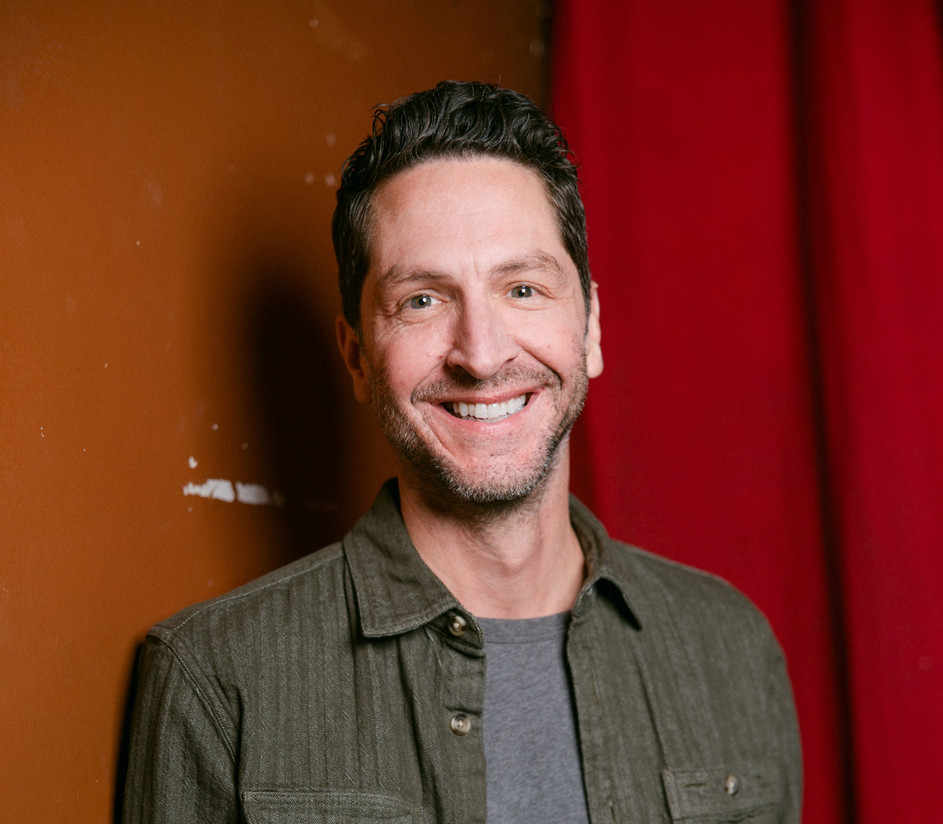
Josh Larsen

Josh Larsen is the co-host of the radio show and podcast Filmspotting, author of Movies Are Prayers and Fear Not! A Christian Appreciation of Horror, as well as editor/producer for Think Christian, a website and podcast exploring faith and pop culture. He’s been writing and speaking about movies professionally since 1994.

Morning Plenary: 9:30 AM

Part 1: Christian (Pop) Cultural Engagement

For most North American Christians, engaging with popular culture is no longer an option. This is the air we breathe. How can we do so with grace, discernment, and appreciation?


Morning Plenary:

Part 2: Movies Are Prayers

Movies can be many things: escapist experiences, historical artifacts, business ventures, and artistic expressions. Considered alongside the Christian ideas of God's sovereignty and common grace, they can also function as prayerful expressions of lament, praise, joy, confession, and more.

Lunch: Noon - 1:00 PM

There are only 100 spots for this light-hearted lunch with our speaker. In addition to movie trivia and fun games we will be hosting a COSPLAY competition. Come dressed as your favorite Movie, TV or gaming character. A panel of judges will determine a winner for a chance to win a Cineplex movie night for two (with popcorn and pop). Other prizes will be available as well.

Room: Airhart (1085) I Limit: 100 people

Afternoon Breakout Sessions: 1:00 PM

Engaging The Mind Of Christ (Through Metallica, Van Gogh, And High Mountain Hydrology)

John Van Sloten

John is a Calgary-based pastor, writer, and columnist for the Calgary Herald. His books include, The Day Metallica Came to Church (2010), Every Job a Parable (2017), and God Speaks Science (2023).

This workshop will give you theological tools to help you practice Christ’s presence everywhere. If all things were made through Jesus, then all things (to some degree) reveal his wisdom. Knowing Christ through the bible we can know Christ through creation—through physical nature, human nature, and the cultural creations of human nature.

I Think I've Seen This Film Before: The Death And Resurrection Of Taylor Swift

Glendon Frank

Glendon is a recent alumnus of Ambrose University, having graduated in 2021 with a Bachelor's degree in English Literature. Since graduation he continues to study and write about pop culture on various platforms. Endlessly fascinated by the intersection of faith and art, he is particularly drawn to films and stories that explore the complexity and nuance of the human condition.

This session is a discussion of the meteoric stardom of Taylor Swift and her career, as well as digging into the themes of love, life, and lament in her lyricism, all through the lens of asking what it means to engage with popular art while considering the Imago Dei. In an age of AI and algorithms where the ethics of art and consumption are at the forefront of our imagination, what does Taylor Swift's unique success mean and how ought we consider it?

Pressing The Right Buttons: Aligning Your Values In-Game And IRL

Alyssa Michaud

Alyssa is a musicologist who works at the intersections of technology, culture, and music. Her research focuses on the dynamics between audiences and artists in today’s technologically mediated society, and she is currently at work on a SSHRC Insight Development Grant in which she is exploring fan responses to digital and holographic concerts. Outside of her work in music research, Michaud once placed third in a national Dance Dance Revolution tournament, has 100% achievements on Steam in FTL: Faster Than Light, and cleared the original Binding Coil of Bahamut before it was nerfed in Final Fantasy XIV.

In 2022, the gaming industry was estimated to be worth $170 billion in global revenues—valued higher than both the global film and music industries put together. In this interactive breakout session, we will critically examine our relationships to this powerful medium by examining the ways in which gaming can foster positive values and also assessing its pitfalls. Through discussions, activities, and lots of examples from the world of gaming, this session will equip you to make more informed decisions about your approach to video games, and unpack the ways in which our controllers can connect us to deeper insights about ourselves and the world around us.

Princess Mononoke And Peacemaking: Studio Ghibli's Prophetic Masterpiece

Julian Erb

Julian is the Director of Community Life at Ambrose and he loves learning people’s stories. He enjoys getting out to the mountains with his family, the Beatles, and yummy food. He also serves part time at Grace Anglican.

How does an anime fantasy epic set in feudal Japan connect to our polarized context and the way of Jesus? We will look into this timeless story and seek to "see with eyes unclouded by hate" and the subversive invitation of peace making.

Afternoon Breakout Sessions: 3:00 PM

On Earth As It Is In Barbieland: Gender Expression, Christianity, And Barbie

Nikayla Reize

Nikayla Reize is the lead pastor of a parish church in Calgary called Awaken. She also serves as a sessional instructor at Ambrose University teaching Old Testament and Biblical Theology. She teaches workshops and seminars at churches around Southern Alberta and especially enjoys teaching on gender, inclusion, and the Bible.

This is a session exploring themes of gender expression in the past (tradition) and in the future (the coming Kingdom of Heaven) with the help of Greta Gerwig's Barbie. Barbie invites us to question the way things have always been done and dream about how they could be in our shared future. We will look at concepts such as patriarchy, matriarchy, and kyriarchy within Western Christianities as we discuss what it means to have the power to communicate ideas and make decisions for others versus being the product of someone else's ideas for how things should be. Barbieland is an imaginary place where young girls can pretend the world could be shaped according to their own hopes and dreams for a life that doesn't fit in a box. Is the Barbie movie envisioning a world that is anti-men or presenting a prophetic lament for a world that is anti-women? No one wants to be an accessory for the fulfillment and success of another and no one wants to be kept in a box. Body sovereignty and embodiment are deeply Christian ideas. Come prepared to discuss the Barbie movie and how the intersections of gender and power depicted there relate to our faith as Christians.

When Songs Become Friends: The Music That Helped Us Through Difficulties, Helped Us Know Ourselves, And Led Us To Solidarity And Healing.

Justin Bills

Justin Bills is a pastor, student and podcast host. Justin grew up in a missionary household in Los Angeles California. Key to surviving a lonely homeschooled upbringing was finding solidarity in music. Bands such as Pedro The Lion, Sufjan Stevens, Radiohead and Mewithoutyou became friends to help through adolescence and adulthood. Justin lives in Calgary with his wife and 3 daughters and is a Student at Ambrose.

Faith And Social Media: Navigating The Digital World With Jesus

Bryce Ashlin-Mayo

Bryce is the Dean of Theology at Ambrose. When he is not working at Ambrose, you will find Bryce preaching in Churches, doing Seminars, writing books, or building retro video arcade consoles. Bryce has written several books on social media and digital ministry including, “Age of Kings: Pursuing God’s Heart in a Social Media World.”

What does the Bible teach about navigating a digital world? Let's explore this topic together and delve into the story of King David in the Bible. We'll discover some valuable and enduring lessons on how to live a faithful life in our modern, high-tech world.

Evening Public Lecture: 7:00 PM

In partnership with the Chair of Christian Thought

Location: Central Library Topic: Fear Not! A Christian Appreciation of Horror Movies

Why would anyone want to watch horror movies? Why would Christians, in particular, bother with the genre? Combining critical observation and theological reflection, critic Josh Larsen makes the case that monster movies, creature features, slashers, and other fright films artfully reflect our deep worries in a way that resonates with the Christian experience.

Sunday, 4 February 2024

How many members of this Canadian Evangelical university's 2023-24 Student Council name the Bible as their favourite book?

For more evidence to cast doubt on the idea that one of Canada's leading Evangelical universities, Antichrist Ambrose University in Calgary, Alberta, is a Christian school, look at the biographies of the members of the 2023-24 Student Council, in which they mention their favourite books. One might think that the student leaders of an ostensibly Christian university would automatically choose the Bible as their favourite book, but only one did (and the fact that one did proves that they had the option of choosing the Bible). Ladies and gentlemen, the favourite books of your future "Evangelical" leaders (typos corrected by blogger):

Ambrose Student Body President: Nathan Snow
...
Nathan's favourite book is the Lord of the Rings: Two Towers by J.R.R. Tolkien.

Ambrose Student Body VP Of External Affairs: Alexsana Butt
...
Alexsana's favourite book is Perelandra by C.S. Lewis.

Ambrose Student Body VP Of Internal Relations: Liam Hawkins
...
Liam's favourite book is the Bible (because it's the only book he reads).

Ambrose Student Body Director Of Community Life: Tessa Stockowski
...
Tessa's favourite book is It Ends With Us by Colleen Hoover.

Ambrose Student Body Director Of Equity, Diversity, And Inclusion: Jasmine Joosse
...
Jasmine's favourite books are too many to list.

Ambrose Student Body Director Of Marketing: Diana Hruba
...
Diana's favourite book is Pride and Prejudice and Zombies probably

Ambrose Student Body Director Of Operations: Brett Meeberg
...
Brett's favourite book is Translating God by Shawn Bolz.

Ambrose Student Body Director Of Spiritual Life: Hayley Meijndert
...
Hayley's favourite books are Victorious Mindsets and The God Chasers.

Ambrose Student Body Director Of Wellness: Micaeliah Urquhart
...
Micaeliah's favourite books are The Hiding Place by Corrie Ten Boom and Les Misèrables by Victor Hugo.

Ambrose Student Body Executive Assistant: Randelle Spence
...
Randelle's favourite book is the Secret of the Garden.
I'm not familiar with all of these books or authors, but I have to wonder about anyone who would pick some of them as favourites. It Ends With Us is a romance novel that appears to have domestic abuse as a major theme, if the reader reviews are any indication. Who wants that?

The author of Translating God is associated with the New Apostolic Reforemation, and the book's foreword is by leading NAR heretic Bill Johnson. The fact that it's the favourite book of someone who "would like to enter into pastoral ministry" is cause for concern. Victorious Mindsets is by Steve Backlund, whose numerous books appeal to the same people who buy the books of NAR figures such as Bill Johnson and Kris Vallotton.

I can't find any listing for Secret of the Garden; I suspect the proper title is the children's novel The Secret Garden (1911) by Frances Hodgson Burnett.

Friday, 30 June 2023

World Evangelical Alliance is tied in with the United Nations, and supports the agenda of the UN and the World Council of Churches

Jesus answered, My kingdom is not of this world: if my kingdom were of this world, then would my servants fight, that I should not be delivered to the Jews: but now is my kingdom not from hence. John 18:36

For those who wonder if the Evangelical establishment (Big Eva, as A.D. Robles calls it) is part of the world system (it seems to this blogger that the higher up on the Evangelical ladder they are, the greater the chance that they're actually playing for the other team), one need look no further than the home page of the World Evangelical Alliance, where the WEA boasts of its ties to the evil and corrupt United Nations (bold in original):

An Evangelical Voice at United Nations

Serving a constituency of some 600 million evangelical Christians, the World Evangelical Alliance (WEA) is uniquely positioned to represent an evangelical voice at the United Nations (UN). Since the relocation of its Headquarters to New York in 2010, the WEA has increased its engagement at the UN promoting peace and reconciliation, advocating for the poor and needy, and also communicating evangelical beliefs and values.

The WEA holds Special Consultative Status in the Economic and Social Council of the UN (ECOSOC) which serves as the central forum for discussing international economic and social issues, and for formulating policy recommendations addressed to Member States and the United Nations system.

The WEA is also accredited to the UN Department of Public Information.
The following hardly needs commentary; the reader will notice not only the WEA support for the United Nations (including the UN's Sustainable Development Goals), but the WEA's referring to "Christian sisters and brothers in the World Council of Churches," and support for the WCC's position, thus showing a complete lack of discernment (bold, links in original).

UN New Agenda for Peace: Submission of the World Evangelical Alliance.

/ Human Rights, Human Security / By WEAatUnitedNations / June 12, 2023

The World Evangelical Alliance (WEA) has offered input to the UN’s “New Agenda for Peace,” a process recognizing the shared human responsibility to “protect and manage the global public good of peace.” In its submission, the WEA affirms the six potential areas for the New Agenda for Peace – reducing strategic risks, strengthening international foresight and capacities to identify and adapt to new risks, reshaping responses to all forms of violence, investing in prevention and peacebuilding, supporting regional prevention, and putting women and girls at the center.

UN New Agenda for Peace

Submission of the World Evangelical Alliance

The World Evangelical Alliance (WEA) commends the United Nations Secretary General for identifying the necessity of A New Agenda for Peace. We are grateful for the opportunity to join many voices contributing to a global conversation that we pray will lead to a future of hope and peace where swords are beaten into ploughshares and people can enjoy life in all its fullness with none to make them afraid.

The WEA began in 1846 as collective desire of Protestant Christians to be engaged in the social issues and injustices of their day. This original seed continues to grow and has become a global communion of approximately 600 million Christians in more than 140 countries. We believe Jesus Christ calls us to be actively engaged in the well-being of the world and all its peoples and that integral to that is the call to peacemaking and the building of societies where there is “positive peace” as described by the 2022 Global Peace Index.1 We believe Jesus Christ calls us to speak and act toward God’s transcendent and moral vision of the flourishing life for all people and creation that is sourced in faith, hope, and love. We believe God calls human authorities to remember our finiteness and dependency, our need for divine wisdom and forgiveness, and our responsibility to steward and build systems and structures together that are just and righteous, with particular concern for the vulnerable and oppressed. We confess we continue to have much to learn from God and others in the global human family in this regard. We also believe our global alliance, with its active congregations, organizations, and networks has much to contribute to this important dialogue upon which so much depends.

We celebrate the contribution to A New Agenda for Peace made by our Christian sisters and brothers in the World Council of Churches and add our affirmation to their submission.2 As fellow Christians with shared concerns, we seek to add to their important voice.

We also celebrate that the United Nations recognizes the shared human responsibility to “protect and manage the global public good of peace.” This submission seeks to contribute to this global public good by affirming the six potential areas for the New Agenda for Peace – reducing strategic risks, strengthening international foresight and capacities to identify and adapt to new risks, reshaping responses to all forms of violence, investing in prevention and peacebuilding, supporting regional prevention, and putting women and girls at the center. We are committed to the SDG's as focused goals to address those issues in our global communities that challenge environments of living in peaceful ways. We also recognize the value of strengthening and building upon the pillars for positive peace named by the Global Peace Index – well-functioning government, sound business environment, acceptance of the rights of others, good relations with neighbours, free flow of information, high levels of human capital, low levels of corruption, and equitable distribution of resources. Toward a New Agenda for Peace that will see the six potential areas strengthened and the eight pillars for positive peace undergirded, we call for special attention to be given to the following:

• Faith community participation

We submit that since faith communities of all kinds and confessions are found everywhere, in rural and urban settings, are uniquely contextually aware, have members involved in many segments of society, and are organized for community engagement, it is crucial that they and their leaders be welcomed, listened to, equipped, and involved as vital partners in any new agenda for peace. Both the Global Peace Index and Our Common Agenda name realities that faith communities are engaging and experienced in, and yet they are unnamed as potential contributors. The WEA has commissioned a Peace & Reconciliation Network to increasingly connect and assist our national alliances in peace and reconciliation work, have a Global Advocacy department with UN representation, and know other religious bodies care for the public good in this way as well. Most importantly, we have thousands upon thousands of local congregations, compelled by their faith in Jesus and his teachings, who actively care for and are engaged in their communities. A New Agenda for Peace in a globalized and pluralistic age should welcome and include the convictions, learnings, insights, contributions, and corrections of faith communities that are forming people who inhabit, labour, and serve within the areas and pillars that require crucial attention for the global public good.

• Trauma-healing

We submit that special attention be given, and investment made in trauma-care and the formation of trauma-responsive communities and structures. Unresolved trauma is a significant contributor to the breakdown of family and social structures, creating the individual and communal conditions for conflict and violence to simmer over generations and erupt disastrously. Attentiveness to the health of the whole person – mental, emotional, relational and spiritual – and the role trauma plays in eroding that health is a crucial part in forming communities and societies equipped to build positive peace.

• Mandatory peacebuilding education including women and children

We submit that special encouragement be given to educational curriculum development that includes the history and practices of peacebuilding. We believe that a global expectation of peacebuilding as a core educational component beginning with the youngest, and including women, would greatly facilitate the equipping of people of all ages, genders, areas and pillars of life to contribute to reducing strategic risks and be a deposit in prevention that would produce generational fruit in family, neighbourhood, business, culture-shaping, and governance.

• Investment in peacebuilding by government and business

We submit that national governments should be called to set a standard investment in peacebuilding. We also submit that business and industry should be invited to invest in peacebuilding as well.

Recent conflicts have increased defense spending by many countries with plans for greater expenditure. A New Agenda for Peace should call for governments to set minimum standards of investing in peacebuilding across their societies. Research, recognition, and rewarding of successful and grassroots efforts should not be seen as optional, but critical investment in human and environmental flourishing. We believe careful attention to regional voices of all involved parties, and religious and indigenous conflict resolution resources that exist in societies is a necessity. We propose that recognizing practices already and historically inherent in many cultures can help build a positive peace if attended to, learned from, and adapted for current realities. These, along with new and emerging peacebuilding capacities should be expected governmental investment.

In addition, we propose that business and industry should be challenged and incentivized to make social investment in peacebuilding an expected part of their social responsibility, entrepreneurship, and contribution to thriving and flourishing communities. Government and business, understanding the economic and environmental impact of violence and the economic and environmental impact of peace,3 should partner creatively in addressing the horrific, unjust, and peace-preventing impact of increased militarization and weaponization and expect investment that produces positive peace.

• Publish good news

As those who claim to be people of “good news” (the etymological root of “evangelical”), we submit that the publishing of good news stories of peacebuilding and reconciliation would contribute significantly to forming culture and shaping practices. A New Agenda for Peace should emphasize the telling of stories from all around the world, including faith communities, where a positive culture of peace is being formed and built. While not minimizing the responsibility to counter “fake” news and tell the truth of what is fractured and broken, we propose that telling good news stories of where the public good of peace is being worked at, contended for, and being realized is strategic for transformation, particularly in an age where the technological interconnectedness of the world enables rapid and viral information sharing.

In conclusion, we express again our gratitude for the invitation of the Secretary General to make this contribution to A New Agenda for Peace. We concur with the view of the World Council of Churches in their submission that “in a world beset by such a constellation of converging crises, a traditional silo-ed approach to addressing peace and security could not pretend to be fit for the purpose.” We encourage the United Nations to a collaborative and wholistic approach that does not ignore voices of faith but welcomes their contribution and participation as vital for the healing of the nations.

With respect and for the sake of the world,

Archbishop Prof. Dr. theol. Dr. phil. Thomas Schirrmacher, PhD, DD, Secretary General

Rev. Phil Wagler, Global Director, Peace & Reconciliation Network

Prof. Dr. Janet Epp Buckingham, Director, Global Advocacy

----------------------------------------------------

1 Institute for Economics & Peace. Global Peace Index 2022: Measuring Peace in a Complex World, Sydney, June 2022. Available from: http://visionofhumanity.org/resources (accessed May 18, 2023).

2 World Council of Churches’ submission for UN New Agenda for Peace. Peter Prove Director, Commission of the Churches on International Affairs World Council of Churches Geneva, 6 April 2023.

3 Global Peace Index 2022, 43-44

The reader will notice the closing words "for the sake of the world" rather than "for the sake of the Lord Jesus Christ." The reader is invited to compare the WEA's submission to the World Council of Churches’ submission for UN New Agenda for Peace (bold, underscore, links in original):

Introduction

Formed in the immediate aftermath of the Second World War, the perspectives and priorities of the World Council of Churches (WCC) were marked from the outset by moral abhorrence at the suffering resulting from and atrocities perpetrated in that conflict. In response, the WCC committed itself to working for the development of international law, to promoting multilateral international cooperation, and to a holistic approach to seeking a sustainable global peace founded on justice and human rights.

At the 11th Assembly of the WCC, held in Karlsruhe, Germany, on 31 August-8 September 2022, delegates from the WCC’s over 350 member churches in more than 120 countries, representing a total global constituency of approximately 580 million people, reflected on a current context in which all of those commitments and values are threatened and undermined. The prevailing ‘polycrisis’ of climate change, conflict, forced displacement, pandemic, rampant inequality, economic instability and political fragmentation was recognized by the Assembly as demanding a holistic approach and intensified international cooperation more than ever before.

Among other relevant policy positions1, the Karlsruhe Assembly:

– rejected the polarization and division of the human community and declared WCC’s commitment to stay together as an ecumenical fellowship, and to grapple with the threats and challenges to peace, justice, human security and environmental sustainability through dialogue, encounter, the pursuit of mutual understanding, and cooperation, rather than through exclusion and confrontation;

– reasserted the ecumenical movement’s rejection and denunciation of war as contrary to the will of God;

– reiterated calls for a global ceasefire, as an urgent moral imperative, in all armed conflicts around the world, and for parties to such conflicts to engage and persist in dialogue and negotiations until just and sustainable peace can be achieved, and to abstain from war;

– appealed for much greater financial and practical support by the international community for peace-building and peace-making rather than for division and military confrontation, and underlined the important role of women and youth as peacemakers;

– called for greatly increased investment by governments and other actors in the foundations of true human security and global stability, including for urgent action for climate justice and to avert the threat of catastrophic climate change, for a just transition to renewable energy, for the elimination of extreme poverty, for sustainable development, and for measures to control rampant inequality, including through tax justice and reparations; and

– encouraged renewed efforts to reform and improve the effectiveness of UN and other intergovernmental instruments for promoting peace and human security. Accordingly, the WCC welcomes the opportunity to make this submission for the ‘New Agenda for Peace’, proposed by the UN Secretary-General in his report “Our Common Agenda”.

Submission

The WCC strongly affirms the urgency of the Secretary-General’s call for concerted collective efforts to respond effectively to multiple converging global challenges, or risk significant systemic breakdown and perpetual crisis.

We concur with many of the main directions proposed for promoting peace and preventing conflicts, including with regard to:

– Reducing strategic risks (nuclear weapons, cyberwarfare, autonomous weapons);

– Strengthening international foresight;

– Investing in prevention and peacebuilding;

– Supporting regional prevention; and

– Putting women and girls at the centre of security policy.

Further, we underline the intersectionality of many proposals in other areas, and their critical importance for sustainable peace, including especially:

– Urgent and effective action to address the climate and biodiversity emergencies;

– A renewed social contract anchored in human rights;

– Universal social protection, including health care and basic income security;

– Removing barriers to young people’s participation in politics and society;

– Ensuring that policy and budget decisions take into account their impact on future generations;

– Eradicating violence against women and girls;

– Promoting women’s economic inclusion;

– Legal identity for all, ending statelessness, and protection of internally displaced persons, refugees and migrants;

– Ending the ‘infodemic’, ‘fake news’ and ‘the war against science’;

– Tackling corruption and illicit financial flows

– Reforming the international tax system;

– Promoting regulation of artificial intelligence; and

– Stronger global health security and preparedness.

Among the many issues that must be encompassed in the New Agenda for Peace, we wish to place special emphasis on the following:

Nuclear disarmament

Though the Russian invasion of Ukraine has brought the threat of nuclear conflagration back more prominently into the public discourse and consciousness, the threat had always persisted. Despite paying lip service to their obligations under Article VI of the Treaty on the Non-Proliferation of Nuclear Weapons (NPT), nuclear-weapon states have consistently resisted progress towards the “general and complete disarmament” that the NPT envisages. Moreover, international efforts to prevent further proliferation of nuclear weapons have been fatally undermined by the obvious hypocrisy of such efforts being led by members of the same club of recalcitrant nuclear-weapon states.

It is legally and ethically anomalous that unlike chemical weapons, biological weapons, antipersonnel landmines and cluster munitions, nuclear weapons – the most indiscriminate weapons of mass destruction ever created by human beings – are not prohibited in a comprehensive and universal manner. The Treaty on the Prohibition of Nuclear Weapons (TPNW) seeks to fill this gap in the international disarmament regime, by establishing a new normative principle in international law for the comprehensive elimination of nuclear weapons, prohibiting the development, testing, production, stockpiling, stationing, transfer, use and threat of use of such weapons, as well as assistance and encouragement to the prohibited activities, in line with the commitment expressed under article VI of the NPT. Rather than on the narrow military/security basis of previous nuclear disarmament negotiations, the TPNW is founded upon recognition of the appalling humanitarian and ecological consequences of nuclear warfare. Nuclear-weapon states and nuclear-umbrella states that seek to undermine and obstruct the TPNW do so at the peril of the entire globe.

Moreover, non-proliferation efforts within the framework of a multilateral commitment to the comprehensive elimination of nuclear weapons will carry greater political weight and credibility than such efforts by nuclear-weapon states while seeking to retain their own arsenals and the political leverage they bring.

Therefore, the WCC expects the New Agenda for Peace strongly to profile the TPNW as the hitherto missing link in the nuclear disarmament regime, and to build upon the new normative principles it has introduced for the stigmatization of nuclear weapons (regardless of who possesses them) and for accelerating progress towards the elimination of this most morally egregious category of weapons.

Other disarmament challenges

The WCC is greatly disturbed by the efforts by some States and private companies to develop autonomous weapons systems – so-called ‘killer robots’ – capable of being deployed and engaging in theatres of armed conflict without meaningful human control. The concern we have for the regulation of artificial intelligence in general is greatly amplified with regard to applications of AI in armed conflict. The moral and legal issues are so self-evident that they hardly require belabouring here. However, the WCC expects that the New Agenda for Peace will be clear and categorical in its opposition to autonomous weapons systems, and in its support for a pre-emptive ban on such weapons.

Likewise, the New Agenda for Peace should include a stronger renewed focus on controlling and reversing the proliferation of small arms and light weapons, which bring so much death and suffering in so many societies in both South and North, in some cases to the point of destabilizing entire nations. The WCC has been a strong advocate for the Arms Trade Treaty (ATT) and its implementation. We believe that in this period of escalating militarization, confrontation and social fragmentation, there must be even stricter oversight and control of the manufacture of and trade in small arms and light weapons, nationally and internationally, to prevent the spread of such weapons becoming even more of a threat to peace and social stability.

Supporting national capacities for prevention, peacebuilding and resilience: The role of religious leaders and interfaith peacebuilding

The WCC strongly affirms the need for the New Agenda for Peace to promote increased support for national capacities for prevention, peacebuilding and resilience, and investment in national level infrastructure for peace. Within this context, we particularly wish to highlight the importance of engaging religious leaders and faith-based actors. In many societies, especially - but not only - in the Global South, religious leaders, communities and institutions constitute the foundations of societal resilience, remaining even when governmental and other forms of authority fail or are absent.

Moreover, the years since the 1992 UN Agenda for Peace was published have been tragically and indelibly marked by the phenomenon of religiously-inspired extremism, and violence and conflict based on religious identity. In far too many, and seemingly an increasing number of contexts around the world, people and communities are targeted and attacked, often with deadly violence, on the basis of their religious identity. In situations where religious discrimination is reflected in official or practical access to citizenship rights, the risks of such violence are greatly elevated. In such contexts, interfaith cooperation to prevent and confront violence, and to promote inclusion, equal citizenship, and fundamental human rights for all is of vital importance. WCC and its member churches work with interfaith partners in many conflict-affected and conflict-risk situations around the world for these purposes.

Given the current and historical context in which the New Agenda for Peace is being formulated, in which religious discrimination and hatred has been a key driver of conflict but in which religion also remains such an important source of societal resilience, we expect that appropriate recognition and prominence will be given to the importance of engaging with faith-based and interfaith peacemakers at the national level in the construction of sustainable peace.

Sanctions/economic warfare

Though sanctions are generally and understandably seen as preferable to measures for the restoration of international peace and security that entail the use of armed force, in WCC’s experience this presumption warrants much closer examination and reconsideration. In practice, sanctions – whether unilateral or mandated by the UN Security Council – often produce humanitarian suffering and other consequences at least as severe, and generally more widespread, than the use of armed force. In terms of their humanitarian impacts, such measures can often be considered as tantamount to warfare by economic means. This is particularly true in the case of comprehensive ‘maximum pressure’ sanctions regimes. The imposition of such measures can also poison the political environment for negotiations and other initiatives for peace (including civil society initiatives), creating major obstacles to the resolution of conflict.

Moreover, according to our observations, sanctions and related measures are generally unsuccessful in achieving their stated aims. Therefore, we recommend that the New Agenda for Peace include a commitment to a thorough ‘cost-benefit’ analysis of the current utilization of sanctions and related measures, weighing their success (or lack thereof) in achieving their legitimate political/security aims against their negative humanitarian, human rights and political impacts.

WCC recently partnered with the World Evangelical Alliance, Caritas Internationalis, ACT Alliance and the Graduate Institute of International and Development Studies (Geneva) to undertake research on the negative impacts of sanctions on humanitarian and social service activities from the specific perspective of churches and church-related organizations. The report is available here.

Mental health/psychosocial support and trauma-healing

To avoid repetition and inter-generational transmission of cycles of violence and instability, mental health, psycho-social support and trauma-healing is often the missing link. It is also generally the most underfunded component of any crisis response. In our view, the New Agenda for Peace must seek to raise the profile of and the support provided to this essential contribution to peaceful, inclusive and sustainable societies, not only in the context of preventing conflict but also for addressing many other aspects of the current ‘polycrisis’, and with a special priority for children and young people.

Especially in contexts where professional mental health services are inadequate to the scale of the need, local religious leaders and faith communities are often by default the primary providers – or potential providers – of psycho-social care and support. Again in the context of investing in local/national resilience, we recommend engagement with and capacity-building for local religious leaders and communities to enable them to provide better and more effective care in this domain, in order to help rebuild lives, and to break the cycle of violence and instability.

The resource extraction-conflict nexus

Resource extractive activities such as drilling for oil and gas, mining, and logging, not only impose heavy ecological costs, but have often been linked to increased incidence, frequency and duration of armed violence, particularly in contexts marked by high levels of socio-economic inequality and where local communities have been largely excluded from decision-making processes. In addition, the militarization of resource-rich lands with a view to exerting state or corporate control over resources has often led to violence and grave violations of the rights of Indigenous Peoples, farmers and fisher-folk, and threats against environmental defenders including religious leaders who have spoken out against such activities.

We believe that the effective management of a society’s natural resources – not least ensuring equitable sharing of benefits and just allocation of burdens – must be a priority not only for the sustainable development agenda but also for the New Agenda of Peace. In this regard, policies that promote equitable wealth distribution, public investment and dignified employment must be given due importance.

Moreover, we observe that continued development of new fossil fuel extraction and related infrastructure constitutes – in the context of the accelerating climate emergency – a kind of weapon of mass destruction (so-called ‘carbon bombs’) imperiling the entire living planet. The New Agenda for Peace should name, stigmatize and denounce this kind of environmental violence and destruction.

Racial justice

The commitment to racial justice, the elimination of xenophobia and of related intolerance has been widely discussed, affirmed and reiterated in various UN forums. However, these threats to our shared humanity remain firmly entrenched in most societies across the world. The persistence of racism, xenophobia and related discrimination remains a major threat to peace in many societies, the salience of which is increasing in some contexts. Accordingly, the New Agenda for Peace must help raise the profile and resources allocated to the UN racial justice mechanisms and amplify calls for inclusive and sustainable communities, free from such discrimination.

The intersection of racism and climate, health, food and social injustice must be lifted up in the New Agenda for Peace. because in our view sustainable peace will be impossible to achieve if some groups of people continue to be disproportionately burdened by the “polycrisis” of today according to their race, ethnicity, colour or place of origin.

Conclusion

The WCC welcomes the convergences and intersectionalities recognized in the framing of the New Agenda for Peace. Indeed, in a world beset by such a constellation of converging crises, a traditional silo-ed approach to addressing peace and security could not pretend to be fit for the purpose.

Moreover, the increasing gulf between global humanitarian needs (driven by the growing frequency and severity of extreme weather events, as well as by conflict) and the resources committed to meeting those needs, obliges the international community to finally move beyond rhetoric to action to address the upstream root causes in order to prevent such crises rather than perpetually failing to meet the critical humanitarian needs they produce.

Respectfully submitted

Peter Prove
Director, Commission of the Churches on International Affairs
World Council of Churches
Geneva, 6 April 2023
---------------------------------------------------------
1 Expressed especially in the Assembly statement “The Things That Make For Peace: Moving the World to Reconciliation and Unity”, September 2022
These two submissions provide ample evidence that "Evangelicals" and liberals are now basically indistinguishable from one another. The "Evangelical" voice at the United Nations is an echo rather than a rebuttal; it reminds me of the old statement about Canadian politicians that they represent Ottawa to us rather than representing us in Ottawa.

Speaking of Canada, the Evangelical Fellowship of Canada boasts of its connections to the World Evangelical Alliance, including the following (bold, links in original):

WEA Strengthened by Canadian Ties

The World Evangelical Alliance is a network of churches and organizations representing more than 600 million Evangelicals. The EFC is its national alliance partner in Canada.

Several EFC staff and former staff are involved in WEA leadership including:

EFC executive vice-president David Guretzki is treasurer of the WEA International Council.

Brian Stiller is the WEA global ambassador, and the EFC hosts his Dispatches blog.

Christine MacMillan is the WEA senior advisor on social justice as well as chair of the WEA Global Human Trafficking Task Force.

Janet Epp Buckingham is the WEA's director of global advocacy.

Steve Hubley is the WEA's director of development.

Canadians can donate online to support the WEA and individual Canadians who work there.

The WEA includes commissions on mission, religious liberty, theology, women, youth as well as initiatives on human trafficking, refugees, leadership training, nuclear weapons, generosity, creation care, business and more.

WEA Peace and Reconciliation Network in Canada

The Peace & Reconciliation Network of the World Evangelical Alliance describes its work using the acronym TRAIN (Teaching, Restoration, Assistance, Initiative, Networking). Some of its Canadian leaders include:

global director (and EFC global liaison) Phil Wagler of Kelowna, B.C.

Canadian coordinator Joel Zantingh of Guelph, Ont.

director of network development Manuel Böhm of Kitchener, Ont.
The EFC needs to update its information on this page; David Guretzki is now the president of the Evangelical Fellowship of Canada. The reader will recognize the names of Phil Wagler and Janet Epp Buckingham as signatories of the WEA's submission on the UN New Agenda for Peace.

See my posts: Today's Evangelicals, Tomorrow's Liberals--A Warning from 1983 (January 13, 2010)

More evidence that yesterday's liberalism has become today's evangelicalism (November 8, 2011)

More evidence that today's yesterday's evangelicals are tomorrow's today's liberals (January 24, 2015)

Mainline church leaders 50 years ago advocated methods used by "evangelical" churches today (November 6, 2018)

Evangelical churches in Canada use Covid-19 as an opportunity to team up with unbelievers in promoting an antichrist agenda (March 31, 2022)

July 25, 2023 update: Tom Littleton has just posted this at his blog Thirty Pieces of Silver: United Nations & WEF Plan to Double Down on 2030 Sustainable Goals in September Meeting While Evangelicals Have Already Signed On (July 25, 2023)

September 27, 2023 update: The International Council of Christian Churches, at its 21st World Congress in Collingswood, New Jersey from June 21-28, 2023, adopted the following resolution (bold in original):

The World Evangelical Alliance and Apostasy

POSITION STATEMENT

The World Evangelical Alliance (WEA) traces its roots to 1846, when the Evangelical Alliance was inaugurated in Great Britain. At present, the organization includes in its membership an extensive list of regional bodies, such as the National Association of Evangelicals (NAE) in the United States. It also includes many wellknown mission, medical, legal, educational, and relief agencies as affiliates.

Since its inception in 1948, the International Council of Christian Churches (ICCC) has stood in opposition to what was then called the New Evangelicalism. The NAE, a mouthpiece of this New Evangelicalism, championed a philosophy of “infiltrating” the apostate churches — particularly those in the Modernistic National Council of Churches (NCC) and the World Council of Churches (WCC). In contrast, the American Council of Christian Churches (ACCC), and the ICCC took the Biblical position that Christians and churches should “separate” from apostasy, compromise, and unbelief (2 Corinthians 6:14-7:1).

As the years have passed, the warnings issued by the ICCC have proven to be correct. When a person or church begins to use human reasoning to countenance compromise on things concerning which the Bible is clear, there rarely is a return to Scriptural conformity and obedience. Compromise breeds compromise, and things usually continue to progressively diverge from what God has commanded in His Word. The WEA is a case in point. It has passed the point where its goal was just to “infiltrate,” to the place where it now fully cooperates with the apostasy.

WEA considers itself to be one of the “Four Pillars” to bring about global “Christian Unity.”

On June 17, 2022, the WEA website carried the headline: “WCC, Global Christian Forum (GCF) sign memorandum of understanding affirming mutual quest for Christian Unity.” The WEA writer reports: “Both Sauca [World Council of Churches Acting General Secretary at the time], and Essasmuah [secretary of the GCF] expressed joy at the pivotal role of the four pillars — ‘namely the WCC, World Evangelical Alliance, Pentecostal World Fellowship and the Roman Catholic Church.’”

The reporter continued that Archbishop Thomas Schirrmacher, secretary general / CEO of the WEA, stated at the meeting that he considered it to be “gracious of the WCC to agree to be just one pillar of several,” leaving room for the other three groups. This was not just the description of a WEA staff writer. Dr. Schirrmacher used this language himself, publicly declaring that the WEA is “one of the [four] pillars.”

The report continues that this memorandum of understanding was signed by Fr. Andrzej Choromanski, of the Pontifical Council for Promoting Christian Unity, the WCC’s Rev. Prof. Dr Ioan Sauca, Rev. Dr. Casely Essa­muah of the Global Christian Forum, Archbishop Thomas Schirrmacher of the World Evangelical Alliance, and William Wilson of the Pentecostal World Fellowship.

Ties between the WEA and WCC have never been closer.

At one time, many evangelicals agreed that the WCC was an apostate organization. Some top WCC leaders denied such cardinal doctrines as the Virgin Birth of Christ, the Deity of Christ, the necessity of Christ’s atonement on the cross, His bodily resurrection, His working of many mighty miracles, and so forth.

However, in recent years, the WEA has had extensive cooperation and has begun working closely with the WCC, The Roman Catholic Church, East Orthodox churches, and so forth.

At the WCC 11th World Assembly, August 31 through September 8, 2023, WEA Secretary General Archbishop Schirrmacher was in attendance. Together with greetings of ecumenical cooperation from Pope Francis, and representatives of Eastern Orthodoxy and Judaism, Schirrmacher spoke on behalf of the WEA.

He began by praising outgoing WCC Acting General Secretary Ioan Sauca, a priest in the Romanian Orthodox Church. Speaking of their close “friendship and cooperation,” he stated: “Professor Sauca has been a gift of God to the body of Christ for such a time as this.” Pointing out that the WEA and WCC were of approximately equal size, Schirrmacher stated: “We are aware that we have a considerable overlap in membership.…”

He continued: “Nowadays, WCC and WEA work together in most areas of ministry. We exchange members on all important commissions. My own involvement in [the WCC] Faith and Order [Commission] has given me enormous insight into the different theological topics that still divide churches and the urgent need for more intense listening to each other.”

This close union between the two groups has been apparent for many years. On August 25, 2021, the WEA official website carried a headline titled: “World Council of Churches (WCC) and World Evangelical Alliance (WEA) Strengthen Their Collaboration [August 2021].”

In his concluding remarks to the WCC Assembly, Bishop Shirrmacher stated: “We pray for God’s blessing on all the ongoing work of the WCC and this Assembly. May God the Father give us all strength to work on behalf of his creation. May Jesus Christ, the Son of God, who saved us from sin and death, be our example in his willingness to give his life for the good of others. And may the Holy Spirit keep us all from evil ways and unjust thoughts and lead us into the growing truth promised to his church on earth.”

The entire message was based almost exclusively on “peace and justice” themes, decrying the war in Ukraine, and fearing that “racism” against Russians would arise from this. He also spoke strongly against anti-semitism. We will not judge Schirrmacher’s intentions, but almost any such speech he and others from the WEA make to ecumenical gatherings fails to explicitly promote the real gospel of salvation by faith in Christ alone.

The WCC also speaks about Jesus Christ saving us from sin and death, but it is virtually always in vague terms, which could be interpreted in different ways. When it is explicit, it invariably is focused on social justice and making “all things new” on this earth.

Instead of an encouragement to fulfill Christ’s Great Commission, as presented in the Bible, Schirrmacher speaks of “work on behalf of God’s creation.” Instead of the Good News, we are to make Christ “our example in his willingness to give his life for the good of others.” Instead of the Holy Spirit illuminating the Scriptures, the sure and complete Word of God, we are to look to Him to “lead us into the growing truth promised to his church on earth.” In the context of social justice, we are to look to the Holy Ghost to “keep us all from evil ways and unjust thoughts.”

The WEA and WCC both promote a questionable version of “social justice” at the United Nations.

The WEA and WCC both hold offices at the United Nations, where they speak out about all kinds of “social issues.” The WEA holds Special Consultative Status with the UN’s Economic and Social Council (ECOSOC), “which serves as the central forum for dis­cussing international economic and social issues, and for formulating policy recommendations addressed to Member States and the United Nations system.”

The WEA uses this platform to advocate for “climate care,” and “global sustainability,” together with other issues of “social justice.” In its August 21, 2021, meeting with the WCC, the two organizations agreed to expand their cooperative work for “climate justice.” In 2019, the WEA established the “WEA Sustainability Center (WEASC) in the strategic ‘UN City’ of Bonn, Germany.” The whole goal of the Center is to teach and encourage the churches to take part in “climate care.”

The ICCC certainly desires to see clean water, clean air, and to discourage practices which harm our planet, but this is not the gospel of Christ. Further, since the WCC program for “justice” is decidedly Marxist, one must be very concerned that the WEA has such ease in collaborating with the WCC in these matters.

Evangelical churches and organizations need to be obedient to Scripture in order to warrant our support.

Many have criticized the ICCC, and other Bible-believing groups, for being too strong in their stand against such compromise. People often justify such compromise with the human rationalization that many WEA member groups “do so much good.” Some just choose to ignore the facts, or simply wink at the situation.

As Bible believers, we must not have a censurious spirit, and we should be patient and kind, but nowhere in the Bible are we commanded to support a church or organization because “they do so much good.” It is not there! The Bible is clear from beginning to end that true Christian love, cooperation, and support are based on obedience to Christ and His Word — nothing else.

Many so-called conservative denominations, including the Presbyterian Church in America, the Presbyterian Church of Brazil, to name just a couple, maintain their membership in the WEA through the World Reformed Fellowship (WRF). Even within that group there are many unfaithful churches.

In addition to regional evangelical organizations, and a few denominations with international reach, there are also many non-profit organizations familiar to many Christians. Even though many do seemingly “good work,” yet their disobedience must be a real concern for Bible believing Christians. These organizations include:

A Advocates International, AM International, Asia Theological Association, Asian Access, B Barnabas Aid, Bakke Graduate University, Barnabas Relief Fund, Bible Discovery, Bible League of Canada, Biblica, C Campus Missions International, CEDAR Fund, Center for Mission Mobilization, ChinaSource, Christian Endeavor World Union, Christopher Sun Evangelistic Association, COMIBAM – Cooperation of Mission from Latin America, Creatio International, Crossroads Christian Communications Inc., Cru, D David Chung Ministries International, E EFCA Reach Global, Elim Center International, Engineer Ministries International, Evangelical Presbyterian Church, Every Home for Christ International, Every Nation Churches & Ministries, F Faith & Family Foundation, Finnish Lutheran Overseas Mission, Frontier Ventures, Frontiers USA, G Global Outreach Day, Global Scholars, Gospel & Information Technology, H Healthcare Christian Fellowship International, Holy Bible Society, I Integral Alliance, International Association for Refugees, International Association of Evangelical Chaplains, International Christian Medical and Dental Association (ICMDA), International Council for Evangelical Theological Education – ICETE, International Evangelism Association, International Justice Mission, International Needs Network, J Jews for Jesus, K Kenosis Media Group, L Luis Palau Association, M Micah Global, Middle East Concern, N The Navigators, No More Violence International, NORMISJON, Norsk Luthersk Misjonssamband (Norwegian Lutheran Mission), O Olivet Center for World Mission, Olivet University, One Challenge International, One Collective, One Mission Society, OneHope, Open Doors International, Operation Mobilisation, P The Pentecostal Assemblies of Canada, Pioneers International, Power to Change, R Refugee Highway Partnership, Reliant Mission, RREACH, RUN Ministries, S Saint Luke Society, The Salvation Army, Scripture Union International Council, SIM International, Sojourners, T Take Heart, TEAM – The Evangelical Alliance Mission, Tearfund UK, Teleo University, Timothy Two Project International, Trainers of Pastors International Coalition, U United World Mission, V Veritas College International, Veritas Legal Society, Voice of the Martyrs Canada, W Water is Basic, World Evangelical Theological Institute Association, World Mission Prayer League, World Olivet Assembly, The World Reformed Fellowship, World Team, World Thrust International, World Vision International, World Without Orphans, WorldVenture, Wycliffe Associates, Wycliffe Global Alliance, Y Young Disciples of Jesus, Youth Evangelical Fellowship, Youth for Christ International.

Conclusion

The International Council of Christian Churches, meeting in its 21st World Congress, June 21-28, 2023, in Collingswood, NJ, USA, condemns the compromise with apostasy that continues to characterize the World Evangelical Alliance. Bible-believing Christians are urged to channel their support exclusively to churches and Christian organizations which are not involved in such compromising relationships. Further, the ICCC calls on all churches and organizations affiliated with the WEA to:

1. Withdraw your membership from the WEA, its regional councils, and any other organizations which fail to remain separate from all unbelief and apostasy. The Scriptures make quite clear that Christian love and fellowship are based solely on obedience to Christ and the Scriptures. You simply cannot “work together in most areas of ministry” and “exchange members on all important commissions” with the apostate WCC and be faithful to Christ. “If ye love me, keep my commandments” (John 14:15).

2. Make fidelity and obedience to Christ and His Word the foundation of your church or organization. Utilitarian and pragmatic decisions are never of God if they violate His Word. God’s work must always be done in God’s way. ““Many will say to me in that day, Lord, Lord, have we not … in thy name done many wonderful works? And then will I profess unto them, I never knew you.…” (Matthew 7:22).

3. Firmly recognize that it is God who must build our ministries. No associations which may bring funding and influence — even for worthy purposes — will ever justify being unfaithful to Christ. “Except the Lord build the house, they labour in vain that build it: except the Lord keep the city, the watchman waketh but in vain” (Psalm 127:1).

4. Actively carry out Christ’s Great Commission: “… Thus it is written, and thus it behooved Christ to suffer, and to rise from the dead the third day: And that repentance and remission of sins should be preached in his name among all nations.…” Although Christians are to oppose injustice and corruption in our fallen world, this is not the Gospel of Christ. Anything presented as the “gospel” apart from the glorious redemption purchased by Christ, is indeed a counterfeit gospel which cannot save.

5. Make common cause with those who seek to be faithful to the Scriptures. “But if we walk in the light, as he is in the light, we have fellowship one with another, and the blood of Jesus Christ his Son cleanseth us from all sin.” (1 John 1:7).
Click here to download the ICCC position statement.

December 16, 2023 update: Another post from Tom Littleton at Thirty Pieces of Silver: World Evangelical Alliance Role in Upcoming WEF/DAVOS 2024 “Faith in Action” Collaboration (December 17, 2023)