Showing posts with label Amusement. Show all posts

Wednesday, 16 October 2024

Youth "ministry" in at least two churches in Winnipeg (and one in Providence) now includes Dungeons & Dragons

There is a way which seemeth right unto a man, but the end thereof are the ways of death. Proverbs 14: 12 (also Proverbs 16:25)

I've never played or had any desire to play Dungeons & Dragons or any other fantasy role-playing game, but I remember when the game was at the peak of its popularity in the 1980s. One of the few times I ever watched Sally Jessy Raphael's tabloid television show was when she had an episode on D&D in 1989. One of her guests was Paul Valentine, founder of the World Church of Satanic Liberation, and even he said that Dungeons & Dragons could be dangerous for players if they had an evil Dungeon Master. Christians warned against the game in those days, but now there are at least two churches in Winnipeg that use D&D as part of youth "ministry."

There's an old saying, attributed to various people, "What you win them with is what you win them to," or "What wins them is what keeps them." If you use Dungeons & Dragons to attract young people to church, that's what you're winning them to, and what will keep them in church. When I read of the nonsense described in the following article, it makes me more grateful that the Lord saved me when He did. As reported by John Longhurst in the Winnipeg Free Press, October 16, 2024 (photos by Mr. Longhurst):

Fifty years ago, a new game appeared on the scene: Dungeons & Dragons.

Soon after being introduced, the fantasy role-playing game, with its magic, wizards, sorcerers and warlocks, was criticized by many Christian leaders who saw it as a portal to the demonic — a way for Satan to steal the souls of unsuspecting youth.

That was during the time of the so-called “satanic panic,” when some Christians saw the devil everywhere they looked, from heavy metal music to graffiti.

One religious tract that circulated at the time said the game — in which players embark on adventures in a fantasy setting, directed by a dungeon master — was a form of “intense occult training” that caused young people to become witches and even to kill themselves.

In at least two churches in Winnipeg, D&D is seen in a very different light.

At River East Church, which is affiliated with Mennonite Church Manitoba, the game is seen as a great way to engage youth.

That’s the view of associate pastor Aaron Thiessen, 35, who runs a twice-monthly D&D game night at the church for as many as 25 youth from grades 7 to 11.

Thiessen hadn’t played the game himself growing up.

“It’s not that my parents were against it; I just thought it wasn’t for me,” he says.

When he discovered many young people in the church were into D&D, Thiessen decided to start some informal game nights in 2017. It went so well, he made it an official youth activity in 2019.

“The first time we tried it, 10 young people showed up. Now we have trouble keeping up with all who want to play,” he says.

The pandemic put a dent in the game — though they kept playing it online — but it came back stronger than ever when COVID abated.

Many of the youth who come to game nights aren’t from the congregation.

“For some, it’s the one connection they have to a church,” Thiessen says, adding it enables him to engage youth he had not met before, in a different way.

For him, the game nights build community and provide him with opportunities to have natural conversations with youth. He especially likes to see introverts open up as they play.

As for who comes, it’s a good mix of male and female players.

“It’s not just for guys anymore,” he says.

Thiessen begins each session with a story from the Bible or a story of a saint. On an evening in October, it’s the story of Moses going up a mountain, where he saw a burning bush and heard the voice of God.

“Mountains were special places where people could run into a deity,” Thiessen tells the youth about that Bible story. “I’m curious about what stories you will tell tonight.”

For Thiessen, incorporating stories such as this is a way to include a bit of spiritual teaching.

“The Bible is a book of stories, stories that continue to impact us today, stories that shape us as people, just as D&D is about stories,” he says.

The game also gives him and the adults who volunteer as dungeon masters to run the games a way to explore issues outside the games themselves.

“It gives us chances to explore why things happen the way they do in a game, the moral choices characters make,” Thiessen says.

After the games, there can be a time to debrief and talk about what happened.

Nathan Christmas, 18, is a volunteer dungeon master at River East. For him, D&D is a core way to bring youth together in a fun activity.

“It’s a space where youth can get together and tell stories. It builds conversation, improv and critical thinking skills,” he says.

For Kiana, one of the youth playing the game, it’s an opportunity to be with friends and “be in a different world.” For Jaden, it’s about “creating new worlds and stories with friends.”

Another congregation using D&D is FaithWorks, an independent church that meets on the campus of Canadian Mennonite University.

It’s organized by Christopher Neufeld, 42, who wasn’t allowed to play the game as a child, owing to some sort of “ambiguous evil” that was said to surround it.

In high school, he started to play with friends. Today he uses it as a way to engage young adults in the congregation; he hopes to start another game for youth in the church, too.

“It’s a connecting point with the church for some of them. Something in common we can do together,” he says.
Kiana (left) and Nori play Dungeons & Dragons at River East Church.

Anton Klein serves as a dungeon master during game night at River East Church.

I remember the "satanic panic" in the '80s, which included accusations of "backmasking" in rock music recordings in the early years of the decade, and accusations of satanic ritual abuse and murder toward the end of the decade. The latter peaked from about 1988-1992, and faded away when evidence mounted that many of the accounts were the result of false memories. I believe the concerns about Dungeons & Dragons, however, are legitimate. A good book on the subject from a Christian perspective is Playing with Fire by John Weldon and James Bjornstad (1984).

December 30, 2024 update: This isn't happening only in the capital of Manitoba, but also in the capital of Rhode Island; as reported by Jonny Williams of the Providence Journal, December 28, 2024 (bold, links, photos in original):

PROVIDENCE – On a recent overcast afternoon on the second floor of a brick building on Bassett Street, a fierce battle raged. Fireballs soared across the room, magic zipped through the air and sharp claws ripped at people’s clothes and flesh.

This was, of course, no ordinary battle. Fire was not actually involved – no sprinklers went off, thankfully – and though spells were chanted, no supernatural forces invaded the space.

This was Dungeons & Dragons (D&D), a tabletop role-playing game where players suspend reality and for a few hours take on a fantastical identity as a barbarian, a bard, a ranger, a rogue, a warlock or a wizard – to name a few of the classes players can choose – and go on intrepid adventures.

A few minutes into the battle, however, the group paused the game and did something unusual: They bowed their heads and prayed. One of the party’s members had to step out of the skirmish to help care for a family member who was sick. Before he left, the group wanted to pray for him and his family.

Origins of Dungeons & Dragons 50 years ago

If the battle was unusual, the setting was odder still. The venue was not a crowded kitchen table but the administrative offices of an evangelical church in Providence. D&D, created 50 years ago in the basement of a game designer in Lake Geneva, Wisconsin, has not always enjoyed a cordial relationship with Christianity.

The game began as a niche pastime among war gamers – people who played battle simulations with figurines – but it exploded in popularity during the Satanic Panic, a period of time in the 1980s filled with paranoia over rumored satanic rituals. D&D got swept up in the panic, gaining notoriety among conservative Christians who associated the game with the occult. What was often left out of the discussion was the fact that D&D’s creators, Gary Gygax and Dave Arneson, were both Christians themselves.

These days, however, D&D has shed much of the stigma associated with it, and some churches are turning to the game as an outreach tool to bring in nonbelievers.

Sanctuary, a church that meets at 15 Hayes St., is one of them. Mike Valdes, a lay leader at the church, says he and others were – in this case truly – supernaturally compelled to experiment with D&D as a form of ministry.

“We felt like God was actually kind of leading it. It wasn’t merely an idea, but something he wanted us to pursue,” Valdes said.
From left, Hannah Enos, Dungeon Master Mike Valdes, David DiPilato and Autumn Beaudoin play a game of Dungeons & Dragons at the Sanctuary church office in Providence. (Photo credit: Kris Craig, The Providence Journal)

An entry point for those uncomfortable with religion

For some people, church may not be a place where they feel comfortable or welcome, but a D&D game can break some of those barriers.

“Seeing that there are many people who would not want to step into the walls of a church but would totally be down to play D&D, we just saw a couple pieces coming together,” Valdes said. “This could be a way to create a community space for people to be in the room with people of faith but in a way that felt safer or more accessible.”

The ministry is still in a beta-testing phase, though about 50 people have expressed interest in participating. Valdes and other dungeon masters – who organize the game sessions, play side characters and guide the story – hosted two separate campaigns with a few players this year. The storylines eventually merged in a Marvel Cinematic Universe-style grand battle in the feywild, a parallel plane infused with magic and inhabited by sylvan creatures.
Dungeons & Dragons game pieces in play on the board. (Photo credit: Kris Craig, The Providence Journal)
An ogre game piece in Dungeons & Dragons. Providence's Sanctuary church is beta-testing the game as a way to welcome people who might not be comfortable in a traditional church setting. (Photo credit: Kris Craig, The Providence Journal)

Not just fun and games

People who play the game often see potential for more than just a fun time.

Jocelyn Bell is one of the players who has been beta-testing the idea. She plays as a level-four water genasi, a type of elemental genie. Like many Christians, she grew up in a religious community where D&D was taboo.

“I was in a church environment as a kid that equated Dungeons and Dragons with [the] demonic,” Bell said.

Bell is now a fan of fantasy, and she even found a way to incorporate D&D in her work. A sociology professor, she uses D&D and fantasy as tools to teach her students about social justice.

Gabrielle Neel is another player who has helped Valdes with the beta-testing. A librarian, Neel has used D&D as a therapeutic tool to help children with autism and special needs express themselves. Research has shown that playing D&D can have salubrious effects on a person’s mental health.

Some Christians may still not feel entirely comfortable playing D&D. The game has fiendish monsters and dark magic, elements that have been frowned upon in more conservative religious circles.

But Valdes said the group has taken its time to explore these aspects of the game in a safe way, and the leaders are always praying for wisdom on how to best use D&D as an opportunity for ministry.

This much was evident in the upper room on Bassett Street. As the game started, Valdes prayed, “[God], be another player at the table, and we dedicate this time to you and invite you to be present and active among us.”
The Dungeons & Dragons player handbook. Once condemned by conservative Christians for its association with the occult, the game has since shed much of its former stigma. (Photo credit: Kris Craig, The Providence Journal)
I don't know if Dungeons & Dragons has changed over the last 40 years--I suspect not--but what has changed is that Evangelicalism has noticeably become more worldly and less discerning.

Thursday, 29 February 2024

This is what passes for "deeper life" at a Canadian Evangelical university

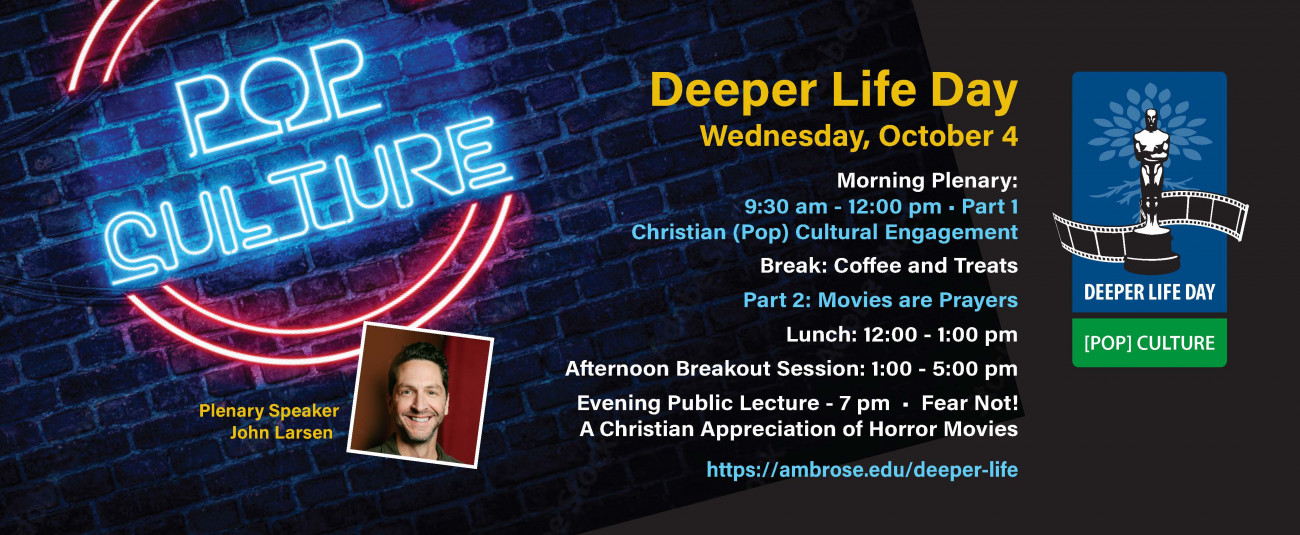
The following requires little comment; it's yet more evidence that anyone who thinks that "Evangelical" universities and colleges are Christian isn't paying attention. The 2023 edition of "Deeper Life Day" at Antichrist Ambrose University (yes, again) took place on October 1 (bold, links in original).
What Is The Purpose Of Deeper Life Day?

The aim of Deeper Life Day is to integrate Christian faith and learning in a way that will help our students flourish in every way. The events of this day embody our spiritual goals for all Ambrose students—formation, discernment, and transformation. We encourage faculty members to participate in DLD, incentivize students to join them on the day, and consider how the themes could be integrated into the courses they are teaching this Fall Term.

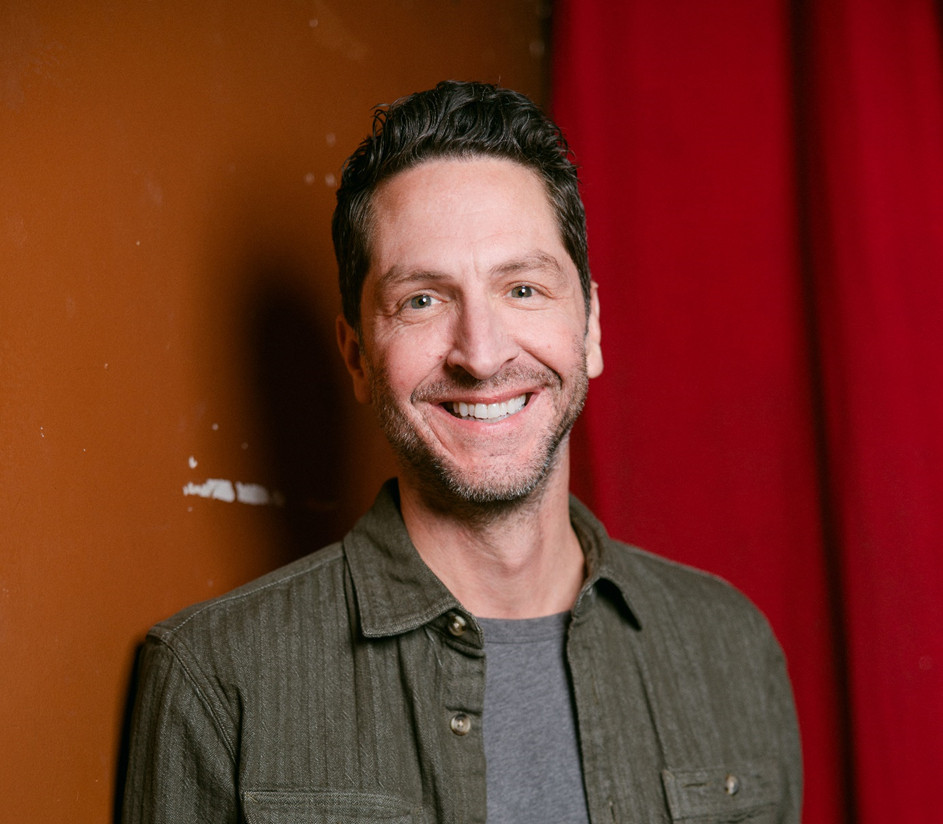
PLENARY SPEAKER
photo courtesy of ARIN SANG-URAI

Josh Larsen

Josh Larsen is the co-host of the radio show and podcast Filmspotting, author of Movies Are Prayers and Fear Not! A Christian Appreciation of Horror, as well as editor/producer for Think Christian, a website and podcast exploring faith and pop culture. He’s been writing and speaking about movies professionally since 1994.

Morning Plenary: 9:30 AM

Part 1: Christian (Pop) Cultural Engagement

For most North American Christians, engaging with popular culture is no longer an option. This is the air we breathe. How can we do so with grace, discernment, and appreciation?


Morning Plenary:

Part 2: Movies Are Prayers

Movies can be many things: escapist experiences, historical artifacts, business ventures, and artistic expressions. Considered alongside the Christian ideas of God's sovereignty and common grace, they can also function as prayerful expressions of lament, praise, joy, confession, and more.

Lunch: Noon - 1:00 PM

There are only 100 spots for this light-hearted lunch with our speaker. In addition to movie trivia and fun games we will be hosting a COSPLAY competition. Come dressed as your favorite Movie, TV or gaming character. A panel of judges will determine a winner for a chance to win a Cineplex movie night for two (with popcorn and pop). Other prizes will be available as well.

Room: Airhart (1085) I Limit: 100 people

Afternoon Breakout Sessions: 1:00 PM

Engaging The Mind Of Christ (Through Metallica, Van Gogh, And High Mountain Hydrology)

John Van Sloten

John is a Calgary-based pastor, writer, and columnist for the Calgary Herald. His books include, The Day Metallica Came to Church (2010), Every Job a Parable (2017), and God Speaks Science (2023).

This workshop will give you theological tools to help you practice Christ’s presence everywhere. If all things were made through Jesus, then all things (to some degree) reveal his wisdom. Knowing Christ through the bible we can know Christ through creation—through physical nature, human nature, and the cultural creations of human nature.

I Think I've Seen This Film Before: The Death And Resurrection Of Taylor Swift

Glendon Frank

Glendon is a recent alumnus of Ambrose University, having graduated in 2021 with a Bachelor's degree in English Literature. Since graduation he continues to study and write about pop culture on various platforms. Endlessly fascinated by the intersection of faith and art, he is particularly drawn to films and stories that explore the complexity and nuance of the human condition.

This session is a discussion of the meteoric stardom of Taylor Swift and her career, as well as digging into the themes of love, life, and lament in her lyricism, all through the lens of asking what it means to engage with popular art while considering the Imago Dei. In an age of AI and algorithms where the ethics of art and consumption are at the forefront of our imagination, what does Taylor Swift's unique success mean and how ought we consider it?

Pressing The Right Buttons: Aligning Your Values In-Game And IRL

Alyssa Michaud

Alyssa is a musicologist who works at the intersections of technology, culture, and music. Her research focuses on the dynamics between audiences and artists in today’s technologically mediated society, and she is currently at work on a SSHRC Insight Development Grant in which she is exploring fan responses to digital and holographic concerts. Outside of her work in music research, Michaud once placed third in a national Dance Dance Revolution tournament, has 100% achievements on Steam in FTL: Faster Than Light, and cleared the original Binding Coil of Bahamut before it was nerfed in Final Fantasy XIV.

In 2022, the gaming industry was estimated to be worth $170 billion in global revenues—valued higher than both the global film and music industries put together. In this interactive breakout session, we will critically examine our relationships to this powerful medium by examining the ways in which gaming can foster positive values and also assessing its pitfalls. Through discussions, activities, and lots of examples from the world of gaming, this session will equip you to make more informed decisions about your approach to video games, and unpack the ways in which our controllers can connect us to deeper insights about ourselves and the world around us.

Princess Mononoke And Peacemaking: Studio Ghibli's Prophetic Masterpiece

Julian Erb

Julian is the Director of Community Life at Ambrose and he loves learning people’s stories. He enjoys getting out to the mountains with his family, the Beatles, and yummy food. He also serves part time at Grace Anglican.

How does an anime fantasy epic set in feudal Japan connect to our polarized context and the way of Jesus? We will look into this timeless story and seek to "see with eyes unclouded by hate" and the subversive invitation of peace making.

Afternoon Breakout Sessions: 3:00 PM

On Earth As It Is In Barbieland: Gender Expression, Christianity, And Barbie

Nikayla Reize

Nikayla Reize is the lead pastor of a parish church in Calgary called Awaken. She also serves as a sessional instructor at Ambrose University teaching Old Testament and Biblical Theology. She teaches workshops and seminars at churches around Southern Alberta and especially enjoys teaching on gender, inclusion, and the Bible.

This is a session exploring themes of gender expression in the past (tradition) and in the future (the coming Kingdom of Heaven) with the help of Greta Gerwig's Barbie. Barbie invites us to question the way things have always been done and dream about how they could be in our shared future. We will look at concepts such as patriarchy, matriarchy, and kyriarchy within Western Christianities as we discuss what it means to have the power to communicate ideas and make decisions for others versus being the product of someone else's ideas for how things should be. Barbieland is an imaginary place where young girls can pretend the world could be shaped according to their own hopes and dreams for a life that doesn't fit in a box. Is the Barbie movie envisioning a world that is anti-men or presenting a prophetic lament for a world that is anti-women? No one wants to be an accessory for the fulfillment and success of another and no one wants to be kept in a box. Body sovereignty and embodiment are deeply Christian ideas. Come prepared to discuss the Barbie movie and how the intersections of gender and power depicted there relate to our faith as Christians.

When Songs Become Friends: The Music That Helped Us Through Difficulties, Helped Us Know Ourselves, And Led Us To Solidarity And Healing.

Justin Bills

Justin Bills is a pastor, student and podcast host. Justin grew up in a missionary household in Los Angeles California. Key to surviving a lonely homeschooled upbringing was finding solidarity in music. Bands such as Pedro The Lion, Sufjan Stevens, Radiohead and Mewithoutyou became friends to help through adolescence and adulthood. Justin lives in Calgary with his wife and 3 daughters and is a Student at Ambrose.

Faith And Social Media: Navigating The Digital World With Jesus

Bryce Ashlin-Mayo

Bryce is the Dean of Theology at Ambrose. When he is not working at Ambrose, you will find Bryce preaching in Churches, doing Seminars, writing books, or building retro video arcade consoles. Bryce has written several books on social media and digital ministry including, “Age of Kings: Pursuing God’s Heart in a Social Media World.”

What does the Bible teach about navigating a digital world? Let's explore this topic together and delve into the story of King David in the Bible. We'll discover some valuable and enduring lessons on how to live a faithful life in our modern, high-tech world.

Evening Public Lecture: 7:00 PM

In partnership with the Chair of Christian Thought

Location: Central Library Topic: Fear Not! A Christian Appreciation of Horror Movies

Why would anyone want to watch horror movies? Why would Christians, in particular, bother with the genre? Combining critical observation and theological reflection, critic Josh Larsen makes the case that monster movies, creature features, slashers, and other fright films artfully reflect our deep worries in a way that resonates with the Christian experience.

Wednesday, 25 December 2019

60 years ago: The biblically inaccurate movie Solomon and Sheba is released

And when the queen of Sheba heard of the fame of Solomon concerning the name of the Lord, she came to prove him with hard questions.
And she came to Jerusalem with a very great train, with camels that bare spices, and very much gold, and precious stones: and when she was come to Solomon, she communed with him of all that was in her heart.
And Solomon told her all her questions: there was not any thing hid from the king, which he told her not.
And when the queen of Sheba had seen all Solomon's wisdom, and the house that he had built,
And the meat of his table, and the sitting of his servants, and the attendance of his ministers, and their apparel, and his cupbearers, and his ascent by which he went up unto the house of the Lord; there was no more spirit in her.
And she said to the king, It was a true report that I heard in mine own land of thy acts and of thy wisdom.
Howbeit I believed not the words, until I came, and mine eyes had seen it: and, behold, the half was not told me: thy wisdom and prosperity exceedeth the fame which I heard.
Happy are thy men, happy are these thy servants, which stand continually before thee, and that hear thy wisdom.
Blessed be the Lord thy God, which delighted in thee, to set thee on the throne of Israel: because the Lord loved Israel for ever, therefore made he thee king, to do judgment and justice.
And she gave the king an hundred and twenty talents of gold, and of spices very great store, and precious stones: there came no more such abundance of spices as these which the queen of Sheba gave to king Solomon.
And the navy also of Hiram, that brought gold from Ophir, brought in from Ophir great plenty of almug trees, and precious stones.
And the king made of the almug trees pillars for the house of the Lord, and for the king's house, harps also and psalteries for singers: there came no such almug trees, nor were seen unto this day.
And king Solomon gave unto the queen of Sheba all her desire, whatsoever she asked, beside that which Solomon gave her of his royal bounty. So she turned and went to her own country, she and her servants.
I Kings 10:1-13

Biblically inaccurate movies ostensibly based on the Bible are not a recent phenomenon. Solomon and Sheba, directed by King Vidor, and starring Yul Brynner, Gina Lollobrigida, and George Sanders, received its premiere screening in London on October 27, 1959, and was released in several countries before opening in North American theatres on December 25, 1959. It was a box office hit at the time, but is largely forgotten today. The film contains more inaccuracies than this blogger can enumerate, but the reader can find some mentioned here.

I saw Solomon and Sheba on television some years ago and found it somewhat entertaining, but I definitely recommend reading the book instead. The movie was given a chapter in the book The Fifty Worst Films of All Time (And How They Got That Way) (1978) by Harry Medved with Randy Dreyfuss (the book was actually written mainly by Mr. Medved's older brother Michael, who was trying to establish himself as a serious writer in Hollywood, and didn't want to be credited as the author). According to Mr. Medved (pp. 217-218):

Vidor commented that the film was based on "a very simple story, really, about the first kings of the Bible...I applied an artistic, not a technical yardstick; we had no technical experts on this!...used a brand-new idea in the last battle, how the Jews defeated the Egyptians. It was pure movies." And pure silliness. Screenwriter Arthur Hornblow added that the intention was to maintain a reverence for the story as it appeared in the Bible...But to spread the blame around, Hornblow admitted that the biblical story was supplemented by quite a bit of outside material, particularly Arabic and Abyssinian myths. These legends hold that Menelik I, the first King of the Ethiopians and ancestor of Haile Selassie, was born of the union of Solomon and Sheba. Obviously the producers were hoping for a triumphant run in Addis Ababa. At the same time they wanted to protect their revenues in Biloxi, Mississippi, and so studio officials reassured the public about miscegenation. They declared that careful research proved that the Queen of Sheba was not black. This comes as no surprise to most scholars, but the fact that she was Italian has thrown many historians for a loop...

...Granville Heathway...receives prominent billing in the film as "Orgy-Sequence Adviser." Mr. Heathway, according to a studio official, "is an egghead Englishman who has studied every book and treatise on the subject of orgies." If he says that they did the bunnyhop as part of Sheban fertility rites, then it must be so.

The orgy in Solomon and Sheba was filmed at an estimated cost of $100,000, and was choreographed by Jaroslav Berger, ballet chief of Switzerland's Bern State Theater. Miss Lollobrigida rehearsed for a month to prepare for the dance, with among other things, a hula hoop...


Submitted for your approval, the trailer for Solomon and Sheba, which emphasizes the extrabiblical aspects of the movie; to see it in its wide-screen glory, right-click on the video and copy the address:

Wednesday, 18 September 2019

Christian nightclub opens in Wichita

The people behind the place mentioned in the following article--which appeared in the entertainment section of the paper--seem sincere, but there's an old saying on the subject of getting people into church, that "what you win them with is what you win them to." Put another way, "what wins them is what keeps them." As reported by Denise Neil of the Wichita Eagle, August 26, 2019 (bold, links in original):

A group of three local entrepreneurs say that are close to settling on a location for a new Christian lounge and night club in Wichita that will be open to all ages.

It’s name: Club His Hop Wichita.

The club, which will be under the umbrella of a Las Vegas club of the same name, will be operated by PC Patton, Darin Smalls and Greg Pianga. It will be in a centrally located spot in Wichita and will offer Christian outreach during the week and an alcohol-free, family-friendly nightclub environment on the weekends.

The club, which the operators hope to have open by the end of this year or early in 2020, will feature a variety of entertainment, from comedians to live bands, and the music will come from all genres. It’ll also have food and arcade games.

“We have the resources already,” said Patton, who works as a para educator and coach at Mayberry Middle School and who also is a hip hop performer. “We’re just makings sure we put this in the right area for everyone.”

They hope to share the location in a couple of weeks, they said.

Patton said the idea for the club was born last spring, when he was invited to perform at an after party for the Stellar Awards, a gospel music awards show staged in Las Vegas. His performance was at Club His Hop Las Vegas, owned by Sam Stewart.

He loved the vibe of the club, which was positive and wholesome and embodied Patton’s belief that hip hop and rap music could carry a positive message.

“I was like, ‘Man, I would love to open something like this in Wichita,’” Patton said.

He met Stewart, and about a month ago, the two reconnected. Stewart, who opened his Vegas club about seven years ago, told Patton he wanted to expand the club into other states. He wondered if Patton was still interested.

Patton pulled in two collaborators he knew from Church on the Street, a homeless outreach ministry that puts on weekly services in an alley near Douglas and St. Francis: Smalls is a general contractor in town, and Pianga is the onetime owner of The Big Apple food truck.

The two loved the idea, and Pianga said it sparked memories of the Eclipse Teen Center that was open in Wichita when he was younger, giving teenagers a safe place to hang out.

But the club won’t be just for teens, they said. When Patton was at the Las Vegas Club His Hop, the patrons ranged in age from 2 to 62, he said.

“It’s going be something good for the whole family,” he said. “You don’t have to worry about anything. You don’t have to drop your kids off to the babysitter. Everyone can come to this lounge and just enjoy.”

The club will serve as an outreach center during the week, offering a space for Bible studies and other group meetups. On Friday and Saturday nights, it’ll be a party zone, and entertainment will rotate every week, the owners said. There could be a rock and roll band one week, a “praise dance” the next and a Christian comic the next.

It will have concessions and will offer food. Mo’s Hut owner Shawn Gordon will be involved with food service, the owners said. He moved to Wichita to serve as the project manager of Church on the Street and earlier this year opened his Hawaiian restaurant at 2800 E. Central.

Smalls said that this is the type of club that Wichita needs, and he’s especially excited to offer young people a safe, positive space to gather.

“A lot of people, when they hear ‘Christian,’ they think, ‘Okay, life is over, you can’t have fun,’” Smalls said. “But no. You can be a Christian and you can still have fun. Life doesn’t end. It only begins truly when you become a Christian.”
The club in Wichita sounds better than the one in Las Vegas that inspired it; I pray that the Bible studies attract more people than the entertainment.

London's Southwark Cathedral hosts fashion show featuring scantily-clad models

Her priests have violated my law, and have profaned mine holy things: they have put no difference between the holy and profane, neither have they shewed difference between the unclean and the clean, and have hid their eyes from my sabbaths, and I am profaned among them...
...And they shall teach my people the difference between the holy and profane, and cause them to discern between the unclean and the clean.
Ezekiel 22:26, 44:23

If church leaders want their buildings to be filled, I suggest preaching the true gospel of Jesus Christ; if they know what the gospel is. As reported by Jack Hardy and Gabriella Swerling of the London Daily Telegraph, September 17, 2019 (links in original):

Southwark Cathedral has been accused of promoting the “antithesis of the Christian gospel” by allowing its nave to be used as a catwalk to sell clothes.

British designer Julien MacDonald brought his collection to the place of worship on Monday night as part of London Fashion Week, turning the aisle into a parade of scantily dressed models.

It was described by the 48-year-old British designer as a “celebration of women” and attracted celebrity guests including the actor Ed Westwick and socialite Lady Victoria Hervey.

However, a leading Anglican clergyman has questioned whether the cathedral should be “giving a platform” to an event which promotes “a narcissistic self-referential display for the very rich”.

High-profile catwalk shows are big money-spinners for fashion houses which build the reputation of designers and cement their links with wealthy and influential customers.

Last night, Rev Dr Gavin Ashenden, the former chaplain to the Queen, urged the diocese “think twice” about whether its holy buildings were being used in a manner fitting for a faith that renounces materialism.

The grade-listed south London church, which has stood since the 12th century, is available for hire for “special events”, from formal dinners to drama and musical productions.

The cathedral has charged money for the use of its buildings since 2000, using the money to help fund the upkeep of the building and costs of worship, as well as ensuring it stays open to the public free of charge.

It comes at a time when church leaders across the country are attempting to combat shrinking congregations with increasingly inventive methods to stump up cash.

Earlier this year, Norwich Cathedral installed a 55-ft helter skelter, available for just £2 a ride, while Rochester Cathedral opened a crazy golf course in its 11th-century building.

Dr Ashenden, who was ordained at Southwark Cathedral, told The Daily Telegraph: “Southwark Cathedral has made its premises available for fashion in the past and one of the things they try and do is build a bridge between secular society and the Christian church and that's no bad thing.

“The problem comes comes when the ethical content of what they are trying to host is in direct contradiction to Christian values. It's like what happened with Rochester and Norwich - it's the Disneyfication of entertainment.

“The cathedral should ask itself to see if the complaints about the fashion industry - as promoting a narcissistic self referential display for the very rich - is indeed conducive with the values of the Christian gospel.

“I think the fashion industry is the antithesis of the Christian gospel. It's about the exposure of the poverty of our souls and that’s about hiding the state of the soul in an excess of glamour.

“A cathedral ought to think twice before it provides a platform to a cultural venture like this.”

London Fashion Week has previously been embroiled in controversy over the use of churches by some of the shows on its schedule.

In 2017, Turkish designer Dilara Findikoglu prompted outrage by dressing models in satanic costumes for their appearance at an event in St Andrew Holborn church in central London.

Officials at Westminster Abbey were similarly accused of selling their soul “for a pair of trousers” after allowing a Gucci show to take place in 2016.

The British Fashion Council, which organises London Fashion Week, said it did not allocate venues to designers to stage their shows, apart from the main hub on the Strand.

A spokesman for Southwark Cathedral said: “Southwark Cathedral has over many years been used for a variety of different events, including those related to the fashion industry. We were pleased to be invited to work with the British designer Julien MacDonald as part of this year’s London Fashion Week.

“His show brought many people into the Cathedral who might not otherwise have come, and many recognised it as a beautiful and special place. The show was delivered in a professional, respectful and energetic way.

“Fashion and its impact on the environment, how we use clothes as part of daily life and what clothing is appropriate are important issues for Christians and others to engage with as aspects of modern living.”

Representatives of Julien MacDonald did not respond to requests for comment.
Dr. Ashenden is unbiblical in his attempt to "build a bridge between society and the Christian church" and in saying that "that's no bad thing." On the contrary, God's instruction to His people is to build walls of separation, as stated by the apostle Paul:

Wherefore come out from among them, and be ye separate, saith the Lord, and touch not the unclean thing; and I will receive you. II Corinthians 6:17

Thursday, 29 August 2019

Britain's largest funeral provider reports 80% decline in religious funerals since 2011

There is no fear of God before their eyes. Romans 3:18

The figures quoted in the following article don't surprise me, but this blogger is surprised by the fact that the decline has occurred in such a short time; eight years is not a long time. The collapse of societies once nominally regarded as Christian is accelerating; as reported by Gabriella Swerling of the London Daily Telegraph, August 29, 2019 (link in original):

An all-black dress code, pallbearers marching in unison, and a steady stream of tears are not often associated with golf courses, zoos and Chinese takeaways.

Yet according to the most extensive ever report on UK funeral trends which, the religious funeral is dying a death.

Instead of services in crematoriums, churches and cemeteries, Britons are instead opting for increasingly quirky ways to mourn their loved ones.

The Co-op, the UK’s largest national funeral provider which conducts more than 100,000 every year, has today published a report revealing that since 2011 there has been a 80 per cent decline in religious funerals.

Eight-years-ago 67 per cent of people requested traditional religious services and just 12 per cent were non-religious. However by 2018, just 13 per cent wanted a religious funeral.

Undertakers have reported a “staggering shift” towards unique, secular ceremonies. Among the more niche requests, there have been milk floats, canal boats, converted steam trains and quad bikes being turned into hearses.

The location of funerals has also provided opportunities for the more imaginative mourners. Zoos, buses, a cattle auction house, next to the 18th hole on a golf course - and even a McDonald’s Drive Thru - have hosted processions for the deceased. A total of 77 per cent of Co-op’s employees have had requests for funerals to be held outside of traditional religious settings.

Among the 4,000 people surveyed for the report, researchers have found that tributes to loved ones have even extended to creative ways of immortalising or memorialising their ashes; some mourners opt to place them inside the furnace of a steam train, create a tattoo or scatter them during a skydive, while others choose to keep them inside a rucksack so they can take them everywhere they go.

Funeral directors also reported that 22 per cent of people have already decided what they want inside their coffins. Among the more unusual requests are Chinese takeaways, a false leg, a moble phone, a Wizard of Oz costume, a broomstick and an Argos catalogue.

The report, entitled Burying Traditions: The Changing Face of UK Funerals, revealed that experts noted that this “shift” towards more unique funerals was because “people feel more able to act on their loved ones’ personal wishes than they would have previously” as the nation becomes increasingly secular.

In July The Telegraph reported that atheism was on the rise in the UK as Christianity is suffering a “dramatic decline”.

According to the National Centre for Social Research, the number of people who define themselves as "confident atheists", rose from 10 per cent in 1998 to 18 per cent in 2008 and hit its record high of 26 per cent in 2018.

Teddy Prout, director of community services at the charity, Humanists UK, said that the trend for bespoke, personalised funerals “is reflective of the huge societal shift of more people identifying as non-religious than ever before and with that, perhaps, comes more open attitudes towards death”.

In the last five years, the report found that requests for traditional pallbearers to carry coffins has dropped from 91 per cent in 2014 to 20 per cent in 2019. Furthermore, requests to arrange obituaries have declined by over a third (37%) and asks for traditional limousines have declined by a sixth (16%).

Samantha Tyrer, managing director of Co-op Funeralcare, said: "The funeral sector is rapidly changing. Whilst 16.5 million of us still feel uncomfortable talking about death, we're clear on what we want and, in the majority of cases, it's no longer a traditional funeral service.

"Our funerals represent the unique life an individual has lived. More so now than ever before, we're seeing requests for wonderfully personalised ceremonies, whether that be on the 18th hole of a golf club, or having a pet dog present on the day. The choices are endless."

Friday, 9 August 2019

Amusement park ride at Norwich Cathedral draws criticism

Woe unto you, scribes and Pharisees, hypocrites! for ye are like unto whited sepulchres, which indeed appear beautiful outward, but are within full of dead men's bones, and of all uncleanness. Matthew 23:27

This know also, that in the last days perilous times shall come.
For men shall be lovers of their own selves, covetous, boasters, proud, blasphemers, disobedient to parents, unthankful, unholy,
Without natural affection, trucebreakers, false accusers, incontinent, fierce, despisers of those that are good,
Traitors, heady, highminded, lovers of pleasures more than lovers of God;
II Timothy 3:1-4

If the following item seems familiar, it's probably because it's an excellent companion piece to my recent post Rochester Cathedral provides more evidence that the Church of England is beyond the possibility of satire (August 3, 2019). As reported by BBC News, August 9, 2019 (link, video in original):

The clergy at a cathedral has been accused of being unprofessional and "poisoning the medicine" a church offers by installing a fairground ride.

A full-size helter skelter has been put in the nave of Norwich Cathedral to give people a different view of the inside of the building.

The Right Reverend Dr Gavin Ashenden, former chaplain to the Queen, said the cathedral had made a "mistake".

The cathedral said it was a creative way to share the story of the Bible.

It took four people two days to build the 55ft (16.7m) fairground ride in the Norman cathedral.

The cathedral said it allowed people to stand close to its medieval roof, believed to be the largest display of its kind in the world.

Dr Ashenden, Missionary Bishop for the Christian Episcopal Church, said the clergy at Norwich Cathedral had been "unprofessional" and were "making a mistake about what a cathedral is good for".

He said there was no evidence that tourists become Christians and "just to put in entertainment is naff".

"For such a place, steeped in mystery and marvel to buy in to sensory pleasure and distraction, is to poison the very medicine it offers the human soul," he said.

The Reverend Canon Andy Bryant, from Norwich Cathedral, said he could see why people would be surprised to see the helter skelter.

But in addition to showcasing the roof, he said it was "part of the cathedral's mission to share the story of the Bible" and was a "creative and innovative way to do that".

Norwich Cathedral is not the only place of worship to use unconventional methods to attract members of the public.

The central aisle of Rochester Cathedral has also been converted into a crazy golf course.


The apostle Paul, writing under divine inspiration, didn't tell Timothy to find a "creative and innovative" way to "share
the story of the Bible." He said, merely, "Preach the word..." (II Timothy 4:2). The Church of England and its clergy don't seem to believe in the truth of Hebrews 4:12:

For the word of God is quick, and powerful, and sharper than any twoedged sword, piercing even to the dividing asunder of soul and spirit, and of the joints and marrow, and is a discerner of the thoughts and intents of the heart.

Saturday, 3 August 2019

Rochester Cathedral provides more evidence that the Church of England is beyond the possibility of satire

Woe unto you, scribes and Pharisees, hypocrites! for ye are like unto whited sepulchres, which indeed appear beautiful outward, but are within full of dead men's bones, and of all uncleanness. Matthew 23:27

This know also, that in the last days perilous times shall come.
For men shall be lovers of their own selves, covetous, boasters, proud, blasphemers, disobedient to parents, unthankful, unholy,
Without natural affection, trucebreakers, false accusers, incontinent, fierce, despisers of those that are good,
Traitors, heady, highminded, lovers of pleasures more than lovers of God;
II Timothy 3:1-4

Another piece of evidence for why Mad magazine will soon cease publication of new material--there's nothing left to satirize.

As reported by Rochester Cathedral, June 24, 2019 (bold in original):

Adventure Golf at the Cathedral
July 01, 2019

A bridge-themed adventure golf course in the Nave of Rochester Cathedral this August
Kent’s most unusual adventure golf course will be at Rochester Cathedral this summer. Created in partnership with the Rochester Bridge Trust, the Medieval Nave will be filled with a bridge-themed adventure golf course. The course has been designed to encourage young people to learn more about the engineering behind bridges.

The Revd. Rachel Phillips, Canon for Mission and Growth at Rochester Cathedral, said: “For over 1,400 years, Rochester Cathedral has been a centre of learning for the community. By temporarily installing an educational adventure golf course we aim to continue that mission, giving people the opportunity to learn while they take part in a fun activity, in what for many might be a previously un-visited building.

“The course forms the centrepiece of a ‘Building Bridges’ theme running through the summer. As well as the physical bridge which has stood over the River Medway since Roman times, the invisible but equally historic links between the Cathedral and the surrounding community are also bridges of a kind; we hope that, while playing adventure golf, visitors will reflect on the bridges that need to be built in their own lives and in our world today.”

The course – which is designed and paid for by Rochester Bridge Trust and constructed by HM Adventure Golf – is made up of nine holes, each accompanied by a model of a different type of bridge. It includes the original Roman bridge at Rochester, and the Queen Elizabeth II Bridge at Dartford, all of which is accompanied by information for further learning.

Andrew Freeman, Operations Manager at the Rochester Bridge Trust, added: “We are always looking for new ways to engage with young people and inspire them to take an interest in bridges and civil engineering. Joining forces with the Cathedral to set up this educational activity within such a stunning setting is the ideal opportunity to reach out to the community and get families and young people thinking about bridges while they have fun.

“Learning through play is at the heart of many of our educational initiatives, as we introduce new concepts and ideas to young people away from the classroom environment.”

Adventure Golf runs from 1st August – 1st September. Previews will run from the 27th July – 31st July. Daytime sessions will be free of charge. More details will be released soon.
As reported by Bobby Hristova of the Canadian newspaper National Post, July 29, 2019:

Church officials at England’s second oldest cathedral have provoked outrage after installing a nine-hole mini-putt golf course in the medieval nave.

Officials said the idea was to attract more visitors to Rochester Cathedral, founded in 604 AD.

“We hope that when people come in, they will know that they’re welcome and they will have an enjoyable experience,” Rachel Phillips, canon for “mission and growth” at the cathedral, told Premier, a Christian radio station.

“So while people are here, having fun and playing crazy golf, they will take the opportunity to reflect on that wider theme of building bridges, that they might find that they would like to pray, light a candle. Maybe talk to somebody.”

But the golf course has met with anger and dismay.

Damian Thompson, former editor-in-chief of the Catholic Herald, tweeted, “St John Fisher, Bishop of Rochester, went to his death rather than watch his cathedral fall into the hands of greedy iconoclasts. I suspect he would rather see it lie in ruins than experience this fate.”

Fisher was beheaded in 1535 after being found guilty of treason by not recognizing Henry VIII as Supreme Head of the Church of England.

Army Chaplain Sebastian Hyatt tweeted, “Rochester cathedral’s idea of mission. So devoid of theology, and intent on making money they have forgotten ‘This is none other than the house of God; this is the gate of heaven’. Shame on you.”

Bishop Gavin Ashenden, who served as the Queen’s chaplain, told the Church Militant news website, “The sequestration of the great Roman Catholic cathedrals of our country by what became the Church of England was always fraught with conceptual and moral difficulty. It was achieved by political force and at the cost of Catholic martyrdom.

“The Church of England, suffering a reductio ad absurdum has turned its Catholic cathedrals into entertainment centres. Having lost contact with transcendence, majesty and holiness, the CofE has become a branch of the leisure and entertainment industry. Since they no longer know what a cathedral is, or what it is for, it is indeed time for them to return them to the Church that conceived, built and knows how to honour and use them.”

Catholic writer Deacon Nick Donnelly also told Church Militant, “English Catholics care for our ancient cathedrals, even if they are in the possession of the usurping Church of England. We are very aware that the Mass was celebrated at the altars of these cathedrals. What is happening at Rochester Cathedral is sacrilege against God.”

Journalist Tim Stanley, writing in The Daily Telegraph, said, “Cathedrals were designed precisely to remind you of your place in this celestial order, to make you feel small, to awe you into belief. When you stick a mini golf course in a cathedral, it doesn’t bring the community closer so much as it strips the building of its original intent and pushes God further away. It is an act of desecration.”

A Saxon cathedral was first built at Rochester on land donated by King Ethelbert, England’s first Catholic king. Justus, first Bishop of Rochester, was consecrated there by St Augustine. The present building dates back to the work of the French monk, Gundulf, in 1080.

The cathedral defended the joint stating the activity was a free and educational way to reel in younger crowds and families.

It also said the golf course did not affect services with at least three services daily.

“The adventure golf is only taking place in the Nave of the Cathedral, with other spaces available for prayer and quiet as usual,” read a tweet from cathedral officials.

The cathedral’s website states the course is not permanent, running until Sept. 1, when the cathedral will display the Knife Angel statue — a sculpture made up of 100,000 confiscated knives and dedicated to crime victims.

Meanwhile, two hours north of Rochester, Norwich Cathedral plans to set up a 17-metre high “helter skelter” tower in its place of worship for two weeks in August. The tower will sit in the nave of the cathedral, allowing people a chance to climb up for a closer look at its architecture, say officials.

“Wherever you are, or are not, on your faith journey, the space invites you just to be, to explore and encounter the space in your own way, to let it speak to both heart and soul,” reads an article on the cathedral’s website.

And Lichfield Cathedral, in the heart of England, has transformed its magnificent tiled floor into a “lunar landscape” to commemorate the moon landings 50 years ago.
Here's Rochester Cathedral's announcement about their next event (bold, link in original):

Knife Angel

Monday, September 2, 2019 09:00
Sunday, September 29, 2019 17:00

The Knife Angel will be on display in Cathedral’s gardens from the 2nd September until the 29th September.

The Knife Angel is recognised as the National Monument against violence and aggression. It will be the focal point for 28 days of education, reflection, remembrance and prayer in Medway, as it provides a powerful visual symbol of the dangers of carrying a knife.

A collaboration between the Home Office, all 43 UK police constabularies, families of victims and the British IronWork Centre, this awe-inspiring piece is created from over 100,000 blunted and seized blades.

Dean Phillip Hesketh says: “We are fortunate to have the Knife Angel coming to Rochester Cathedral in September. It has already visited many other cathedrals and has provided a valuable opportunity to raise awareness of the devastating effects of knife crime. We hope that it will bring people together in Medway to address what is becoming a national crisis.”

We will be running special sessions for any Medway school who wishes to visit it. For more information click here.
If this isn't enough, this will be coming in November (bold in original):

Beatle Mania

Friday, November 1, 2019
18:30- 22:00

Last years Queen Tribute SOLD OUT and it was so much fun we’ve decided to come back for another year, this time with Beatles classics performed by Rockit Choir and Counterfeit Beatles! Come along and join in...

“There's nothing you can do that can't be done, Nothing you can sing that can't be sung, Nothing you can say, but you can learn how to play the game, It's easy, All you need is LOVE".

TICKETS
Bronze Ticket - £12.50

Silver Ticket - £17.50

Gold Ticket - £22.50

Sunday, 23 June 2019

Presbyterian community service centre church in Philadelphia offers eight-week sermon series on Harry Potter

As the old saying goes, what you win people with is what you win them to; put another way, what wins them is what keeps them. If a church attracts people with worldly entertainment, that's what they're being won to, and what will keep them coming back. It's apparent that the lead goatherd of the community service centre church mentioned in the following article doesn't trust in the power of the gospel and the sufficiency of the Bible to bring people to church.

The church mentioned in the following article claims to be in the Reformed tradition, but their commitment to Biblical truth doesn't seem to be to the extent of offending non-Christians. A glance at their events page reveals a schedule that looks more like that of a community service centre than a Christian church (and yes, it includes yoga). As reported by Stephanie Farr of the Philadelphia Inquirer, June 17, 2019 (links in original):

The large banner on the lawn of Leverington Church in Roxborough has been raising eyebrows as if it were a Wingardium Leviosa spell.

"If I read 'Harry Potter meets Jesus,' I'd probably think it was cheesy, too," Pastor Langdon Palmer said. "But I didn't know how else to put it."

Palmer's unconventional eight-week sermon series at the Presbyterian church, which started May 12, has raised something else, as well: attendance. He said weekly attendance has risen 10% to 20%.

"People are literally saying, 'I came because of Harry Potter,' " he said. "It's a little bit of pressure because hard-core Harry Potter fans know everything."

Palmer, who has been pastor at Leverington Church for five years, almost didn't do the series. He was afraid religious people who are skeptical of Harry Potter would think he was trivializing the Gospel. And he was worried that Harry Potter fans who are skeptical of the Bible would believe he was distorting the books to fit his own ends.

But as a man who loves both and as a pastor who sees a generation of people more familiar with the stories of Harry Potter than those in the Bible, he decided to go for it.

"I think if we're going to be good teachers, we start with what people are familiar with to teach them about what they're not familiar with," said Palmer, 60.

In his sermons, which are available as podcasts on the church's website, Palmer uses audio and visual clips from the "Harry Potter" films to illustrate his points. He equates the unexpected and mysterious letters Harry receives to join Hogwarts School of Witchcraft and Wizardry to unexpected and mysterious messages people might be receiving from God.

And he likens the relationship between Harry and Professor Albus Dumbledore, the wise but often inscrutable head wizard at Hogwarts, to his own relationship with God.

"It's so parallel," he said. "God is so good and so kind, but there are times he seems arbitrary, where he leaves, where he doesn't explain himself – just like Dumbledore."

Palmer said he's encountered "both Christians and Harry Potter fans who are definitely not happy that I'm doing this," but on the whole, the reaction has been positive.

Despite his passion today, Palmer hasn't always been a fan – of Harry Potter or of God. For much of his adult life, Palmer was an electrical engineer and a self-proclaimed atheist, though looking back now he thinks he was probably "more of a hard-core agnostic, calling myself an atheist to be cool."

"I'm a born skeptic, and I've had many conversations with God about this: 'Why would you have me be a pastor? I question everything all the time,' " Palmer said. "I came to the conclusion that if this is the way that God wired me, maybe I could relate to other people who struggle with doubt."

As for Harry Potter, Palmer had heard the stories of religious leaders who denounced – and in some cases, even burned – the books because they believe the series promotes the occult and satanism.

"When it first came out, I was not impressed. I was not a fan," he said. "I assumed it was kid stories or promoting dark magic and stuff."

But when Palmer read the books with his children at their urging, he found they offered opportunities to talk with his kids about right and wrong and good and evil.

"I went from someone who was very skeptical to thinking it's really a significant piece of literature," he said.

Harry Potter isn't the only pop-culture touchstone that Palmer has invoked in his sermons. He once did a series on the science-fiction movie "The Fifth Element," and you'll hear him referencing Comic Book Guy from "The Simpsons," "Star Trek," "The Lord of the Rings," and "The Matrix" in his sermons.

He even dreams of doing a sermon series on "Nacho Libre," the Jack Black movie about a monk who follows his dream to become a Mexican wrestler.

For those who question why he mixes pop culture and religion, Palmer pointed out that even Jesus used cultural artifacts and current events to explain ideas.

"I think it can really help the church, but if you try to be hip, if you're trying to be relevant to the kids, it's all over. People can smell fake right away," Palmer said. "But if there's something that moves a pastor deeply in culture, he or she should be free to use that."

Thursday, 10 January 2019

Old church in Louisville morphs into an entertainment complex

Many evangelical megachurches have already morphed into entertainment complexes while still ostensibly maintaining their identities as churches. In the case of mainline churches, declining membership and revenue increasingly lead them to abandon their properties. As reported by Maggie Menderski of the Louisville Courier Journal, December 18, 2018:

What was once a place of worship on E. Market Street is about to become an entertainment complex complete with two restaurants.

The old Market Street United Methodist Church in NuLu is in for a makeover.

The building, which was most recently home to The Refuge in Kentucky Church, sold to Weyland Ventures for $800,000 in February, according to a deed filed with the Jefferson County Clerks office.

Renderings filed with Louisville Metro late last month show the old church itself will be transformed into a dining room, a bar and a VIP lounge. There are also plans for a courtyard.

The gymnasium that’s already located on the south end of the building will be maintained and joined by a “sports court lounge.”

Weyland Ventures owners weren't immediately available Tuesday for comment.

The company has already restored the steeple, and it has plans to spruce up the exterior doors and stained glass windows, according to documents filed with Louisville Metro.

Weyland also has plans to build a neighboring two-story building that will hold a second restaurant, according to the documents.

See also my post: An example of a dead church morphing into a community centre (January 26, 2014)

Monday, 26 November 2018

30 years ago: Disgraced televangelist Peter Popoff underwhelms Edmonton

This blogger first became aware of Peter Popoff early in 1979, coming across his weeknightly radio broadcast. Mr. Popoff was offering, and spending most of his time talking about, his book The Other Side of Life: An Astonishing Glimpse Into the Future; he was a few decades ahead of the curve when it came to books by people claiming to have gone to Heaven. I was just starting to read the Bible in those days, and the Lord protected me from falling for deception of the kind promoted by Mr. Popoff.

In the 1980s, Mr. Popoff became widely known as a televangelist, performing phony faith healings, ostensibly hearing directly from God. In 1986, secular humanist skeptic and magician James Randi exposed Mr. Popoff as a fraud, receiving his revelations from his wife, communicating through an earpiece. The exposure of Mr. Popoff as a fraud led to his declaration of bankruptcy in September 1987. However, you can't keep a con good man down, and Mr. Popoff wasn't one to let debunking and bankruptcy stop him. He started down the comeback trail, and on November 26, 1988, performed in one of the meeting rooms on the second floor of the Chateau Lacombe hotel in downtown Edmonton--a considerably smaller venue, with a considerably smaller audience, that he had attracted a few years earlier.

This blogger attended with fellow cultwatcher Chris Milner, and witnessed an entertaining, albeit bare-bones performance, with no miraculous healings, and no instant divine revelations. Although Mr. Popoff performed no miracles for his audience in Edmonton, he was able to tell stories about alleged miracles that he had recently performed elsewhere. My favourite was when he claimed that he had prayed that a recently-deceased man who was being transported for burial would be raised to life. According to Mr. Popoff, the man woke up in the hearse, and the driver of the hearse, a backslidden Pentecostal preacher, promptly pulled the car over, got down on his knees, and rededicated himself to the Lord. As they used to say in Get Smart, "I find that very hard to believe."

We weren't the only ones who weren't fooled by Mr. Popoff; on our way out, we met a discerning Christian named Steiner Bremnes, who perceptively observed that since Mr. Popoff had been exposed, he seemed to have lost his spiritual gift.

Mr. Popoff eventually found the prosperity gospel to be effective--for him--and within a few years he was back on television, raking in millions of dollars while using the methods that had made him notorious in the first place, and is presumably still going. Howard Cosell's comment about the "coaching business" can also apply to the televangelist business: "Bad apples seem to always float back to the surface of the barrel..."

Sunday, 12 August 2018

Mainline and Southern Baptist churches in South Carolina are in decline

...I will build my church; and the gates of hell shall not prevail against it. Matthew 16:18b

...Nevertheless, when the Son of man cometh, shall he find faith on the earth? Luke 18:8b

This know also, that in the last days perilous times shall come.
For men shall be lovers of their own selves,...
...Having a form of godliness, but denying the power thereof: from such turn away...
...For the time will come when they will not endure sound doctrine; but after their own lusts shall they heap to themselves teachers, having itching ears;
And they shall turn away their ears from the truth, and shall be turned unto fables.
II Timothy 3:1-2a, 5; 4:2-3

The New Testament prophesies that the last days preceding the return of the Lord Jesus Christ will be times of increasing apostasy, so it comes as no surprise to this blogger to read that even in America's alleged Bible Belt (as in Canada's alleged Bible Belt), nominal Christianity is in decline.

The Lord is still building His church--right on schedule. The churches that are in decline are the ones that "have a form of godliness," but have fallen into apostasy--as indicated, for example, by the presence of women in positions of leadership, and substituting the social gospel for the true gospel--and the gates of hell are prevailing against them.

Many of the new churches that are springing up are using the methods of the Church Growth Movement, marketing Christianity as a consumer product to satisfy the desires of the customer. As the saying goes, "what you win them with is what you win them to," also stated as "what wins them is what keeps them." If worldly entertainment is what attracts people to church, that will be what keeps them there, and they'll leave if they're being sufficiently entertained. There's nothing particularly "consumer-friendly" in the true gospel of Jesus Christ, yet His church has been around for 2,000 years, and will be around for eternity.

As reported by Sarah Ellis of the Columbia State, August 9, 2018 (bold, links in original):

South Carolina churches are shedding thousands of members a year, even as the state’s population grows by tens of thousands.

In the place we call the Bible Belt, where generations have hung their hats on their church-going nature and faithful traditions, an increasing trend of shrinking church attendance — and increasing church closings — signal a fundamental culture shift in South Carolina.

At least 97 Protestant churches across South Carolina have closed since 2011, according to data from the Lutheran, Presbyterian, United Methodist and Southern Baptist denominations. An untold number of other closings, certainly, are not captured by these statistics.

Many churches are dying slow deaths, stuck in stagnation if not decline. And if they don’t do something, in the near future, they’ll share the fate of Cedar Creek United Methodist, a 274-year-old Richland County congregation that dissolved last year; Resurrection Lutheran, a church near downtown Columbia that will hold its last service on Sept. 2; and the dozens of churches that sit shuttered and empty around the state.

At the same time, some churches are growing, and some growing quickly. But they might not look much like the churches your grandparents (and their grandparents) were raised in. From meeting in unconventional places to tweaking their traditions, many churches are adapting, offering something different that many people thought the church couldn’t do for them.

What they’re doing reflects the results of an ongoing conversation among churches: How can they stay alive?

At Whaley Street United Methodist Church near downtown Columbia, the small crowd of remaining members are quick and cheerful to say they’re a “small but friendly” church. A couple dozen people sat spaced out among the wooden pews on a Sunday morning earlier this summer, when the Rev. Joe Cal Watson delivered an efficient sermon titled, “What is church?”

“I miss the days when church and Sunday were so important … the world stopped so we could focus on our faith,” Watson said from the pulpit. Sunday mornings still matter, he told the flock, but how the church treats people and helps people in need are more important.

Whaley Street’s congregation is a fraction of the size it once was when the surrounding Olympia and Granby mill villages were thriving.

The church simply doesn’t know how to grow these days, though it hasn’t stopped hoping for growth.

“We’re open. We’re friendly. But we do have an old-time service,” said Mary Anna Spangler, a member of 30 years. “But the big problem is how do you get (people) in the door and then keep them?”

FAITH BY NUMBERS

The South is slowly catching up to national and European trends shifting toward what many call a “post-Christian” culture — that is, a society with characteristics no longer dominantly rooted in Christianity.

Studies and surveys have documented the decline of self-identified Christians and the rise of “nones,” or the religiously unaffiliated, across the United States for years.

The Pew Research Center describes the United States as in the midst of “significant religious change. ”The share of Americans who identify with Christianity is declining, while those who say they have no religion is growing rapidly.”

In the South, more than three-quarters of adults identify as Christians, and more than 8 in 10 people consider religion to be somewhat or very important in their lives, more than in any other region of the country, according to Pew.

But, as in the rest of the country, a shrinking proportion of Southern adults say they regularly attend religious services — 74 percent in 2014, down 3 percent from seven years earlier. And surveys tend to inflate how often people actually attend religious services, Pew notes.

South Carolina is in step with those trends, and it shows in church statistics, particularly among Protestant denominations.

While Catholics are actually increasing in number in South Carolina, largely driven by influxes of northern and Hispanic newcomers to the state, major Protestant denominations report declines in membership and numbers of churches in recent years.

Consider:

--United Methodists and Southern Baptists, which together account for more than 3,000 churches and nearly 800,000 church members in South Carolina, report five-year membership declines of 5 percent and 18 percent, respectively.

--United Methodists lost 12,707 members and closed 30 churches in the state between 2012 and 2017. By comparison, 29 new United Methodist churches opened in the state in the past 50 years.

--The number of S.C. Southern Baptist churches has held steady at around 2,100 during the past five years — thanks in part to new church plants canceling out closures. Not all Southern Baptist churches report their statistics to the convention each year, but among those reporting, there were nearly 130,000 fewer members in 2017 (568,519) than in 2012 (698,041), according to statistics published by the S.C. Baptist Convention.

“The reality is that 80-plus percent of (S.C. Southern Baptist) churches are plateaued or declining, meaning they haven’t grown by any measurable percentage in 10 years, or they’ve actually lost membership,” said Jay Hardwick, who leads the church-planting team for the S.C. Baptist Convention. “And a large percentage of those are in a window where if something drastic doesn’t happen within five to 10 years, they’ll close their doors. They won’t have anything.”

NOT-SO-SACRED SUNDAYS

A church, particularly a Southern church, used to be a community center.

It was where you made friends and kept up with friends, where you ate supper on Wednesday nights, played on a softball team, sent the kids after school, fulfilled your community service duties, made business connections, got your musical fix in the choir and maybe joined a reading or knitting club.

And being a part of a church once was, essentially, a status symbol for many people in the South.

“Where do you go to church?” was a regular get-to-know-you question; the answer said something about who you were.

“You didn’t have a choice when I was a child. You went to church,” said Happy Meglino, who grew up in a Southern Baptist church and now attends Whaley Street United Methodist with her husband, Mark, and their 5-year-old daughter, Julianna. “My mom played the organ, and my brother and I were going to be there every time the doors were open. And your friends were there, too. … If you were going to be a good Southern girl, accepted socially, you went to church. If you didn’t go to church, mmm, we don’t know about you.”

Now, though, a church isn’t a line you need on your social resume.

“If you just want to be a philanthropic person, there are a gazillion opportunities for you to feed hungry people, clothe cold people, do service projects, build a house,” said David Turner, the minister of music and worship at Ebenezer Lutheran Church in downtown Columbia.

The oldest Lutheran church in Columbia, Ebenezer once boasted a large, multigenerational congregation of families who lived in nearby neighborhoods. The city used to close streets for its annual vacation Bible school.

Now, Turner said, the church’s attendance numbers are lower than ever.

“1950 was great, but it’s not 1950 anymore,” Turner said.

A key issue for the future, Turner says, is whether church leaders will have the knowledge and skill to guide churches toward a new future or be stuck in a past when Sunday mornings were sacred.

Many of the churches that are failing have not kept up with the pace of change in their communities, and they stopped making a difference outside the walls of the church.

When a church becomes more concerned with looking inward at itself rather than reaching outward to the people around it, it’s lost its core function, said Hardwick, the Southern Baptist church planter.

“Relevance has nothing to do with how cool and creative the church is, if the music’s cool and the lights are great and the staging’s just right,” Hardwick said. “Relevance has everything to do with making a difference.

“If this church disappeared, would anybody in our community know or care?”...

...NEW METHODS, OLD MISSION

Fewer than 1,000 feet from the door of Whaley Street United Methodist, upwards of 300 people gather in Columbia’s 701 Whaley event hall on Sunday mornings.

They comprise Downtown Church, a 7-year-old Presbyterian church born, in part, out of a feeling that other churches were “answering questions I wasn’t asking and not answering questions I was,” said the Rev. Amos Disasa, co-pastor.

The founders of the church saw people looking for an experience that a so-called traditional church didn’t provide.

“We sensed a need for a place for people who were persistently asking questions about God and were very interested in their own spirituality but were not opting into the formal institutions that would typically provide those answers,” Disasa said. “They’re weren’t going to church on Sundays, but it wasn’t that they had given up on God. They were disinterested in the institution of a church as it is.”

There’s no one-size-fits-all model of church, especially not in 2018. And there’s also no reason to expect people to show up at any church just because it’s there, many church leaders are recognizing.

“We early on taught our folks we have to be the ones that go out and share Christ and share what we’re doing with folks, because if we open our doors and just sit there and expect folks to come up, it’s not going to happen,” said Jody Ratcliffe, the founding pastor of the 2-year-old Church at West Vista.

The door to the Church at West Vista also happens to be the door to a bar.

One Sunday a month, the fledgling church meets at New Brookland Tavern on State Street, a popular Sunday brunch area. The rest of the month, church happens in living rooms throughout the Columbia metro area.

West Vista’s “house church” model is, in some ways, a throwback to the earliest days of the Christian church, but it represents a major shift from the traditional church model of recent centuries.

In a rapidly changing religious landscape, there is one critical element of a church that must not change, Hardwick said: The gospel message and mission.

Almost anything else is fair game.

“The message never changes, but the methods are always up for change,” he said.

‘EXPERIENCE THE EXPECTED’

As much change as the church is undergoing, church tradition isn’t dead — no more than Brookland Baptist Church in West Columbia is at 8 a.m. on a Sunday.

In many ways, Brookland represents the way church has been for generations.

Families sit together in long pews. They wear dresses and suits and ties and hats. A big, swaying choir fills the stage, and paper bulletins double as fans (though, an usher will hand you a real paper fan if they see you sweating). Golden offering plates are passed.

A robed pastor’s booming, lyrical voice preaches a message that lifts you out of your seat, and when he calls you to the altar, it is no suggestion; you come.

But Brookland is also reaching people — 3,500 of them or so on an average Sunday morning — in ways the church never did before. Big screens flank the pulpit, alternating live video feeds with scrolling lyrics to old-school hymns being played by a full band with, yes, drums and electric guitars.

You can pass the offering plate right along and give your tithe via text message or on the church’s website.

If you didn’t come to church on Sunday morning, you might come for lunch during the week at the massive conference center, which is used for all kinds of events, church- and nonchurch-related. Or your kids might play basketball in the wellness center or catch a quick word from the Rev. Charles Jackson, the pastor, on Twitter.

That’s all part of an evolving strategy to reach the people who are and will become the next generation of Christians, the church says.

“First of all, you’ve got to think about who that next generation is,” said Marnie Robinson, a member and church spokesperson. “The church may be trying to force them to be the church of yesteryear, and they’re not those people. … We need to talk to the millennials as if they are important and teach them the message of Christ; teach them and show them.”

But still, “church is church,” Robinson said, and many people are looking to “experience the expected.”

“When you do church, when you go to church, you expect to hear a good word,” Robinson said. “You expect to experience good music, and you expect a good prayer. Music, prayer and the word — you’ve got worship right there. All the other good stuff that happens is extra.”

Brookland will keep adapting, but it’s not going anywhere, Robinson said. And neither is the greater church, she feels sure.

“The church is one of the oldest institutions in the world, so I don’t think it’s going anywhere,” Robinson said. “How we do church may change, may be changing. But church is not going anywhere, and I take solace in that.”

THE END?

Consistency and tradition were beloved among the rural Cedar Creek United Methodist congregation in Blythewood, and consistency and tradition sustained the church for 274 years, until it closed in 2017.

“I think that most churchgoers like things to be the way they’ve always been,” said the Rev. Alice Deal, who retired this summer as pastor of Cedar Creek’s remaining sister churches on the Fairfield Circuit, Bethel UMC and Monticello UMC. About 40 church members, mostly seniors, remain between the two of them.

A command to change, though, comes from the one they worship, Deal said. “The holy one of Israel speaks through the prophet Isaiah and says, ‘I am about to do a new thing. Do you not see it springs forth?’ I think newness is what we’re called to be open to and to embrace, but that’s not always easy to do,” she said.

Some won’t change, held back by fear or stubbornness or practicality or something else.

But some will reach a point where “the pain of staying the same outweighs the pain of change,” Hardwick said.

“They realize, man, if we stay the same, we will put the death knell, perhaps, of gospel ministry in this community,” he said. “Then we’re going to be willing to make the hard decision that it’s going to require of us, kind of a whatever-it-takes mindset.”

But for some churches, the most faithful choice they can make is to close and invest their resources elsewhere, Hardwick said.

The futures of Monticello and Bethel are looming.

“I don’t know what the future holds,” Deal said, “but I know who holds the future. In God’s perfect will and God’s perfect time, what God intends for these churches will happen.”
Examples of what I mentioned at the beginning of this post can be found in this report by Miss Ellis in the State, August 9, 2018:

Sunday mornings at Ebenezer Lutheran Church are almost exactly what you’d expect them to be — except, perhaps, for all the empty pews.

At a recent service at Columbia’s oldest Lutheran church, about 40 or 50 people sat in the hushed hall of Ebenezer’s stunning sanctuary. There were a handful of children, many more white-haired heads and at least one homeless person...

...About 180 years younger than Ebenezer, Downtown Church has built its identity, in part, on its willingness to change — to try new things and to let go of things that don’t work or don’t matter or have run their course.

It’s an attractive place for people like Amanda McAlhaney, who shied away from “traditional” churches most of her life. She felt little personal connection there and was turned off by fear-based messages, she said.

What she and her husband, Shawn, found at Downtown Church is a down-to-earth message that consistently translates to their everyday lives, she said.

“For me, this church is just about being a good human being,” McAlhaney said. “I’m always thinking how I’m going to relate this to life, and I think that has been something missing in other sermons (in other churches). … The formality drops or disappears, and you’re just there to worship. … That’s something that’s been really special about it for me, when people just don’t want the formality of the traditional church.”

Turner said he’s trying to push Ebenezer to look for ways to get people into the church through the “side door and back door” — because, these days, people aren’t walking into a church just because it’s there, he said.

“I think you find some way for people to, first and foremost, connect socially, and then you turn it into a spiritual formation event,” Turner said. “We’re a consumeristic culture now, and so you can fight it and you can roll your eyes about it … it sort of is what it is. So I think, get them pulled in, and you can have that conversation after they’re invested in the program.”

Maybe it’s offering a chance to volunteer at a soup kitchen, opening the church as a performance hall during the week or allowing nonmembers to be married in the sanctuary, Turner suggested. The point is to give people another reason, any reason, to connect with the church.

At Downtown Church, it’s easy to embrace change — to try new things and let go of others — because the survival of their congregation “is not the point of existing,” Disasa said.

“We try really hard to be OK with the idea that Downtown Church may not exist someday,” said the Rev. Dawn Hyde, the church’s co-pastor with Disasa. “And it’s not the end of the world. It’s not the end of faith. It’s not the end of God.”

Thursday, 2 August 2018

Attendance at Noah's Ark theme park in Kentucky seems to be below expectations

I don't know how accurate the figures are, but this blogger believes that people would be better off to stay home and read their Bibles than to patronize Christian theme parks. As reported by Thomas Novelly of the Louisville Courier-Journal, August 2, 2018 (link in original):

Visitors to the life-sized Noah's Ark attraction near Northern Kentucky are sinking below the number of projected visitors advertised by the owners of the religious-themed park.

The Ark Encounter sold a little more than 860,000 tickets between July 2017 and June 2018, according to open records obtained by The Freedom From Religion Foundation, a nonprofit that promotes the separation of church and state.

When the park opened in 2016, park officials anticipated 1.4 million to 2.4 million yearly visitors.

A spokesman for the park said the foundation's figures for ticket sales are accurate but noted that it doesn't represent how many people actually visited the park.

Ark Encounter spokesman Mark Looy estimated that 1 million guests came to the Ark Encounter last year, and on busy days, between 7,000 and 8,000 people visit the park. He said attendance has been growing since the park opened two years ago.

"We are like most attractions in that we don’t release annual attendance figures," Looy said in an email. "Furthermore, one can’t look at ticket sales to come up with the grand total."

Looy said he couldn't specify the total annual guests because, in part, children under 5 years old attend the park for free.

"Thousands and thousands of young children under 5 who have visited the ark in the past two years have attended free with their families, and they will not show up in the 862,471 amount," Looy said.

Ark members with lifetime passes or annual memberships do not come up in the final ticket sales, either, Looy said.

For attendance to be 1 million visitors at the ark park, 14 percent of all its attendance needs to be free or non-ticketed, according to The Freedom From Religion Foundation.

The Ark Encounter showcases the biblical narrative of the great flood in Genesis by displaying a life-sized replica of Noah's Ark that spans 510 feet long, 85 feet wide and 51 feet high.

On the ark there are various exhibits and animal statues, including robotic dinosaurs. Answers in Genesis, the group behind the park, argues that humans and dinosaurs co-existed, though dinosaurs went extinct nearly 65 million years before people appeared on Earth, according to the U.S. Geological Survey.

When the park was being built, it won more than $18 million in tax incentives from the state, which outraged numerous groups, including The Freedom From Religion Foundation, because of the prospect of the state government interacting with a religious project.

The state tried to take away the tax credits because it contended the park was being used for religious indoctrination instead of a tourist attraction. But a federal judge ruled in favor of the Ark Encounter in July 2016, granting the park the right to the tax incentives.

After its first year, the Kentucky government cut the Ark Encounter a rebate check for $1.8 million.

“It is a shame that Matt Bevin and the Commonwealth of Kentucky continues to pay for this Christian ministry,” said Edwin Hensley, a co-organizer of Kentucky's Freedom From Religion Foundation. “Last year Kentucky wrote a check to Ark Encounter for $1.8 million, refunding almost 80 percent of the $2.28 million sales tax revenue."

The Ark Encounter is on an 800-acre site in Grant County and about 45 miles south of the Creation Museum, a sister attraction by the same Christian group, Answers in Genesis, founded by Ken Ham.

Looy said numerous other expansions are planned at the park in the coming years.

"... We think the third year at the Ark will be just as strong as our excellent second year," Looy said.

Admission to the Ark Encounter ranges from $15 for children to $48 for adults. Children 4 and younger are free, according to the website.