Showing posts with label Environmentalism. Show all posts

Sunday, 13 May 2018

Canadian evangelical university jumps on global warming propaganda bandwagon

Here we go again, with yet another worldly bandwagon that the professing evangelical church decides to jump on, as the world becomes increasingly skeptical. As reported by Jack Taylor in The Light Magazine, May 2018 (link inserted by blogger):
“If we can’t fix the climate we can’t fix other things.” Dr. Katharine Hayhoe’s presence on a stage captures your imagination immediately. Her conversational style pulls at scientific minds and hearts of faith alike. “We have been driving down the road looking in our rear view mirror and that is fine if things are stable but not if things are changing.”

Hayhoe, Director of The Climate Science Center at Texas Tech University, is enhancing the May 12th Sky Gala: Cosmos, Climate & Faith with a profile that has seen her named one of Time’s 100 Most Influential People, Fortune’s 50 World’s Greatest Leaders and Foreign Policy’s 100 Leading Global Thinkers.

The Canadian Scientific and Christian Affiliation is hosting the informal gala which also features a concert by Janet Danielson (SFU School of Contemporary Arts) and contributions from the Isotone Ensemble (Oakridge, Tennessee).

Hayhoe knows layspeak for conservative Christians and understands the tensions swirling like a hurricane around sincere believers trying to know who to trust in the flotsam of fake news. The powerpoints and charts are convincing. “There are 26,500 indicators of a warming planet.”

The evidence is laid out and presented in a disarming fashion. “Science can tell us why we’re getting warmer – climate changes for natural reasons.” She speaks of El Nino, changes in the earth’s orbit which bring about ice ages, and the energy from the sun. “It’s not the sun making the planet warmer; it’s not El Nino; it’s not the ice age… all those things say we should be cooler.” The culprit is nailed. “Three hundred years ago, with the wide use of coal, the Industrial Revolution resulted in a spike in carbon dioxide. There is a natural blanket around us and we’re adding an extra layer of 43% more to produce an artificial greenhouse effect.”

Hayhoe wants Christians to know that she and her pastor husband are people of faith who believe the planet is God’s greatest gift after His Son. She wants believers to understand that caring for our world is an expression of our care for the poor, the needy, the vulnerable and all others who make up the neighbours we are meant to love.

“Our physical experience informs our brains… we have to look globally and not just where we live.” This is a good word to those of us facing a comfortable Canadian spring. “Climate is about more than weather.” Hayhoe points to a world with stronger hurricanes, warmer oceans, breaking records and increasing deserts as evidence of impact. “We can’t just throw out data we don’t like,” she says. While science can tell us that “our choices in carbon usage matter… it can’t tell us what’s the right thing to do – faith helps make those decisions.” Our choices regarding the climate will impact our crop yields, our health care system and our education. On average our planet is warmer and more humid than we’ve ever been in recent history.

Part of the confusion for Christians is the strength of the opposition to climate change teachings. Hayhoe considers political, psychological, sociological and science in her presentations. She is a voice well worth considering wherever you might fall in the continuum of climate change.

Climate change is about wisdom, discernment and stewardship. It is about learning to trust the eyes and minds of those who invest their time, energy, knowledge and resources towards the vulnerability of our planet. “Assessing the potential impacts of climate change is essential to setting sound targets that minimize the costs and maximize the benefits of both adaptation and mitigation.”

Dr. Katharine Hayhoe is trying to bridge the gap between science and faith in one specific area. Her book, A Climate for Change: Global Warming Facts for Faith-Based Decisions tries to deal with misconceptions and complexities as we work our way through what is being touted in the media. YouTube and TED talks are also part of her communication channel to reach anyone who will listen.

If you want to listen to “the climate change evangelist” in person there is still time to check out the May 12th Sky Gala event. We do ourselves a favor to stay informed by those who have dedicated their lives to discovering truth in one form or another.
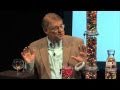
Dr. Hayhoe's talk was part of a conference titled Science & Christianity in Canada at Trinity Western University in Langley, British Columbia:

This conference will include Canadians in science, speakers dealing with issues relevant to our theme, & talks on science & Christian faith in general. Check website for more information at: csca.ca/may2018/

The reader will notice that none of this has anything to do with the gospel of the Lord Jesus Christ; rather, it's yet another social gospel diversion. Readers can do their own investigation into the numerous scandals and lies involving those promoting the global warming propaganda. I remember the mid-1970s when these "experts" were promoting a coming ice age. Even if the globe is warming (which I doubt), I have yet to hear an adequate explanation of why this is bad; I'm tired of 30- and 40-below windchills. I might take the global warming propagandists seriously if and when they start living lifestyles in accord with what they say they believe.

See my post Today's Evangelicals, Tomorrow's Liberals--A Warning from 1983 (January 13, 2010)

Wednesday, 2 May 2018

"Universal Worship" is part of last days deception

For the wrath of God is revealed from heaven against all ungodliness and unrighteousness of men, who hold the truth in unrighteousness;
Because that which may be known of God is manifest in them; for God hath shewed it unto them.
For the invisible things of him from the creation of the world are clearly seen, being understood by the things that are made, even his eternal power and Godhead; so that they are without excuse:
Because that, when they knew God, they glorified him not as God, neither were thankful; but became vain in their imaginations, and their foolish heart was darkened.
Professing themselves to be wise, they became fools,
And changed the glory of the uncorruptible God into an image made like to corruptible man, and to birds, and fourfooted beasts, and creeping things.
Romans 1:18-23

This know also, that in the last days perilous times shall come...
...Having a form of godliness, but denying the power thereof: from such turn away.
For of this sort are they which creep into houses, and lead captive silly women laden with sins, led away with divers lusts,
Ever learning, and never able to come to the knowledge of the truth.
II Timothy 3:1, 5-7

Given the origins of "Universal Worship" in Islamic mysticism, I suspect that the "Christianity" involved in this movement is that characterized by the Emerging Church, of which mysticism is a major component. Mysticism inevitably leads to universalism, because the the practitioner, whatever his religious profession may be, discovers the writings and works of other mystics, and then discovers that people of various religious beliefs have had the same experiences, thus leading the practitioner of mysticism to conclude that the experiences come from the same source.

The reader of the following item will notice the pagan worship cloaked in concern for the environment. It's also hard not to notice the disproportionate number of women in positions of leadership--typical of the New Age movement--in "Universal Worship."

If the reader is wondering why I frequently post items from the Toledo Blade, it's because that's one of the few newspapers that still seems to have a religion section, which says more about the media than it does about religion. This blogger believes that local items such as those reported in the Toledo Blade often provide great insight into conditions generally. As reported by Nicki Gorny of the Toledo Blade, April 27, 2018 (link in original):

When it comes to perspectives on environmental stewardship, world religions aren’t so different.

If many at Unity of Toledo were already thinking it by the time that Shamsuddin Waheed approached the podium, the sixth of seven presenters to share their reflections based on their own religion’s texts and traditions, it was Mr. Waheed, representing Islam, who vocalized it.

“Maybe the format is different,” he said, “but the essence is the same.”

It was an apt observation for a Universal Worship, such as the one Mr. Waheed and others participated in at the spiritual center on Sunday. The service, created in 1921 by the Sufi Hazrat Inayat Khan, invokes the “One Being” through each of the world’s major faith traditions.

The MultiFaith Council of Northwest Ohio has been organizing the services monthly, each time at a different area house of worship, since September. Each service begins with a candle-lighting ceremony and continues into readings and a musical expression representing each religious tradition, in line with the model established by Mr. Khan; in local services, the Bahá'í Faith is typically substituted for Zoroastrianism, reflecting local demographics.

“We really experience some of the spiritual depth of each of the traditions that we present,” said Judy Lee Trautman, who is ordained as a cherag to the lead the services. “And we’re doing it in a safe space where no one has to sacrifice their own tradition or their own ways of worship. They just kind of witness and be in solidarity with other traditions.”

Universal Worship isn’t necessarily hard to come by if you run in Sufi circles, as Ms. Trautman, who is also chairman of the MultiFaith Council, has been for years; Sufism is often described as a mystic dimension of Islam. But to find a Universal Worship that engages participants who actually represent each faith background, as local services do, does stand out.

“Many of the places where the service is offered is just, whoever attends picks a scripture to read,” Ms. Trautman said. “Whereas we’re really blessed in Toledo to have diversity.”

That diversity was on full display on Sunday, when representatives of Hinduism, Buddhism, Sikhism, Judaism, Christianity, Islam, and the Bahá'í Faith each shared reflections and readings; chants and songs, some in languages other than English, covered the musical expressions.

Many presenters chose selections related to Earth Day on Sunday. A theme typically unifies the messages at each service; the next one, May 13, coincides with Mother’s Day.

Although Sufism has roots in Islam, a participant won’t find the sort of prayers or prayer positions traditionally associated with Islam in Universal Worship. Sufism encompasses numerous and diverse schools and lineages, according to Inayati Order, which was founded by Hazrat Inayat Khan. Mr. Khan, who in addition to creating Universal Worship is credited with bringing Sufism to the West, promoted a particularly universalist approach in his “acceptance of all people and paths leading to the unfoldment of the light and power latent in the human being.”

Sara Jobin thinks of it “like spokes on a bicycle.”

“All religions are trying to point to the same thing,” said Ms. Jobin, who has been influential in bringing Universal Worship to Toledo. “They’re all beautiful and they have their different traditions.”

Ms. Jobin was introduced to the services several years ago through the grandson of Hazrat Inayat Khan, Pir Zia Inayat-Khan, who leads the Inayati Order. But she said the real spark that led to the adoption of local services came last summer, when she participated in a Universal Worship in Switzerland. She recalled being struck by the diversity of the participants, recalling musical expressions from Africa, India, and Turkey.

“It was just all these people from all these countries all over the world, and it was so beautiful,” she said. “I just thought: I wonder if we can do that in Toledo.”

An answer to that question came in Ms. Trautman, a self-described Sufi Unitarian who, coincidentally, had been ordained to lead services since 2002. Her ordination came around the same time that she and her husband formally organized the MultiFaith Council, which demanded much of her attention, she said. So, aside from one or two services held for demonstration or education purposes, she never led a local Universal Worship.

It seemed like an especially appropriate time to introduce them to the community, she added, pointing to instances of hate crimes that have been on the rise nationally in recent years.

“This presents a challenge, but opportunity also for organizations like the MultiFaith Council to dig deeper and try to raise awareness of the blessings of diversity,” she said.

Ms. Jobin was recognized on Sunday for participating in her last service locally. She is preparing to end her tenure as resident conductor of the Toledo Symphony and move to Richmond, Va., in July to take on a new role as musical director of the Inayati Order.

The move, she said, is “really following my heart.”

Universal Worship will continue on a monthly basis, with Lauraine Carpenter, principal trumpet for the Toledo Symphony, taking on responsibility for coordinating musical expressions.

Ms. Carpenter, who has been participating in the services since September, said her own faith journey has incorporated several traditions. So Universal Worship, she continued, is “perfect.”

“It’s the essence of all religions,” she said. “We all have the same God, we all have the same belief, really. So why not celebrate it together?”

Universal Worship is free and open to all. Future dates are posted at multifaithcouncil.org. Musicians or faith communities interesting in participating should contact the MultiFaith Council.

Tuesday, 20 March 2018

Backlog: World Wildlife Fund calls on leaders of various religions to unite to save African wildlife from poachers

Be ye not unequally yoked together with unbelievers: for what fellowship hath righteousness with unrighteousness? and what communion hath light with darkness?
And what concord hath Christ with Belial? or what part hath he that believeth with an infidel?
And what agreement hath the temple of God with idols? for ye are the temple of the living God; as God hath said, I will dwell in them, and walk in them; and I will be their God, and they shall be my people.
Wherefore come out from among them, and be ye separate, saith the Lord, and touch not the unclean thing; and I will receive you.
II Corinthians 6:14-17

Christians are not to unite with unbelievers even in good causes--and I think saving endangered wildlife from poachers is a good cause. If Christians want to speak or act on this issue, they should do so as Christians, not as members of an inter-religious body. As reported by Jason Straziuso of Associated Press, September 21, 2012:

NAIROBI, Kenya — Standing before a pile of charred elephant ivory as dusk covered the surrounding savannah, Christian, Muslim and Hindu religious leaders grasped hands and prayed. Let religion, they asked, help "God's creatures" to survive.

Poachers are escalating their assault on Africa's elephants and rhinos, and conservationists warn that the animals cannot survive Asia's high-dollar demand for ivory tusks and rhino horn powder. Some wildlife agents, customs officials and government leaders are being paid off by what is viewed as a well-organized mafia moving animal parts from Africa to Asia, charge the conservationists.

Seeing a dire situation grow worse, the animal conservation group WWF is enlisting religious leaders to take up the cause in the hopes that religion can help save some of the world's most majestic animals.

"We are the ones who are driving God's creatures to extinction," said Martin Palmer, secretary-general of the Britain-based Alliance of Religions and Conservation.

Palmer spoke during Thursday evening's prayer at a site in Nairobi National Park where Kenyan officials burned hundreds of ivory tusks in 1989 to draw attention to the slaughter of elephants. Although the park has no elephants, it hosts 221 rhinos.

"We are the ones who can change the way Africa works," Palmer said.

Dekila Chungyalpa, the director of WWF's Sacred Earth program, argues that the killing of elephants, rhinos and Asian tigers — the three animals WWF is most concerned about — is a moral issue. She said that conservationists are not doing well enough getting the anti-poaching message across, and that new strategies — such as religion — must be tried.

"Faith leaders are the heart and backbone of local communities. They guide and direct the way we think, behave and live our lives," she said, adding later: "I think this is the missing piece in conservation strategies. ... WWF can yell us much as we want and no one will listen to us, but a religious leader can say 'This is not a part of our values. This is immoral.'"

Three dozen religious leaders from nine African countries toured Nairobi National Park on Thursday, where they saw rhinos, zebras, buffalo and ostriches all within site of the skyline of Kenya's capital city.

One of the safari vans held a Christian, a Hindu, a Muslim and a Buddhist, which spawned efforts to create some sort of wildlife-themed religious joke. During a more serious conversation, Hamza Mutunu, a Muslim leader from Tanzania, argued for the animals.

"The general message is that taking care of the wildlife is part and parcel with our religion," he said. "We have a duty from the Prophet Mohammed. ... Taking care of wildlife is within our religion."

Preetika Bhanderi, who is with the Hindu Council of Africa, said: "Hindu's backbone is non-violence toward everything that has life. That means animals, and people, of course."

Charles Odira, a Catholic priest from Kenya, said religious leaders can help spread the message effectively given the moral authority and standing they have in African communities.

"Just as when we talk about Jesus Christ, when we say (from the pulpit) that animals are part of God's community, an impact will be made," he said.

Odira acknowledged the uphill fight even religious leaders have. Poachers can earn hundreds or even thousands of dollars for a rhino horn or elephant tusk. That money represents far more than they could earn after years of labor in the typical village job.

Mutunu, though, said that religious leaders of all faiths came together in Loliondo, Tanzania last year to fight against poaching. He said the effort has yielded dividends.

The poaching numbers are grim. The number of rhinos killed by poachers in South Africa has risen from 13 in 2007 to 448 last year, WWF says. Last year saw more large-scale ivory seizures than any year in the last two decades, it said. Tens of thousands of elephants are being killed by poachers each year.

It's not known what kind of impact religious leaders may be able to make, but Mike Watson, the chief executive of the Kenya's Lewa Wildlife Conservancy, said he and other conservationists will take any help they can get. Lewa saw one of its rhinos killed by poachers last week. The park had never suffered a rhino poaching death before 2009; it's had five of its rhinos killed since then.

"We know for a fact that one of the demands for ivory is religious icons in the Far East, and if pressure can be brought to bear to reduce that demand both locally here in Kenya through assistance by religious leaders, and overseas, it can only be a good step," he said. "It might take generations. If religious leaders can some way speed that process up, all well and good, but all efforts need to be on the table."

Africa is the supply side of the poaching equation, but the demand comes from Asia. Chungyalpa said WWF is working with Buddhists in Southeast Asia to try to educate Asian consumers about ivory and rhino horn powder. Yao Ming, the oversized basketball star from China, visited Kenya last month to raise awareness and make a film called "The End of the Wild."

Chungyalpa compared the effort to enlist religious leaders in the anti-poaching fight to how religious pressure helped end the era of apartheid in South Africa.

"There has to be a rising up of moral outrage," she said. "This is the spirit we're after."

Tuesday, 4 April 2017

Beware of the Simplicity Institute

The Simplicity Institute, which appears to include some people who are ostensibly Christians, also seems mostly composed of woolly-headed idealists and hippies who turned off their alarm clocks in the '70s, and get their lunch by squeezing it out of their beards. I agree with them to the extent that it's not necessary to live an affluent lifestyle, but these are the kind of people who know little or nothing about economics, and are always talking about distribution of wealth, but not about production of wealth, which is necessary in order for distribution to take place.

They go on about how economic growth is bad for the environment, but don't mention that it's the countries with the most productive economies that have the cleanest environments and healthiest people. Their "Charter of Sufficiency" is a masterpiece of vagueness, with no careful definitions of anything (link in original):

The following ‘Charter of Sufficiency’ is a vision statement for a sufficiency economy, which is intended to provoke thought about the contours of a just and sustainable society. (It is adapted from the ‘Charter of the Deep Future’ found in Chapter Five of Entropia: Life beyond Industrial Civilisation).
_______________________________________

CHARTER OF SUFFICIENCY

Enough, for everyone, forever

We affirm that providing ‘enough, for everyone, forever’ is the defining objective of a just and sustainable economy, which we seek to achieve by working together in free association.

We affirm that everyone should be free to create the meaning of their own lives, while acknowledging that this freedom legitimately extends only so far as others can have the same freedom. Freedom thus implies restraint.

We affirm that an inclusive democracy must not discriminate on such grounds as race, ethnicity, gender, age, sexuality, politics, or faith.

We affirm that generations into the deep future are entitled to the same freedoms as present generations.

We affirm that respecting the deep future requires maintaining a healthy environment.

We affirm that technology can help to protect our environment only if it is governed by an ethics of sufficiency, not an ethics of growth. Efficiency without sufficiency is lost.

We affirm that maintaining a healthy environment requires creating a sufficiency economy that operates within environmental and energy limits.

We affirm that a sufficiency economy means stabilising consumption and population, transitioning to renewable sources of energy, and adapting to a very moderate energy supply.

We affirm that strict limits on material accumulation are required if a sufficiency economy is to maintain a just distribution of resources and avoid corrosive inequalities.

We affirm that property rights are justifiable only to the extent they serve the common good, including the overriding interests of humanitarian and ecological justice.

We affirm that a sufficiency economy depends on a culture that embraces lifestyles of material sufficiency and rejects lifestyles of material affluence.

We affirm that material sufficiency in a free society provides the conditions for an infinite variety of meaningful, happy, and fulfilling lives.


It's hard not to notice that for SI's promotion of "degrowth," its leaders are content to live in countries that practice economic growth. Let's see the SI leaders move to countries that practice "degrowth," and I might be more inclined to take them seriously. They talk about voluntary simplicity, but experience shows that if enough people won't go along voluntarily, compulsion will follow. I highly recommend Thomas Dixon's novel Comrades (1909), about a utopian socialist community created off the coast of California that quickly becomes a total disaster. It's similar to Animal Farm, but is much funnier, and is available for free download.

The perceptive reader will notice that SI's homepage positively quotes New Ager Buckminster Fuller, which is par for the course for SI. Other than the Charter of Sufficiency, the only SI publication I've read is Mark A. Burch's report Mindfulness: The Doorway to Simple Living (2012), but that was enough for me to recognize him as a false teacher:

Mindfulness, or Right Mindfulness, is one precept drawn from a set of interdependent precepts called The Noble Eightfold Path of Buddhism. (p. 3)

Formal mindfulness practice consists of sitting meditation with attention focused on one’s breathing, either by counting breaths or by silently witnessing the act of breathing, to the exclusion of all other internal or external distractions...

...Practices that specifically develop stable states of mindful awareness often entail formal meditation or contemplation. In Buddhist Vipassana (mindfulness of breathing) practice, for example, attention is focused on the breath with the intention of slowly developing concentration, cultivating inner stillness and eventually an ever deepening insight into the activities and dynamics of one’s own conscious awareness ...

...Christian “Centering Prayer,” while differing from Buddhist Vipassana in its intention, is nearly indistinguishable in its method. The Buddhist is intent on liberation from suffering and growing in compassion whereas the Christian practitioner of centering prayer is intent on cultivating a state of inner stillness and spiritual receptivity to the action of the Holy Spirit. The Buddhist “anchors” attention on the breath while the Christian anchors it on a “prayer word,” not unlike a mantra, expressing the contemplative’s intention to open themselves to intimacy with God (Keating, 1998). But otherwise, all the physical postures, preparation, attitudes and activities that one brings to the practice are nearly identical.
(pp. 4-5).

The reader will notice that Mr. Burch admits that mindfulness comes from Buddhism, and that Christian "Centering Prayer" is indistinguishable, in practice, from the Buddhist practice of mindfulness. The inevitable conclusion for those who indulge in such practices is that since the experiences are similar regardless of one's religious tradition, they must derive from the same source, leading the practitioner toward universalism. Why is Mr. Burch, a supposed Christian, engaging in and recommending a pagan practice?

Another thing I noticed was that Mr. Burch cites James Lovelock's belief on evolution (on page 21), without mentioning that he was the man who gave us the Gaia hypothesis, which states that the Earth is itself a living being--the natural spiritual result being nature worship. Right under that, Mr. Burch praises Carl Jung as a "great Viennese depth psychologist." Carl Jung is popular with New Agers--especially those who claim to be Christians--but was a man whose "wisdom" came from a "spirit guide," i.e., demon, named Philemon. For more on Carl Jung, see PsychoHeresy: C. G. Jung's Legacy to the Church.

Thursday, 2 August 2012

Australian Neo-Nazi "ethicist" Peter Singer receives his country's highest civilian honour

Righteousness exalteth a nation: but sin is a reproach to any people. Proverbs 14:34

Surely some future historian, surveying our times, will note sardonically that it took no more than three decades to transform a war crime into an act of compassion, thereby enabling the victors in the war against Nazism to mount their own humane holocaust, which in its range and in the number of its victims, may soon far surpass the Nazi one. It is significant that, whereas the Nazi holocaust has received lavish TV and film coverage, the humane one goes rolling along largely unnoticed by the media. Malcolm Muggeridge, Sanctity of Life, Chatelaine, December 1979, p. 138

Professor Peter Singer, an "ethicist" whose views on the sancity of human life I find virtually the same as those of the Nazis, was named a Companion (AC) in the General Division of the Order of Australia in the Queen's Birthday 2012 Honours Lists (see page 8 of linked document):

For eminent service to philosophy and bioethics as a leader of public debate and communicator of ideas in the areas of global poverty, animal welfare and the human condition.

John Hawkins of Right Wing News has compiled some revealing quotes from major figures in the animal rights movement. Of interest for this post are these, merely a small sample to illustrate Professor Singer's low view of the sanctity of human life:

An animal experiment cannot be justifiable unless the experiment is so important that the use of a brain-damaged human would be justifiable. — Peter Singer, godfather of the animal rights movement, Animal Liberation: A New Ethic for Our Treatment of Animals, 2nd. edition, 1990.

Surely there will be some nonhuman animals whose lives, by any standards, are more valuable than the lives of some humans. — Peter Singer, godfather of the animal rights movement, Animal Liberation: A New Ethic for Our Treatment of Animals, 2nd edition, 1990.

There are some circumstances, for example, where the newborn baby is severely disabled and where the parents think that it’s better that child should not live, when killing the newborn baby is not at all wrong … not like killing the chimpanzee would be. Maybe it’s not wrong at all. — Peter Singer, godfather of the animal rights movement.

Your dog can show you when he or she wants to go for a walk and equally for nonviolent sexual contact, your dog or whatever else it is can show you whether he or she wants to engage in a certain kind of contact — Peter Singer, godfather of the animal rights movement.
The one thing I would agree with concerning Professor Singer's "eminent service to philosophy and bioethics" is that while many who share his outlook pussyfoot around the implications, Professor Singer isn't afraid to take his views to their logical conclusions and state them.

Although Peter Singer is of Jewish background, that doesn't seem to have had much influence on his philosophy, as reported by Dan Goldberg of Jewish Telegraphic Agency, June 24, 2012:

Although his family has a Passover seder -- “with a beet root instead of a lamb shank” -- and he celebrates Purim with his grandchildren, and Rosh Hashanah, Singer says Jewish traditions “did not play much of a role in my life.”

He concedes, though, that his family history did play a part in the development of his theories.

“As three of my grandparents died in the Holocaust, and the fourth was fortunate to survive in Theresienstadt, that was very much present in my life,” he said. “I am sure that it had some impact on my thought -- on my abhorrence of cruelty, of the naked use of power over the defenseless and, of course, of racism.”

His parents, he says, gave him the choice of whether to have a bar mitzvah celebration. He declined.

“I never believed in a god,” he said. “There may have been times when I wondered if there might be a god, but it always seemed to me wildly implausible that a god worth worshiping could allow the Holocaust to occur.”

Tuesday, 5 June 2012

Wilderness Torah: An American event combining Judaism and New Age

As reported by Emanuel Maiberg of Jewish Telegraphic Agency, May 29, 2012:

OAKLAND, Calif. (JTA) -- When the sun set on Saturday, Zelig Golden blew his shofar, calling more than a 100 people of all ages and backgrounds to assemble in a giant circle in Bort Meadow, a campground in Chabot Anthony Regional Park.

“All our prophets had their epiphanies in nature,” Golden, 38, told to the crowd, marking the start of Shavuot and a program that he believes could spread across the American and even world Jewish community.

If those gathered wished to receive their own revelation, he said, they had to venture into the wilderness as well.

“Revelation is not a lighting bolt that fills your head with wisdom all at once. It's when you look at a blade of grass and say, that's amazing. When you see the specks of green in someone's eyes,” Golden continued.

After music and dancing, participants were invited to grab the ends of the ribbons hanging from the “Omer Poll.”

They wrapped themselves around the attached 49 strands -- each representing a day between the exodus from Egypt and the receiving of the Torah at Mount Sinai.

Throughout the weekend long “Shavuot on the Mountain” event, organized by the Bay area-based Wilderness Torah, participants were encouraged to reengage with Judaism, nature and the relationship between the two.

Golden kept his head covered with a wide-brimmed cowboy hat or a knitted head covering, never a traditional kippah. His beard, hosting a few gray hairs, would suit either a traditional rabbi or an outdoorsy type who likes to camp and to keep a warm face.

Golden is a mixture of both, and while it's a collaborative effort today, Wilderness Torah was originally his vision.

Raised in a traditional home in a small Jewish community in Spokane, Wash., he moved to California to attend Berkeley School of Law.

Until 2010, he worked as an environmental lawyer for the Center for Food Safety, protecting farmers from genetically modified organisms, or GMOs.

He became depressed, he said, at his job, despite the positive impact he knew it had on the issues he cared about. “I lost my derech,” he said, using the Hebrew word for "path."

His path to spirituality began with a non-religious meditation group for lawyers.

That ignited a spark. “I realized that it was something that was missing from my life and I wanted more of it,” he said.

His search eventually led him to Berkeley's Jewish Renewal community, Chochmat HaLev, or “wisdom of the heart.”

The group partnered with Hazon, the Jewish environmentalist group, and engaged in issues of and programs on sustainability and the environment.

For Sukkot 2007, Golden and a handful of other Chochmat HaLev members organized a camping trip to the Sacramento Valley's Eatwell Farm, their Community Supported Agriculture (CSA) affiliate.

While only a few dozen people attended that first event, today Wilderness Torah is an independent organization that sees hundreds of participants in their desert camping expeditions and youth mentorship programs.

The latter include b'nai mitzvah programs that weave Jewish thought with outdoor skills.

At the Shavuot on the Mountain program, a popular joke was that Wilderness Torah events are like the Jewish Burning Man, the annual contemporary cultural held in Nevada’s Black Rock Desert.

It’s another way of saying that these programs are open and welcoming, particularly to all things New Age.

In fact, both festivals aim to establish an idyllic village community in nature, leading to all sorts of creative expressions.

So it was not surprise to see someone strike a yoga pose or break out the Hula-Hoop during a Torah service that took place in the cool shade of pine trees.

But while Burning Man is partly fueled by psychedelics and clothing is optional, Wilderness Torah makes a concerted effort to be a child-friendly, family experience.

Indeed, the many kids in the “Children's Village,” a kind of daycare where they were entertained and educated (with parents allowed to attend their activities), seemed to be enjoying playing outdoors for the entire weekend -- not an Angry Bird in sight.

Most of the younger participants were asleep by the start of the night-long tikkun, or study session. It followed the 10 p.m. Shavuot celebration opening and Havdalah.

With the temperature dropping and the wind picking up, pages with sacred text were blowing in the hands of those who gripped them while reading by flashlight.

The adults broke into several nearby groups began their night of learning.

One, with Golden, studied writings on Shavuot in the Torah and other commentaries. Not far away, Rabbi Daniel Lev guided a group in an activity called “Shema Between the Sheets: Spiritual Intimacy at Bedtime.”

By 5 a.m., a handful of the hardiest had made it to the Shacharit sunrise services, led by Chochmat HaLev's Rabbi SaraLeya Schely.

As that small group prayed, most people remained asleep in the tents dotting the surrounding meadow. Even Golden wasn't in sight, maybe finally allowing himself a few hours of sleep.

Perhaps he was storing energy for what he hopes is next: Spreading the program around the globe.

Indeed, he said that process has already begun.

“What's really exciting is that were being approached from people all over,” he said. “We get requests from Australia, the UK, Canada, Israel. We want to take what we're doing here and spread it across the Jewish world.”

Thursday, 2 September 2010

Discovery Communications terrorist was a Malthusian, Darwinist, radical environmentalist misanthrope--and I say that with all due respect...

...but, of course, how can this be, since the politically correct political-media complex insists that it's Christians who pose a danger to society?

Nevertheless, according to The Washington Post:

James J. Lee divided the world into good and bad. According to his writings on a Web site he created, people were bad, especially "parasitic" babies.

Animals and bugs were good, Lee wrote. But war was bad, along with global warming, pollution and international trade.

As for civilization?

The environmental militant who was killed Wednesday at the end of a tense hostage standoff at Discovery Communications headquarters in downtown Silver Spring, termed it "filth."...

...Lee, who once listed a Silver Spring homeless center as his address but who had inherited property in Hawaii that he sold for $90,000, held extreme views about the environment. According to writings on the Internet, he believed that humanity had polluted the planet and that human reproduction was the worst pollutant.

"Humans are the most destructive, filthy, pollutive creatures around and are wrecking what's left of the planet with their false morals and breeding culture," he wrote in an 11-point Internet communique that authorities said was similar to demands he made Wednesday...

... Many of his notions seem to stem from his reading of author Daniel Quinn's novel "My Ishmael," about a telepathic ape who teams with a 12-year-old girl to save the planet.

On a Web site that federal law enforcement sources confirmed was created by Lee and contained his 11 points, he listed his demands of the Discovery Channel.

Among them: that the channel stop broadcasting "all programs promoting war" and help find ways to stop "ALL immigration pollution and the anchor baby filth that follows that," as well as find "solutions for Global Warming, Automotive pollution, International Trade, factory pollution, and the whole blasted human economy."

"Saving the Planet means . . . decreasing the Human population. That means stopping the human race from breeding any more disgusting human babies!"

Lee argued that "nothing is more important" than saving animals: "The Lions, Tigers, Giraffes, Elephants, Froggies, Turtles, Apes, Raccoons, Beetles, Ants, Sharks, Bears, and, of course, the Squirrels."

"The planet does not need humans."

He also demanded that the company broadcast daily shows based on Quinn's book.

On Lee's MySpace page, he lists his heroes as Quinn and James T. Kirk, a fictional protagonist in "Star Trek," the science-fiction television series.

Below are some of Mr. Lee's demands. My favourite is #7 (emphasis mine).

1. The Discovery Channel and it's affiliate channels MUST have daily television programs at prime time slots based on Daniel Quinn's "My Ishmael" pages 207-212 where solutions to save the planet would be done in the same way as the Industrial Revolution was done, by people building on each other's inventive ideas. Focus must be given on how people can live WITHOUT giving birth to more filthy human children since those new additions continue pollution and are pollution. A game show format contest would be in order. Perhaps also forums of leading scientists who understand and agree with the Malthus-Darwin science and the problem of human overpopulation. Do both. Do all until something WORKS and the natural world starts improving and human civilization building STOPS and is reversed! MAKE IT INTERESTING SO PEOPLE WATCH AND APPLY SOLUTIONS!!!!

2. All programs on Discovery Health-TLC must stop encouraging the birth of any more parasitic human infants and the false heroics behind those actions. In those programs' places, programs encouraging human sterilization and infertility must be pushed. All former pro-birth programs must now push in the direction of stopping human birth, not encouraging it.

4. Civilization must be exposed for the filth it is. That, and all its disgusting religious-cultural roots and greed. Broadcast this message until the pollution in the planet is reversed and the human population goes down! This is your obligation. If you think it isn't, then get hell off the planet! Breathe Oil! It is the moral obligation of everyone living otherwise what good are they??

7. Develop shows that mention the Malthusian sciences about how food production leads to the overpopulation of the Human race. Talk about Evolution. Talk about Malthus and Darwin until it sinks into the stupid people's brains until they get it!!

8. Saving the Planet means saving what's left of the non-human Wildlife by decreasing the Human population. That means stopping the human race from breeding any more disgusting human babies! You're the media, you can reach enough people. It's your resposibility because you reach so many minds!!!

Who changed the truth of God into a lie, and worshipped and served the creature more than the Creator, who is blessed for ever. Amen. Romans 1:25

Have you ever noticed that those who claim that human beings are so destructive to the planet and environment never act on their professed beliefs by voluntarily removing themselves from the human population? The only person I can think of who followed such beliefs to their logical conclusion was Tooker Gomberg, who grew up in a relatively wealthy family in Montreal and made his way west to Edmonton, where he spent many years as an environmental activist and managed to get elected to city council in 1992. I can’t recall anyone who was so imprisoned by what Paul Johnson, in his book Intellectuals (1988), called the "heartless tyranny of ideas." Mr. Gomberg was so captive to his environmentalist ideology that he allowed it to submerge his more natural human instincts. He lost a bid for re-election in 1995, failed in subsequent attempts to gain public office, and moved to Halifax, where, in 2004, he committed suicide at the age of 48 by jumping off a bridge. At that, the possibility exists that it may have been the use of the anti-depressant drug Remeron, and not the logical conclusion of environmentalist ideology, that inspired Mr. Gomberg to make his exit.

HT: Vox Popoli